A hoya blooming to completion for me was a first! I’m not typically one for blooming plants, but this one promised dark purple flowers, and so I was intrigued. The plant was acquired with two sets of leaves back in 2023, and has since put out another 3 sets of leaves in the intervening time. That’s something like 150% growth! More importantly, during early May, a peduncle started forming. This signifies the potential the plant is starting to push out a cluster of flowers if it doesn’t “blast” off, like my linearis did last year. I was pretty excited to see these “black” blooms, but wasn’t holding my breath. Over the span of another two weeks, the blooms slowly got larger and showed their “waxiness”. I missed the moment where they unfurled, but I came back one day to full on flowers (Figs. 1 and 2).
Apr 21, 2024Apr 27, 2024Apr 28, 2024Figure 1. Left to Right, progression of hoya blooms over a week.
Figure 2. The flowers all open! Picture taken Apr 30, 2024. Also check out that cute olive jar it lives in. Surprisingly hasn’t shown any signs of needing a larger vessel yet! Yellowing is almost certainly from getting too much light.
Flower and Plant Review
The bloomed didn’t smell particularly strong, but there was a faint sweetness if I got very close. Admittedly, I didn’t think through the fact that this plant lived on a shelf, and the blooms were well below my face height while sitting. So to see the blooms, I had to either jam my face in at an awkward angle, or pull out the plant to admire. Anyhow, the plant bloomed, I was happy, but not entirely convinced it was worth the wait. The leaves aren’t particularly charming, and unless it’ll be regularly in bloom, it doesn’t do much as a décor piece. It also made a mess after the pollination, leaving behind nectar blobs that had dripped off onto the shelf. A minor amount of drippiness can be seen in Figure 4.
Figure 3. Hoya blooms early in the morning on May 2, 2024 at 5:09 AM. The nectar can be seem in where the fuzzy petals are slightly darker.
The Response
With that in mind (the plant being rather boring), I tried to go to bed. At some absurd hour, I decided that it might be worthwhile pulling out the information I had on trying to pollinate the plant. I vaguely recalled that I had downloaded a few articles on the procedure, but being in bed, it was easiest to pull out my phone. Here are the two sites I landed on:
I also found a less than useful, but often looked at YouTube resource for pollination and a Reddit thread wishing the poster luck: https://www.reddit.com/r/hoyas/comments/ghng1f/pollinating_hoya_blooms/. The main issue I found was somewhat low resolution images and unclear arrow directions in the diagrams. Even though everything was labelled, looking up the respective parts of the hoya flower across different flower types was quite difficult. Here are the steps with the best interpretation I could make.
Identify the respective components. Hoya blooms tend to be in clusters, though some form single blooms. The flowers are typically 5 sided, forming star patterns. To pollinate, the parts of interest are near the center of the flower, where activity takes place
Pick your weapon
Pull out the pollina by sliding along the surface slit, gently pushing down, hooking the dark joint (corpusculum), and lifting it out. The pollina consists of two pollinium attached by a corpusculum
Identify your target and hold your breath
Slide the pollina into and through the “stigmatic lock”, also known as the ”staminal slit”. The goal is to get the pollen in the pollina to contact the inner walls of the lock
Repeat
I reluctantly rolled out of bed after realizing I wouldn’t be able to sleep unless I tried the pollination out myself. From what I could tell, the goal is simply to readjust the location of the pollen source further up.I took some photos for reference (Fig. 4), then decided to also take the internet’s advice on repeated trials. I balanced juggling my phone, trying to read instructions, while trying to perform the procedure on a single cut flower (Fig. 5). If I could pollinate while it was stably fixed in place, then maybe I’d have an alright shot trying to balance a wobbling plant too.
Figure 4. May 5, 2024. Detailing on the flowers, they are quite dark! Also a fun back shot for more detail. The leaves have cute pink speckling.Figure 5. The test bloom. Isolated and slotted into the base of a terracota pot since that’s what I had on hand.
Procedure
There are “optimal” times for pollination, and I’m not sure the crack of dawn was it. I found it fairly difficult to get the insertion correct, despite this flower having a very simple and accessible structure. This could have been because it was 4:30 am and I was all bleary eyed, or I didn’t have the right tools. The internet recommends a cat whisker (I left mine behind), but I only had a horse hair on hand. I decided to stick with the fresh X-ACTO knife blade gave me the best balance between control and width after the horse hair proved itself too difficult to be used. (Figs. 6 and 7) Note, if you use a utility knife like I did, you’ll find that the flower also bleeds sap!
Horse hairX-ACTO bladeFigure 6. The weapons of choicePicking out the pollinaPost insertionFigure 7. Some snippets of the action.
The Result
In the end, I managed to repeat the procedure at least 3 times across most of the remaining flowers that were still attached to the main stem. One of the biggest issues I had were the pollinarium not wanting to remain in the lock. They would poke out a bit and I was reasonably confident that the probability for fertilization would be just about zero. Trying to insert things in also caused a lot of damage to both the receptive and insertion components of the flower. Nontheless, I was hopeful.
I waited a few more weeks but the flowers all dropped and dried out. A fun experiment, and one I’ll likely try out again if I get the chance. Preferably at a different hour.
Figure 8. Dried up flowers a month later. You can see how plump the flowers used to be! This may be worth dissecting later to see whether or not the pollina vanished.
I’ve also made my own reference diagram I can look at and contribute!
Figure 9. Abstracted diagram for hoya pollination procedure. Find one pollina, remove via corpusculum, insert corpusculum in first through the stigmatic lock, push until pollium contact the inside of the lock. (It is entire possible I got the insertion direction wrong, but I can’t imagine it matters so long as contact is made!)
Next Steps
I might try to invert the shape of the pollina next time in case the pollen is on the inside of the wings rather than the outside edge. For this specific plant, it may also be worth waiting an extra day or two to pollinate, since the flowers lasted for quite a while, and I feel like they would naturally be more receptive when the nectar is more actively being produced.
Regrettably, I can’t validate the procedure I detailed because I’m writing this a month later, long after the flowers have dried and dropped off with absolutely no seed pod production. Maybe the sudden increased production in nectar caused the pollina to slide out? Maybe I should harvest some insect legs to try pollinating? Or perhaps self-seeding rates are simply very low to begin with?
Figure 10. A hopeful Hoya linearis bloom on the way? Check back in a month or so!
RE: Faculty Member in the Ornithology Department Opening
To whom it may concern,
I am listing some traits I possess, most suitable for the opening in the Faculty of Ornithology. Several of my publications involve the persistently difficult to consume Tweety Bird, a rare specimen of a canary. I have documented its behaviours extensively and have branched into other similar topics of detailed and immersive research, including that of mice and pigs. My wide-ranging experience and flexibility in the workplace may be suitable for cross-disciplinary opportunities. I also actively participate in service for disadvantaged members, as evidenced by my support of Granny and her knitting hobbies. I am keen to continue my work with a supportive faculty that encourages exploration studies and diversity in the field.
Yours, Sylvester J. Pussycat Sr.
Context: “enrichment” portion of a lab meeting. What would it look like for a cartoon character to apply for a faculty job?
A very special event indeed, what a time to be on strike. As of writing this, I’m still making up some strike pay hours. Nonetheless, I was extremely fortunate to view totality at a relatively clear location some hours away from where I am normally situated.
I went equipped with:
eclipse glasses
sandwich materials and some chilled diet coke
a sweater
and a lot of patience
We managed to find a park with an available bench to have the pre-eclipse picnic, then started checking through the glasses periodically, trying to find when the first visible blip over the Sun would happen (I had forgotten the specific times, and didn’t feel like looking it up). Here are some photos I took during the progression (Fig. 1).
Figure 1. Eclipse progression from left to right, top to bottom. All images where taken with eclipse glasses over cellphone camera.
For the most part, I was taking images through my cellphone camera and the glasses. Some branches did get in the way to make it difficult, but it was a fun exercise.
I had a burst of inspiration halfway through the eclipse and pulled out the photometer on my cellphone, laying it flattish along the arm of the bench. It registered around 50k lux around the midway mark. I checked on this periodically, with the value falling off during cloud passage or shadowing (inference, at first I thought it was just the eclipse progressing quickly!). When totality neared, the radiance value plummeted to a few hundred, and dropped further to single digits.
A couple of days later, it occurred to me it might be interesting to plot those values and see what it might look like. On top of that, was there some way I could estimate the incoming flux based on first principles? How accurate were my readings from my phone in comparison to weather stations? Let’s say I didn’t get far, but here is what happened.
Here’s how I tried going about it. The first is getting the total incoming flux at the top of the atmosphere and how much is getting through the ground. I added some values from the typical incoming solar radiation and then some specific incidences at a nearby weather station. Clearly they were quite different from each other (Fig. 2). Nontheless, I also tried fitting the data points I took. I tried a few different curve fits and ended up with mildly ridiculous fits (Fig. 3). Intuitively, I had been expecting something like a sigmoid function to align well, though I received a suggestion for a gaussian fit to align with what we see from transits instead, which in retrospect, makes quite a bit of sense. However, this fell to the backburner and I didn’t get quite anywhere.
Figure 2. Nearby station data plotted over the 2 data points collected on site.Figure 3. Miscellaneous fits to the site collected data.
I don’t have much of a conclusion to this other than, a cellphone probably does not replace a pyrometer, and three data points does not make for a good fit.
Things can’t be that bad. I counted 17 baby shrimp!
– Elisa, February 2024
Prelude
Three-ish months ago (Nov 17, 2023), I set out on an adventure to build a living wall. I had just moved home, and I was thinking of ways to decorate my room and now office space. As it turns out, picture frames for 3 foot long posters are not as readily available at a budget price, even when shopping second hand. I opted for a project I had been wanting to try for a while, putting up my plants on wall. The rational was multi-fold.
Firstly, it has been a life long dream to have a living wall in my own space, with my preferred selection of plants. No fake moss. Secondly, it would take up space on the wall, and should be much cheaper than frames. Thirdly, if I could rig up an automated watering system, this would alleviate the need for leaving my plants unwatered and uncared for during long periods away, or asking someone else to take care of them. All of this sounded entirely sensible to me.
Act I: Making a Watering Wall
So, I sized it out. I knew I needed a waterproof support frame, and some sort of water permeable fabric. I wanted to add a watering system, so I decided to build the frame from PVC pipes, drill holes at the top, and pump water through one end. Dimensions were constrained by the largest garden/landscaping fabric I could find at a reasonable price, 3 feet across. I had been hoping for 5 by 5 feet, as I really wanted it to fill up the space in Zoom calls, but we do what we can. I estimated the maximum head a pump would need to be able to push up to the top of the frame, and multiplied it out by the internal PVC dimensions (I went back and forth inner dimensions, and decided that ½ in pipe would be sturdy enough if I built a central cross feature in the frame). Some quick googling later, I figured I would need a pump that could allegedly do at least 10 ft of head from the main ½ in outlet. I came up with a few configurations, and decided it would make sense to pipe the water out bottom side of the frame.
My shopping list looked something like this:
2 10’ lengths of ½ in PVC pipe
5 T-joins
1 cross join
3 elbows
3’ width fabric, roll of
40 gph pump
Flexible hosing (to link the pump and frame) and connectors
PVC cement
Something to store water in, at least 3’ + a few inches wide to accommodate for the pump connector
I already had a saw and drill with various bits. I purchased the pump a day in advance to look at the outlets and what was needed to join the pump to the frame. Now it was off to Home Hardware. They didn’t have enough T-joins for ½ in pipe. Next step, Home Depot. The folks there were kind enough to ask what kind of project it was. As it turns out, white PVC pipes are necessary when dealing with potable water. For my use case though? Electrical conduit would do just fine at half the cost. Great! They were out of conduit in the dimensions I wanted, so I picked up the PVC connectors before heading on over to the RONA down the street. I finally found the conduit, ½ ‘’ ID and 3’ in length. I purchased 2 10’ lengths and wedged them cautiously into the car. At some point, a trip had been made to Canadian Tire to pick up a giant Rubbermaid tote. It was a ROUGHNECK, and claimed it wouldn’t crack in winter conditions. I had been hoping for a flat bottomed box or planter, but an internet search had revealed that most nicely formed boxes were capped at around 48 inches or less. No matter. I could figure it out later.
One night of staying up working on impromptu projects wasn’t enough (I had built a Corsi-Rosenthal box the previous night and spent far too long perfecting the box fan coverage around the corners). I sawed the pipes to length, using a 30 cm ruler as a guide, sanded the edges down with a rasp, and finished the edges with a coarse grit sand paper. I gingerly put all the pieces together with the connectors and flexed the frame. I felt like it would hold. I cemented the pieces together and let it cure outside. At this point, night had fallen and I took a break for dinner.
The cement had cured by the time I was done, so it was time to do a water test. Holes were drilled and the connectors added. At this point, I realized that the connection point to the frame sat belowthe frame, and not to the side like I had planned. But it was already cemented in. I figured it wasn’t a big deal. We filled a bucket with water, dropped the pump in, and turned it on. It worked! The disbelief on our faces belayed the lack of faith in my online water head calculation. But the drill spacing and flow rate worked perfectly to lift the water to the top of the frame, and distribute the outflow across the drill holes. Naturally, I had to move on to the next step, seeing if the flow would be enough to saturate the garden fabric.
I lugged the frame and the roll of fabric outside and started wrapping it tightly on the frame. I was doing this unsupervised and alone at this hour, and naturally ended up making some impromptu decisions in the dimming light. I decided to make the fabric wall by wrapping around the frame three times. After folding the frame in, I punched some holes through the fabric with the tip of a pair of scissors right by the top of the frame, and zip-tied it in with some spare zip-ties I had found in my bag after some field work. I tested again with water. Slowly but surely, the compressed fabric against the outlet holes of the frame began to take up water. Holding the frame perpendicular to the ground, water dripped through the fabric instead of the air space between the front and back.
I chucked the whole thing into the Rubbermaid tote (Fig. 1). Job well done, I thought.
Figure 1. Garden fabric wound around a PVC frame, then chucked into a tote.
Intermission: Watering Wall to Living Wall
I lack some clarity on the timeline for the next few parts, but I eventually stitched a few pockets made of cut rectangles from the fabric using fishing line to the “front” side of the wall. I stuffed the pockets with a lower layer of LECA, placed some plant cuttings in, and secured them with more LECA. The tote had been hauled up to my room and propped up against a wall. It had been filled with well over 20 gallons of water, enough to avoid running the pump dry. Over the next few days, I would plug in the pump to “water” my plants (Fig. 2). One issue I knew I would be running into was the stability of the frame. I wanted it to be vertical. With it leaned up against a real wall, there were certain to be mold issues and water damage.
Figure 2. Putting plants on the “wall”. Darkened areas are saturated with water. Notice that the tote’s lid is behind the wall, this was preventing the wet plant wall from contacting the drywall.
I tried a few different configurations, including filling the tote with 1 gal bottles to brace it (and limit the total water volume in case the tote cracked), and propping it up on an overturned planted when the awkward angle from the pump connector started really bothering me (Fig. 3). I was hoping that eventually I could get some 3D printed supports in.
Figure 3. With some added lighting, hanging plants, and sneaking gallon bottles propping up the wall.
Act II: Water Quality and the Clean-up Crew
A week later, I discovered that the water in the tote was… unpleasant. It was time to cycle it out. I ran into my first issue here. The frame was now waterlogged and quite unwieldy. Hauling a flexible plastic tote filled with ~80 L of water was also not quite practical (Fig. 4). This resulted in a very silly, slow water drain by repeatedly filling gallon bottles and dumping them out into the bathroom while the frame had been lugged into a bathtub while this was happening. This would not do.
Figure 4. A messy room with plants, and a rubbermaid tote full of water and gallon bottles. Those are rock samples in the ziploc bags…
I mulled it over for the next week or so. The second time I had to do the tote lugging and gallon bottle juggling, I decided that I was over it. Either I could disassemble the wall for a later date, or get something to clean up my water. The plants were doing great though, and I didn’t want to disturb them. So I thought, shrimp! Shrimp would be my solution.
Some quick googling later, I found that Amano shrimp were great algae eaters and detritivores, quickly breaking down plant matter. I had decaying leaves in the tote already, and a filter in the pump. Surely it would work out! (For those who do not know, ammonia is a product of decaying matter, and is highly toxic to various organisms. Denitrifying bacteria convert ammonia to nitrite – also toxic, and then to nitrate – less toxic). Just in case though, I would throw in some extra dead leaves and wait another week. The time line becomes even more blurred here. Did I buy the freshwater test kit then? Or did I wait until I first got my shrimp?
I recall being excited to find an aquatics shop in London when I was visiting. We made a quick stop. I asked for 3 Amano shrimp, a marimo moss ball, water wisteria, some pellet fish food in case there wasn’t anything to eat for the shrimp, as I didn’t have any algal issues. I was very tempted to get a few guppies, as I recalled them to be easy to take care of based on a few conversations I had had with a friend, but I decided to take it slow.
I brought the shrimp home, added a mesh beg to my pump to block the inflow of water, and I slowly released them into the tank, thinking that any beneficial bacteria that road along in the water might help. Over the next few days, the shrimp chomped away at the debris building up on the moss ball, and hid under various 3D printed benchys (Fig. 5) scattered throughout the water. All was good (Fig. 6).
Figure 5. Example of a Benchy – The jolly 3D printing tortune test. Did you know that benchys are top heavy? All of them flipped in the water. The shrimp enjoyed hiding underneath them until duckweed and other aquatic plants got introduced.Figure 6. Amano hanging out on an upside down benchy next to some floating plants.
I instantly fell in love with the little shrimp clomping around, and decided perhaps I could get a few more. After all, amanos were nearly clear in colour, and I could never find them in the tub. I went and visited a shop I had originally wanted to go to (they were closed for unknown reasons), and explained my situation. They confirmed that I wasn’t really planning on breeding, so amanos, plus whatever fun coloured shrimp I wanted would probably work. This time I ended up with 3 amanos, 3 painted fire reds (neocaridina), and 3 guppies.The red shrimp were on sale, so that made the decision fairly easy for me. The guppies were selected at a ratio of 2:1 female to male, to distribute the male attention between the fish.
This is around the time when things started going wrong. The new shrimp seemed to be fine, but the old ones were listless and would curl up at the bottom of the tub. That was odd. I started doing 30% water changes each day, despite the lugging back and forth. I was testing the water parameters at this time, and saw a clear increase in…nitrite. This happened during a particularly busy time, and I let it run on for far too long. Two shrimp had passed away by the time I did my research on how to address the problems I was seeing. I purchased SeaChem Prime, Stability, and API’s QuickStart after trying to figure out which PetSmarts had both Prime and Stability. I later found out cheaper ways to access these products, but in the meantime, I was following instructions for dosing each day, while doing water changes. Things seemed to be improving other than the loss of 2 of the original shrimp. I chalked it up to the failure to acclimate.
Intermission: A Rescue Mission
Things were going well, so I finally decided it was time to rescue some of the lake minnows in the garage. I kept them separately in another tub for a couple of weeks before adding them into the large tote (Fig. 7).
Figure 7. Quarantine tub! The golden pothos is likely doing most of the work keeping the water clean.
Act III: Upgrading the Living Wall
The only issue I was having now, was the plant wall itself. With all the time I spent worrying about the living critters in the tote, I had neglected to figure out a solution for adjusting the wall so that it would stand up straight. I had to check on it daily to make sure it was stable, and was knocking around all sorts of things in the tub to do so. Now that things were stable-ish, it was time to upgrade. I had been regularly keeping an eye on aquariums for sale, both from major online retailers and second hand. The prices of a new aquarium were eye watering.
While searching for a reasonably priced aquarium, I also purchased an air pump and sponge filters. I had a feeling the fabric in the frame likely wasn’t doing as much filtration and supporting denitrifying bacteria like I had expected. This way I would have some additional oxygenation and an extra place for bacteria to grow, just in case the filter in the pump wasn’t doing the trick. I also added an additional piece of filter media into my water circulation pump to provide a far denser spongey material and prevent sucking up any shrimp.
Some weeks later… I got it! An aquarium! With a stand! (Did you know how expensive new aquarium stands are? I was looking at tool shelves as an alternative). It was a whopping 72 gallons. Since it was a second hand purchase, bringing it home was its own adventure. It was also immediately determined that it was far too big and would hold far too much water for any of us to feel comfortable with it on the second floor where I had the current setup. Rip my office living wall.
I set it up dry, gave the interior a good wipe down, and took a look at the top of the tank. Yep, as I expected, I would need to elevate the plant wall ABOVE the tank. As it turns out, all tanks with dimensions greater than 48 inches all come with a supporting brace across the top of the tank, presumably to relieve pressure on the glass outwards somehow. I had originally been planning on a support frame anyways, but this meant building a pretty high one, with significant pressure downwards on the glass.
I built the frame (Fig. 8). I’ll bypass the complications here, but it turns out there are multiple brand options when it comes to PVC pipe connectors that inset at different depths. I purchased some weight diffusing egg-crate. I boiled some gravel leftover from a backyard project and weighed it down. I wedged the frame support under the brace and onto the egg crate. I added water. I also purchased some Eco-Complete to weigh it down when it went on sale. There was a questionable trip that involved the back of a warehouse for that one.
Figure 8. Somewhat of a preview. Bits and bobs leftover from the frame building. It took two iterations to get the light on safely. The tank is a mess of random things. Fear not! I took the java fern out eventually.
I let it sit for a while, then transferred all the fish and shrimp over.
The End: Grand Plans
I had grand dreams of building an urban scape filled with miscellaneous ceramic houses from the thrift shops and letting them overgrow with moss, and a mesh “highway” that the shrimp could use to cross the tank, with a giant mountain on the other end. I knew it would take some time to find all the pieces if I wasn’t going to get anything new, or make the parts myself.
The End?
Everything worked like a dream. My shrimp were happily picking away at the substrate and the walls. My fish were swimming around and constantly looking for food. There were little algal growths happening, copepods were showing up, and my fish were starting to get white specks on their bodies.
Wait.
…my fish were starting to get white specks on their bodies???
The Next Adventure
Wherein several tank diseases rip through the aquarium, I acquire multiple tank syndrome, I find several other vendors, the plants start to settle in on the wall, my “budget” plant wall defies the budget, the fungas gnats return, the baby shrimp make their appearance, and I find a local aquatic plant dealer.
I had the opportunity to do some field work for an extended period of time this summer. Logistics of field work, travel, insurance, and other field related prep work aside, I also had a large number of plants that needed to be taken care of. I had to make plans for said plants.
What ended up happening was roping in a few people to check in on my plants during my absence, and distributing them so no one person was saddled with watering 50 + plants with very particular needs. Instructions were, water when the soil looks and feels dry, approximately once every 10 days or so for the larger plants, and once a week for the smaller ones.
Had I been a little more prepared and had more time to plan, here are the things I would have done. The following information has been compiled from my past experience with leaving plants with roommates for just under 2 weeks, and typically being entirely absent during the holiday season. The good news is, we can test out these ideas soon! I’ve put off this post for so long that it aligns with my departure for 2 weeks, perfect to test out some of my ideas and rescue any plants that did not fare well in between. Its worth noting that there are some complicating factors that I didn’t account for, such as the change in seasonality, living in a drier environment than before, use of artificial lighting, plantlets recently released from their humid propagation boxes, blooms on the way, etc. And I might have pests. Woohoo.
Tl;dr
get plants in semi-hydroponics used to a higher water reservoir as to maximize fill before departure
stick plants in soil over large jar of water (without touching) as to provide moisture
Let’s talk about why I came up with these points. Plants require a few things to live (and grow). Water, light (also heat), and nutrients. Of these, water and light (Fig. 1) are the critical ones for indoor plants when it is not the growing season. Additionally, the balance between water and light is very important and ideally mimics the plant’s native environment or initial growing conditions. Nutrients are not considered for shorter term absences.
Figure 1. “Full spectrum light” as shown in the barrina T5 listing. x-axis shows wavelength, y-axis shows..a fraction of? Irradiance? Note the blue and red peaks, these are generally considered the important wavelengths for plant health and growth. Compare this to https://en.wikipedia.org/wiki/Sunlight#/media/File:Solar_spectrum_en.svg
Bottom humidity – fancy bottom watering
Watering without being present sounds like an easy thing to do. Just stick a bulb in or set up a drip system. This might work for some plants, but in my case, I predominantly have aroids and semi-succulents. These plants typically want to be watered in cycles of being fully soaked and then subsequently dried out until the next watering cycle. Nonetheless, most of my plants enjoy more moisture than the internet leads me to believe and typically live in a slightly more moisture rich environment in lieu of full desiccation. Thus, to maintain access to water without the ability to drench it from time to time (typically around 1 week’s time) can be a little difficult.
My solution is to stick all of my small pots over clean Classico mason jars after I use up all the sauce. The jars are filled about half way, and I pop the small nursery pots into the jar lid a couple of days after watering, so it maintains some moisture and will not fully dry out due to the nearly enclosed environment. This only works for my plants in pots of 2.5” diameter or smaller. For larger plants, self-watering pots are also an option, though I have typically found they are very finicky and require some calibration to prevent oversaturation of the base soil layer.
Hydroponics
Alternatively, I can provide endless amounts of water instead. This would be putting my plants into water directly, with or without additional media, but definitely not with soil. This method requires far more time to set up, but it is certainly doable. There are a few benefits of doing this. A deep water reservoir, precise control over nutrients, minimal pests… The trick is that it doesn’t work for every plant and it takes some time for plants previously living in soil to switch into water. Some I have cuttings fully growing out in just water, and some I have supported in a soil-less medium that wicks up water with strong root growth (this also adds aeration, very important to prevent a hypoxic environment!). The biggest complication with this method is cost – time and dollars. The second is that not all plants survive the transition, and it requires careful maintenance during that time.
For larger plants, transitioning into semi-hydro and filling up the jars as much as possible is ideal. If that is not an option, then the plant will simply not be watered during my absence. Plants in large containers tend to have more established root systems and reservoirs for instances of drought. Tropicals will not love this, but succulents will do just fine if they are large enough.
No sun or little sun
For the plants where I can’t set up water access via a large pool beneath the pot, I remove the water entirely. This leads to the plant missing a key ingredient for growth. In which case, perhaps the plant should not grow at all.
If there is no light, then there is no strong reason for water uptake. Most of my plants are suitable for “bright, indirect” sunlight. This is a cryptic statement that many a plant owner struggles with. What it tends to translate to is, most of my plants prefer as much sunlight as I can give them, so long as I bump them slowly into the sun. On the flip side, limiting sunlight will limit and slow growth. Less growth also means less water uptake and might set it off on a hibernation mode. Which is perfect if you can’t water your plants.
Grouping
Why group plants together? For context, my groupings are roughly: semi-succulent, semi-epiphytic, problem plants, and one-offs. These groupings are by water/light requirement, and care. The semi-succulents will need next to no care while I am gone. The semi-epiphytic plants and aroids would like some care. The problem plants need to be regularly checked on (these have pests, and I am not opposed to having them die-off entirely). And the one-offs are those that need to be watered, or left alone entirely. This just makes positioning my plants and making sure none get left out if there is someone checking in on them easier.
Survival of the fittest
Naturally, the plants might still be unhappy or die off while I’m gone. So what survives, survives. That’s a useful indicator for future trips what kinds of plants will do okay. In the chance I have to leave for an extended period of time again, then I’m all set with what did alright last time. Alternatively, if I really want plants around, cheap and robust plants are the way to go.
3+ weeks of travel
Things that actually happened during the field season: I split up some plants to pass along to others to take care of. At least one was on death’s door (it shriveled up, and the other similarly sad looking plant now has 1.5 leaves). I had a pet pass away during this time as well, I have no real thoughts on how to improve this situation for extended periods away other than living with someone else that is equally bonded to the animals. The rest of the plants are doing alright, though upon return, they did acquire some unwanted critters that were slowly killing them off.
Post field season thoughts: So that’s plants. What about the person travelling? I’ve been left with some thoughts after the last round of field work, and having just returned from a conference last week. One. Showers are nice. Two. I should start setting up a “recovery” station for myself when I return, especially if there is a big change in climate. Three. I want to find some time for myself to mull over what it means to be attached to various possessions, and how that affects me when I am absent or when I return after an extended period.
NEW: 2 week trial
Prepping for 2 weeks away, I’d like to avoid throwing my plants into hibernation. Stopping the growth of the young plants would simply lead to their death, or a tricky care situation on my return. Just about all of my smaller plants are in hydroponics or still suitable for a humid container. These will be under timed grow lights to compensate for the loss of sunlight with the change of seasons. The larger plants not in a reservoir will be going entirely unwatered, with two exceptions that are newer to my grouping of plants. Two smaller plants will also need to be watered during my absence, one is in the middle of slowly putting out flowers and requires the dry/wet cycle, and the other is entirely epiphytic in nature and does not possess functional roots. I have a few rooted cuttings, some will be staying in water, and some are being transitioned to semi-hydro and need to be topped off until the roots extend further. I was vaguely aware of needing to prepare them for my departure if I wanted healthy plants about 10 days pre-departure. During those 10 days, I purchased multiple grow lights and automatic timers, pulled out all the plants from propagation (except for one experimental box), informed my brother how to take care of my carnivorous plant (keep it flooded with rain water), and scattered hopefully live nematodes over all my potentially thrippy plants. I do still have some plants on campus, where they will be watered once during my absence. I may have written an entire spreadsheet with watering instructions and tips.
Expectations: All plants will be alive, and either slightly underwatered or overwatered when I get back. My calathea ornate (has spider mites currently and previously died down to a singular leaf) will likely go back to having one leaf. The corm only state oxalis may return from their hibernation and start putting out new leaves. The anthurium forgetii might be crispy. The propagations will not have made significant progress rooting. I will lose the hoya blooms on my linearis. If there are to be any casualties, I expect them to be amongst the newly propagated and the hoya I have had for weeks that have shown zero signs of growth (I think they had root rot before they even made it to my hands). Lastly, I might have aphids. I really hope this is not the case, but I have been side eyeing some of the leaf damage on my anthurium, and it is not looking promising.
Setup:
X2 barrina T5s – “full spectrum”
X1 barrina T5 – “full spectrum”
X1 sansi 15 W bulb – “full spectrum”
X1 barrina T5 (not shown)
X2 GE automatic timers with two outlets set to turn on from 7:30 am to 10:30 pm ET (not shown)
X3 misc coolermaster laptop fans (not shown)
4L of rainwater (not shown)
I purchased noma bulbs (8 W) sometime last year and also purchased a clamp lamp holder for it. I’ve been using it for nearly a year as a regular light bulb as well, and it has generally been focused on my carnivorous plants. I purchased the sansi bulb as an experiment when I moved home, with the intent of hanging them via pendant lamp bulb holders (since returned due to overheating). It now lives in the clamp lamp. All noma bulbs are currently inactive. They provided the lowest intensity light and had a tendency to heat up more than I would have liked. Once I find holders that are better at dissipating heat, they will likely make it back into regular use. I later purchased a set of 8 barrina T5s (yellow).
In the meantime, I have a vertical plant stand next to a window (Fig. 2). The plants on the stand above the window sill receive no additional artificial lighting other than those under the sansi bulb. There is one plant at a lower level that has heavy leaves, so it’s on the ground in case it topples. That one receives an off axis barrina light since it does not need high light intensity. These two are linked to one timer.
Figure 2. Light sources include the window, sansi light bulb (clamped onto plant stand), and barrina T5 (attached to the plant stand and standing vertically, LED lights are facing parallel to the stand, not towards the plant). Sampling of spectra were taken for the sansi light from the closest platform, from the “base” – flush to the platform, and incrementally upwards from the locations marked with an “x”. Sampling for the barrina T5 was done at a diagonal by placing a ruler on the plant pot and away from the light. Sampling for the window stool plants was taken behind the stool, ~3 inches above the stool. Sampling of spectra for the stingray plant was taken at the base of the plant.
There are two barrinas linked together in the “closet” area, with the lights generally facing downwards about 5 – 20 inches away from the plant tops (Fig. 3). Another one is linked to the same timer and is focused on my previously “bathroom” plants (not shown in images). There are three fans in the closet, since I spotted some fluffy mold growing in the three days I had been gone. Ew. That’s probably what I get for no airflow and using rain water that has been sitting in a bucket of decaying leaves.
Figure 3. Light sources include the window, and two barrina T5s hooked onto closet bars facing downwards. Not shown (and not relevant) is another barrina T5 closer to the ground. The forgetii sampling is marked by a downwards facing teardrop, with samples starting at the base of the pot moving upwards. The hoya linearis is in a hanging pot and is much closer to the barrina T5. Sampling started from the top of the pot upwards. The hoya cluster is indicated by a group of 6 pots and is quite a ways from both artificial and natural light (> 1 m). The window sill plants receive natural light.
Various other plants are scattered about, in the hopes that natural lighting and overflow from growlights will be sufficient. To get a baseline, I decided to borrow – with permission! – a couple of spectrometers from the lab covering the UV and NIR range, and a cosine corrector. Samples were taken between 2:40 pm to 3:15 pm ET at 100 ms per sample and averaging over 10 samples. What I should be expecting to see is a curve similar to that provided by the barrina T5 listing (Fig. 1).
It looks like the Sansi bulb is doing a lot of heavy lifting, even on the far side of the stand. The “full spectrum”-ness seems to be covered reasonably well, though it certainly is not a smooth slope as otherwise shown in the images. The “oneoffs” show the light coming in from a window on a cloudy day. Both the stingray alocasia and hoya cluster are quite far from the window (~2m and 1m respectively), but the hoya cluster may additionally be receiving some light from the barrinas in the closet. That said, you can see the fall off from the barrina lights if they are not angled correctly from the dragonscale alocasia readings. The window stool may also be receiving some light from the sansi bulb, and is located about 40 cm away from the window sill. Even at this distance, the light intensity falls off quite a bit in comparison to spectra taken at the window sill.
The spectra looks as it should, based on the marketing images for the barrina lights. Though it is worth pointing out the apparent fall off around the 570 nm wavelength may be a function of the spectrometer rather than a lack of light in that wavelength. We can say that the sansi light bulb did a better job of outputting in the relevant spectrum than the natural light right by the window sill. It also does not have the red wavelength “peak”, and is more focused towards the blue light. Natural light coming in from the windows falls off very quickly, but the results might be different had it been a sunny day outside.
A speedy writeup today while I take a break from thinking about the numerous emails I have been putting off. Despite the prompt I received, I do find myself spending a surprising amount of time helping out other TAs (teaching assistants) figure out what is, and isn’t okay. Having TAed (verb) for quite some time now, I have dealt with wonderful and atrocious instructors, other TAs, and students. Here are some words of wisdom.
Top skills I used while TAing:
Patience. Much patience has been applied. Be observant in your patience
Time Management. TAing is a “job” insofar as it is one of the only ways to fund your research, which is likely what your supervisor and the institution consider to be your real job. Nontheless, you have hours assigned to focus on something else. Try to strike that balance
Self-preservation. It’s good to check in with yourself. Are things okay?
Some handy strats for first-time TAs:
Read the contract. Do it. The instructor is obliged to meet with you at some point in most contracts. You are obliged to confirm if the contract makes sense. This is a great time to mention your comfort level with the materials and if you need hours to learn the content to be successful in your other duties
Track your hours. All your hours. If you forget to, go back and estimate each week. Meetings, emails, prep, despairing over the assignment, formatting feedback, all of it. Then forecast. Do you actually have enough hours for the rest of the term?
Balance any need to “care” for the students, yourself, and the course. Forget the institution’s reputation and a disdain or admiration for cheaters for a moment. Will anyone appreciate the effort you’re putting in? Will you gain something from it for yourself? Spend a little bit of time figuring out what feedback actually gets used. It may be handy to compile a general list of issues rather than provide specific comments. Do not entertain one on one meetings instigated by sob stories unless the student has done a minimum to ask specific questions or have read the general feedback. The exception to this is if you have hours set aside for this task. TAs are not trained to take care of the mental health of their students nor deal with exceptional circumstances. Have a handy list of references to point them elsewhere if need be. A reference document on how to “save as pdf” is astonishingly useful. So is “how to save a file and where to find it”
Communicate often and early. If the instructor is not accesible, then with the other TAs. Check that contract. See if it is being upheld. Count those as hours. This ties in with…
Front loading your work. Within reason of course. Get the rubrics, read the assignments, set up your TA hour tracker, let the students know that YOU know about the myriad ways in which they can be academically dishonest, and set and enforce your boundaries early on!
For the long-term TA, you may be jaded. Or even as a first-timer, you may simply not care for this aspect of your job. There are certainly ways to optimize your true working hours and not be reviled by your earnest coworkers.
For the passionate TA who cares about academic integrity, rigor, passion, and performance from students… It will be difficult and disappointing sometimes. Being actively involved with the course progression, reading the syllabus and course goals, checking the grade distribution, skimming the assignments you didn’t mark might help you identify the pain points of the course, or what the students are underprepared for. Feel free to suggest small changes or potential improvements to the course. If something is working well in your section, mention it to the others. In the case of your coworkers not caring abotu the same things you do, you may need to argue truthfully that it will save everyone work in the next few months. Good luck.
Lastly, it is worthwhile mentioning that professional relationships are sometimes difficult to navigate. The academic sphere does not always foster teaching skills nor empathy. If you suspect something is not quite right, get a second opinion. Tenure and a different cultural background do not justify a complete lack of communication, competence, nor care.
Thoughts? For brevity’s sake, I have not included my thoughts and experiences on academia as a whole. Thus, context has been stripped from this post. Nonetheless, I suspect the general skills/strategies should still hold regardless of what kind of job it is, if human interaction is somehow involved.
Addendum: This post has predominantly been prescriptive, in the hopes that it will be intuitive as to why the strategies have been listed. However, I strongly believe that “tools, not solutions” is the best thing you can provide to students that have the time and enthusiasm to improve.
Editor’s note: This post was originally drafted in February, shortly after discussion around ChatGPT in the academic space was booming. The views of the author have generally remained unchanged.
Fig 1. Character art inspiration for a role playing game. Generated using Stable Diffusion.
I have, in the past, been accused of writing much like a robot. At the time, this was a major offense and I was rather hurt by this remark. In retrospect, they weren’t necessarily wrong. I was on internship at the time, and part of my role involved writing emails in response to client inquiries. In writing these emails, I wanted to acknowledge their questions, confirm their accounts, and either provide the answer to their query, or to politely inform them that their concerns were on hold while I forwarded their inquiry to the appropriate team. This method was very formulaic, and lacked personality due to the professional tone I used. Several of the questions had very straightfoward answers where we could copy paste the response from the FAQs or had a standard procedure to resolve. The language I used was neutral, with as few words with specific positive or negative connotations as possible. Several clients I interacted with were from different countries and time zones, so I used simplified terms and sometimes elaborated on key points or more technical phrases. I would end with a pleasantry and an open invite for further follow-up as need be. Indeed, this sounds exactly like the kind of chat bot I would want to deal with CS inquiries. I would be happy to interact with such a bot.
Speaking of bots, the recent discussion on the interwebs has been quite concentrated on the preview of ChatGPT (and various other similar productions from Google and Microsoft). I have also seen some concerns in the academic world in terms of increased rates of cheating or using ChatGPT to answer thinking questions or to write long form responses. While these concerns are legitimate (there is no doubt that some individuals out there are directly using the outputs for this purpose), it does not necessitate an institution wide email banning the use of AI in response shortly thereafter.
This (hypothetical) email sent to all of its students might state that the use of AI tools in part or entirety was not permissible for assignments, academic work, and coursework – unless they were explicitly asked to use them. Teaching Assistants did not receive guidance on this separately from the students. In this situation, if a TA meeting were to occur for a writing assignment with no further discussion regarding ChatGPT, I assume that the instructors did not receive additional advice in how to detect this form of cheating. This email highlighting ChatGPT as the primary offender and not including the names of some other commonly used sites and resources for cheating would be an interesting choice. Naming a specific tool and a less than polished email might suggest administration having a knee-jerk reaction.
Such a response did occur at my institution. For a variety of reasons, I found this rather disappointing. Part of it is in the name, AI-tools. Banning the use of new tools at an academic institution is an interesting choice, even if it does lead to the increased use of these tools for cheating or more efficient cheating. After all,
it is safe to state that some portion of students will always cheat and some of them will get away with it.
and, the use of an AI-tool does not necessitate the act of cheating.
therefore, we should ban AI-tools?
That is an interesting chain of logic. While it is easier and more accessible to cheat in this fashion, I am not convinced that banning its use will greatly decrease the frequency of cheating. Rather, I feel that it might have been helpful to reiterate the goals and values one is meant to learn from doing work without cheating. Then there is some reward for choosing not to cheat, rather than a hint of a punishment for doing so. This requires meaningful course content and a consequence for failure to attain the minimum requirements.
I also found it disappointing that there was little acknowledgement to these new developments as interesting and potentially serving a good use in the near future. The first response I saw from the academic community was sarcasm and fear (though perhaps reddit is not the most ideal source for anything else). This seems rather contrary to the regular newsletter publishing of recent developments and relevant global news to students. While it makes sense that academic integrity is of high priority in this instance, I’m not sure the last time flat out banning something has worked if there isn’t enforcement. Some examples: we currently are required to mask on campus, yet the vast majority of individuals remain unmasked. Smoking is not allowed near entrances, but I often see security smoking there.
Now, to be frank, I don’t think this is all that novel of an AI-tool and the popularity of it for use in cheating will fall off as something “better” occurs. I imagine if the developers are aware of integrity concerns, they may eventually develop a method in which academics can request a comparison of submissions to responses tied to specific accounts (update: OpenAI has indicated they will integrate fingerprinting into their service). Or perhaps not, until some law comes to force for these companies, which judging by the speed of which they have been addressing companies leveraging personal data, may be a long ways away.
Perhaps the “newness” and “groundbreaking” level didn’t merit a whole news spread, but I think there is a fair amount of potential application for ChatGPT in various service areas in the future. As for the benefits to the academics, and other folk that make their living based on what comes out of their brains, see the points coming up.
So why the ban? Cheating has never been allowed, but it hasn’t been easy to prevent it. Thus far, my experience with reporting plagiarism shows that the reporting procedure is incredibly long and draining. I don’t even see most of the work that goes into reporting the cheating after I explain to the course supervisor why I think a student has cheated. Minor incidents are not always pursued in full and the typical work around is to provide very low marks to students. These method does not result in a mark on transcripts, and a student can often withdraw at this point unless the instructor is particularly vindictive and saves the reveal for the end of the course.
I wholeheartedly believe that cheating needs to be addressed more seriously, and more resources put into making sure that students with more privilege do not “get away” with it by being better cheaters. Cheating is a skill of sorts, just not one that is specifically meant to be fostered in the academic environment. The entire purpose of not cheating to do very fundamental things is to develop an appreciation for the rigour involved in research and effective communication. Using other people’s work while providing attributions for the individuals that did the work is another important skill that is hopefully developed prior to post-secondary, and comes as second nature. [There is a separate conversation to be had about the desire some individuals may feel about needing to take ownership of various ideas that can be apparent in the work place]. Feelings on cheating aside, here is an argument for why entirely “banning” AI is not the answer. Note that this is assuming that the students who were planning on cheating will do so using any resources available to them.
there is a lot to be learned from these AI-tools. In a recent lab meeting, we discussed the potential for inspiration (specifically from art generation), feedback/editing (suggestions from text based tools), and code revision. Naturally, this is a dangerous path to go down if you never learn the fundamentals, but assuming you do have the skills to produce the final work, I see AI-tools as a potentially faster way to get feedback and break through art-blocks. Or one that can open paths that you might have not considered (despite it being trained by a number of like minded individuals, there is a possibility for some deviant ideas buried in there or different takes based on the aggregate answers during the derivation).
Have you ever stared at a document you had written until your eyes turned red and your head was swimming? You know there are minor improvements you can make, but all your co-workers are busy and the Writing Centre has been booked up due to poor planning. There is a free tool staring you in the face that can rewrite your sentences in several different styles. How many steps beyond a thesaurus and word editor is it? No doubt someone also panicked when students started using a wider range of vocabular they previously did not possess. Did anyone notice when their emails started getting written for them? Rarely does my gmail say precisely what I want it to, but when it does, it’s rather nice to not type up everything. Microsoft Word often wants to cut down on my excessively long-winded phrases too. I even accept the suggested changes sometimes.
1b. Turns out, ChatGPT is pretty decent at suggesting basic scripts and packages for processing without going through an entire blog post.
a number of random generation tools exist on the internet that are not labelled as AI. For example, I have a few complex spreadsheets that have been shared on the internet that can fully generate various sized villages and towns, with the names of each individual, where they work, what their major belongings are, and what kind of personalities they have. Just about anything can be used for inspiration. Why should we discount AI? One argument I see for this is that it can potentially start spouting out fairly stale information unless it is continually trained with newer versions being released. Part of this is that the “inspiration” it provides soon becomes bog-standard and no different from a friend with strong opinions as an AI is trained to have “right” answers. But the interpretative value of the results is quite dependent on the user. Without any changes, the baseline response is “cheating” if it is used directly. Subtle modifications and revisions to adapt it So it becomes more of an iterative process. Say I am interested in creating a alternate timeline where two major events in our current timeline have slightly different results. I could plot the entire progression of these changes all the way to the modern world. Or I could ask for a well-rounded answer from a resource that has more knowledge of these events and their impacts for the subsequent changes and potential results on the current day. Even if they aren’t correct or plausible, it provides a framework in which to build upon
pretending new technology doesn’t exist does us no favours in academia. While it’s not necessary to immediately jump upon the shiniest newest instrument or model, completely avoiding it and shutting it out is not usually a good approach either. The typical intermediate approach is to acknowledge it, and to cautiously integrate it. Jumping in head first tends to produce work where the results are not meaningful or well understood (this is evident in the machine learning space or the use of statistics in sciences). Ignoring it entirely seems to be somewhat antithetical to the values of innovation and integration of all relevant aspects of human life in research.
it cannot be ignored. Cheating or not, AI is around. We might as well familiarize ourselves with it if we anticipate having to interact with it in the future. At the present, the main concern is cheating on written assignments (again, why image-based AI were specifically mentioned, I’m not sure as digital art assignments can be evaluated in a very straightforward manner for cheating). The work arounds have been reasonably straight forward, such as adding cheating detection tools, or handwritten assignments, or “scaffolding” assignments where the students integrate feedback and respond to the evaluations. That said, the amount of time to integrate these changes is non-trivial, and it can result in more work. I suspect this is part of the reason why academic institutions may attempt to ban chatGPT altogether instead of providing resources and support for teachers and TAs having to mark these assuming that the tools will be used regardless. I vaguely remember the dark times where students were forced to install invasive software on their computers to catch twitchy eyes or browser opening, rather than support and time being provided for professors to change their curriculums to be harder to cheat on or to focus more heavily on interactive work to demonstrate their knowledge. Students still cheated. Meanwhile, ChatGPT could make for an interesting instructional tool were it integrated in course content. For example, in a first year course, students could submit a prompt and identify the correct/incorrect aspects of the response and to supplement the response with specific relevant aspects for the course. A literature course could break down the stylistic writing choices based on various prompt triggers. A machine learning course could go ahead and train it based on specific sets of data. Prior to this email rolling out, we were encouraged to think of ways that ChatGPT could benefit, rather than hinder us as graduate students and researchers. I was personally hoping that it would be fairly good at parsing out cryptic and uncommented code by perhaps analyzing the structure and tracing variables. It can certainly read my spaghetti code and format it into a slightly more human reader friendly version, though I would caution testing any code that gets reformatted in this manner. The non-academic way in which I might use this bot is to see if it will retain memory about some world-building I want to do based on some real world information (that is preferably not quite accurate)! Seems like the perfect job for AI to be honest. I also noticed when I was trying to slowly tease out a proposal from the bot that…it does indeed write the way I do. Some of the specific aspects of my project were very easily identified, as well as some methods to apply them in. I asked for the following questions, modifying each question based on the response and which aspects of the response I wanted an elaboration on.
The Proposal
elisa what does a research proposal look like? can you give me an example research proposal on the martian atmosphere and cloud interactions with topography? how does this change if we consider exclusively cloud interactions near craters? what would an expanded methodology look like? how would the proposal on craters change if this were in preparation for a phd dissertation?
Some observations I made were: references were not real, though the authors often were. ChatGPT was unable to generate real URLs when providing suggestions. ChatGPT was to some extent able to parse code from GitHub repositories. ChatGPT knows more about plants than I would have expected, but is entirely wrong on its stance of calatheas as an easy indoor plant to take care of when my apartment is subject to someone else’s whims for the temperature (and thus, humidity). When discussing pets, ChatGPT had a more “humane” slant and often had disclaimers about the advice it was issuing. The stylistic language is quite flexible. ChatGPT was able to provide purple prose, scientific report, and various other styles for its responses. ChatGPT in its free form is very confident and left leaning based on the questions I asked of it. The history of each conversation may influence the subsequent responses.
I have not had the chance to interact with versions of ChatGPT where the “confidence” can be dialed up or down. I think lower confidence (less safe answers) could provide some interesting discussion points when thinking about what is common in research and what the next steps should be.
The major downfall I noticed was, the necessity to create an account and likely a bunch of other information. Nothing is truly free after all.
Fig 2. Character art inspiration. Key words included braids and glasses. Generated using Stable Diffusion.
This here blogpost is a focus discussion on failure within the academic sphere. Initially I had planned on pushing the concept a little further by discussing failing in advance or by inaction. Instead, I spent a bit of time reflecting on what it means to fail and whether “success” is all that. The post takes inspiration from a publication from the CV of Failures that has become increasingly popular to discuss and share amongst colleagues following a reflection on an article in Nature Reviews (The Need to Normalize Failure – https://doi.org/10.1038/s41570-022-00454-x), which highlights how creating a CV of Failures at an earlier academic stage can be shared.
I think an underdiscussed aspect of a “short” CV of failures is the sheer amount of time it takes to apply to various scholarships and fellowships. I have made the active decision to skip over some scholarships from time to time in order to use that time more productively. While one can say, “applying is good experience”, this feels awfully similar to “unpaid art for exposure”. It doesn’t balance out here. Instead, I find my time more worth while spent making a dedicated effort to apply for scholarships that I have been recommended to, or truly feel that I align within ~70% or so of the required expectations. I then consider the applicant pool and my competition to see if I am fit for the competition. While this process likely cuts me out from more scholarships than I would like (experience shows that I likely would have succeeded more than once had I gone ahead with the application), I find it a reasonable method in which to choose what I do. Of course, with limited experience, I could be spending my time poorly. However, when I found myself with limited mental capacity following a major injury, I realized that pushing through and increasing the number of hours I did “work” was not always a viable method.
Another aspect that I consider is the necessity to have fancy fellowships to your name. The need for success demands that individuals with a reasonable source of monetary support are also obliged to strive for titles and the financial support that comes alongside them, reducing the likelihood that someone less privileged with fewer experiences may receive the same title. This is not a complaint per se, but somewhat a criticism of the method in which various accolades are handed out. If one does not have a history of receiving awards, then they may be less likely to receive more in the future, which is quite discouraging in terms of time spent. While there are opportunities for one to jump into the race of cascading awards, it is easier to “win” when you have already won in the past.
Let’s talk about my CV of Failures then. The most biting failure was to achieve a Mitacs scholarship that I was informed was very easy to get, where almost no one gets rejected. The liason and my supervisor had gone over my application, its relevance, and various other requirements with a fine toothed comb. It was a stellar application. Not only did I get rejected, they informed me that they could still provide some form of financial support if I found several thousands of dollars somehow. I then had to spend a not unreasonable amount of time looking up ways I could scrounge up the money from different sources and get them all to agree to fund the same project. When the details finally worked themselves out with days to spare, I recall breaking down in public from relief and exhaustion and gratefulness to those involved. Of course, the trip was delayed due to the COVID-19 pandemic and the subsequent attempts to communicate a work-around went quite poorly. A mixed failure I suppose.
More recently, I took part in an NSERC funded program and competition of sorts to develop some innovative project with a specific theme. Our team pushed the boundaries of the definitions and put forth incredible work connecting various sectors and individuals with legitimate criticisms of various extant policies. I was proud of the work we did. We did not win the competition. While the criteria were unknown to us, I believe it was in part due to being a little too outside the box. While the entire purpose was to make connections and supplement our resumes, the fallout between individuals and poor management decisions still ongoing left a bitter taste in my mouth. I had received what I had been looking for (funding to support my delayed MSc, a failure on its own for various reasons), but lost my enthusiasm for a project I cared about. Another mixed failure. We didn’t win, we didn’t publish, and I was left with a sense of bitterness and lack of trust in terms of the “connections” I had formed.
I suppose it is also worth noting some general failures which meant a lot to me at the time:
failing to get into the engineering program I wanted to
failing to receive a number of scholarships, mostly industry related
failing to get an internship in something actually relevant to my degree and studies (In some cases, I knew who had received the position, and it did not make me feel any better.)
failing my first road driving test (in retrospect, I really should have believed everyone when they said I picked the worst possible center to do it at)
failing a course (almost, I decided to sensibly drop out and enjoy my time better. Dropping a course was considered a failure to me at the time)
failure to remember to apply to some “critical” scholarships
What have I learned during this time? The humans involved with making decisions are often very thoughtful and kind. For smaller awards, the financial status of the applicant is actually taken into account when they say they will consider it. For larger awards, it makes a difference to have concrete evidence of your past successes. Merit based methods aren’t fail-proof. Those who do the choosing sometimes do not make choices that they themselves are even happy with. Maintaining connections and finding a mentor to walk you through some of these details can make a difference in the time spent and wasted. Sometimes failure is not dependent on you, and can be due to other sources. There is sometimes undue burden to achieve scholarships, which can greatly change one’s living and working environment.
I am always optimistic that various awards, jobs, and titles will eventually go to those who deserve it. But perhaps, it would be nice not to have the pressure to aim for such achievements, and doing the work itself would be the achievement. Perhaps we shouldn’t normalize the need for awards other than for very exceptional circumstances and it would be nice if the chance at financial support didn’t require skipping other scholarships to be considered eligible. Let me propose another article, The Need to Normalize Weighing Time Investment and Rethinking Success Factors. Connecting with others over shared failure can be great for bonding, but I would be wary that failure can also become a “success metric” and the normalization needs to be for more than failure.
Tis the season, to hopefully take a quick break from work and research! As the term ends, I’m busy wrapping up my TA duties, studying for exams, and prepping to meet with my supervisors to see where things are headed for the next term. A few other things have happened since drafting up these thoughts. Herein also wraps up my first month or so of living alone on purpose.
It’s also the season of reduced sunlight and impulse buys. Instead of talking about the silly things I purchased during the Black Friday/Cyber Monday sales, let’s address my increasing plant collection. I’ve been trying to purchase things more locally (which is quite easy when you live on the fringes of the largest city in the country). I swung by a plant studio to pick up a discounted snake plant (people really love quoting that one NASA study about air purification, but I assure you this baby plant does nothing to enhance my air quality) and a request plant (variegated string of hearts)! I was beyond delighted that the staff were willing to pull out various plants they had sold (and were in the midst of packing) when I started I mentioned that there rare plants that I had wanted to see in person before dropping several double digits. Also, I may have acquired a dragon-scale plant in questionable conditions from the Superstore (I haven’t stepped into one for years, I had no idea things were so pricy!) while buying basic home things like measuring cups (Fig. 1). I had previously purchased a very lovely plant from the same distributor die within a couple of weeks, so my expectations are low (string of turtles at half price, very sad). So far, so good though. The leaves are yellowed, and it seemed that it had been over watered for quite some time.
Figure 1. A giant dragon-scale leaf, leaf for scale. Some yellow tinges visible in dramatic lighting.
In roughly the same time frame, I remembered that Toronto was hosting a week long One of a Kind exhibit of sorts. Instead of swinging by to check out handmade pottery and buying art, as I was greatly tempted to do, I pulled out some of my ancient art assignments from highschool and stuck it on the walls. Now I have arty walls, very satisfying. The next thing is to deal with the generic looking, rather scratchy furniture that seem to be required fixtures in the apartment. I’d like a comfy, cozy chair. I think I have the perfect IKEA lounge chair now that there’s some room after cleaning up a few boxes off of the floor. Chances are that it’ll become the requisite “laundry chair”, where the “not dirty but not clean” clothes will go. I also think it’s time to look for a slim shoe tray thingy with the change of the season and the potential for the snow to start sticking around. I’d also love some more lighting fixtures or alternatives to the fluorescents for my main lighting. Bah. Fluorescent lights. Still. While I’d love to make the place a little nicer, I’ve more or less avoided bringing in anything new into my life in terms of decor and furniture.
Figure 2. Some old art on the walls. Non-optional couch that came with the apartment. Dragon scale alocasia sitting up looking pretty. If you wonder why my laptop and drink are on the couch, it’s because I often sit on the yoga mat on the floor next to the couch. :’)
Was I a sensible consumer during all of this? Not necessarily. There was some shopping I did in the lead up to the “big” sales, primarily because I wanted to avoid the feeling of being rushed. Some things that genuinely seem useful and have long term value include – a small cushion that can be heated, a desk lamp to hold UV spectrum LED lights for my plants (and for myself to have yellow lighting), and a giant – Costco sized bottle of concentrated dish detergent. It’s one of my life’s greatest banes to have to repurchase small bottles of expensive dish detergent every couple of months. On top of that, instead of taking advantage of the sales to replace my wireless headphones (slowly on their way out), my major electronics purpose was an e-reader (to replace the one I lost several years ago on a plane). Oh, and a new microphone since I spend a lot of time speaking online in comparison to pre-pandemic conditions. Overall an interesting mash-up of things I was interested in this year.
To side step again from the frenzied shopping season that takes place right around the US Thanksgiving and a lead up into the holiday season, here are some things I’ve been thankful for and am looking forward to: family that sends me food, a hand held coffee grinder, a holiday season full of cats and cat-sitting, and being on commission for a piece of art because someone decided they liked my style.
So here we are at the end of the term. I’ve mostly moved in and set up. Classes are just about done and I didn’t end of overshooting my allocated TA hours. Work is ongoing and I have finally made progress on my pet electronic project. I have found that my office neighbour is into plants and is willing to take care of them when I’m out. I’m generally pleased with how things are going despite the dim, dark days ahead.
I’ve been prompted to discuss some of the recent issues I’ve been having. There’s been a slight delay on some issues popping up, but as projects rise and fall, changes to my computer set up are required. Also I just moved. Again. We’re now counting 9 moves since I’ve started graduate studies. Let’s chat.
Projects and Pathing
What feels like a common silly thing to wrestle with which each new code package is the installation of specific dependencies and setting up folders and paths in a particular fashion to allow the use of said new fancy code package. Without going into detail, I’m astonished that I was able to follow some specific set of instructions to install GDAL (notorious for being tricky to set up since a number of dependencies need to be upgraded and downgraded at various steps in the installation). However, I’m at a loss when it comes to the more cryptic error messages (Figs. 1 and 2).
Usually what I do is Google and check various forums for days on end, find some workaround and install something completely different instead. This time it’s looking like I really might have to figure out the issue. On a related note, speaking with my labmates did help out for another software problem I was having. Thank you!
Figure 1. A screenshot of Anaconda. I cracked open my “clusters” environment and got a series of messages that I have no recollection of setting up. Here I was just trying to reproduce the weird error that I get when I try to import a python package! More to solve I suppose. I should start documenting what I do to set up my environments.Figure 2. The actual issue. The log has nothing useful in it by the way.
Housing
Wow, what a problem. This is a nation-wide issue of course. There’s the actual cost of housing that means I get to spend something like 80% of my income and have 20% leftover for groceries and any sort of enjoyment in life outside of work, then there’s bad housing. Let’s document my housing experiences briefly.
Location zero: never even moved in. I got a last minute notification that the place I had originally planned was not going to work out.
Location one: Landlord insisted on meeting up in a different city. Played games with the offer (stating there was another tenant they preferred). Entered premises without notice. Did not resolve issues. Gave me keys to everyone’s bedroom and asked me to keep it a secret (I refused) because they didn’t have a property manager and didn’t want to drive in to unlock the doors for people. Refused to address the issue of a surprise pet someone had been hiding in their room (and causing allergic reactions) despite this being a condo with no pet rules. Failing to notify the condo association of the tenants and associated vehicle licenses. Gaslighting and yelling. It goes on.
Location two: Landlord lived in the house. When viewing the place, they indicated that kitchen and pool were for common use. Linens were provided. Moved in. Got yelled at for cooking and having “food scents”. Insisted that people in the past just ate take out every day. Threatened to call the police on me. Put something questionable in my room that caused it to smell. Lied about the passcode for the entrance. I didn’t even last the two weeks I had paid for.
Location three: Just a crash pad at a friend’s place while avoiding Location two and figuring out where to go.
Location four: Perfectly fine! The place was a little small and out of the way. This was a non-issue until the pandemic rolled around and I was stuck indoors all the time due to a wasp problem in the backyard.
Location five: Pretty great. Minus the extreme heat (no AC) and roommates that had weird sleeping hours that resulted in a lot of stomping overhead. The folks were great, but the random footsteps overhead really got to me after a while. I was all set for the rest of my degree. Until I wasn’t.
Location six: Turns out it’s really hard to find housing when the university suddenly declares in person classes again. After 60+ calls and messages, and several in person visits where people were making offers on the spot, I finally found a place reasonably priced and close enough to bus. Only issue is that the landlord hated onions. Okay. I could deal with that for a bit.
It turns out that it was a lot more than that. There was a lot of random sudden sniffs outside my door, and loud music being played all the time from upstairs, and a lot of guests (guess what we weren’t allowed to have?). The heat would also get randomly turned off and she demanded our windows be opened for hours to air out. Eventually me and my law school roommate decided to look into the legality of our living conditions and decided that we were indeed protected by the Residential Tenancies Act and our lease was nonsense. Over the holidays our landlord someone developed some terrible illness wherein her doctor insisted that no scented things were allowed in the house. Of course, they felt welcome to inspect our quarters. Somehow my roommate spilled an entire bottle of perfume that the landlord didn’t notice, but my diffuser that had water in it for over a month was a problem. No wonder I didn’t submit my thesis in time to work from home the next term.
Location seven: Great! Lovely roommate, reasonably nice location. Wasps in the house and mice in the walls. Can’t win ’em all. Those issues never got resolved properly. There was also incredibly poor heat distribution in the house and a gap in our entry door, so we often had a space heater on. Oh, and the house down the street was regularly broken into and we had a couple fires in the five months I was there. I wouldn’t have enjoyed living there much longer.
Location eight (skipping over living from home and living at a remote campsite for three weeks): Okay. Housing in Toronto is rough. A family friend let me stay for a bit while I was waiting on residence to let me in. It was a lot of being treated like a surrogate daughter though. Not the most comfortable, but alright.
Location nine: Finally! I have arrived! I applied way back when I received my original acceptance and followed up after the response date had passed. I was on the wait list. Cool. Then I got in and picked a date. Great! I emailed closer to the move in date asking where the lease was. I was informed it was in the works. It showed up in my inbox a week before move-in with some additional information. For example, there was a link that informed me I would receive a move-in time via email and I should confirm this worked for me. The email never arrived despite reaching out several times and getting a response for elevator booking on the Friday before move-in. No one seems to work on the weekends.
Move-in day. I waited until around 10 that morning, calling in several times to see if I could get a hold of someone. I even got transferred once. To no avail. Anyhow, I show up and it’s all good. Then I get into the apartment. Fairly quickly, I notice it is not all good. There are several issues with the apartment, most of which are cleanliness and electrical related. I have a quick chat with the office that gave me keys, and they assure me that I can submit a maintenance request and most issues will be addressed between 24 and 48 hours.
Surprise! I am unable to fill out the maintenance form. To that point, I am also unable to complete the arrival inventory (where I can state the condition of things where I found them). I email IT and someone fixes this a day later citing a mysterious issue and I have now have access. Alright then. I fill out the form and make 3 specific maintenance requests, and within a day, I see notice that my requests have been updated and are in various stages of progress. I come back after going to a workshop out of town and see a notice indicating that one request is a non-issue, and another has been confirmed as an issue. A nice little notice informs me that they will be coming back. Cleanliness issues have not been addressed.
A week passes, and I check with the front desk how to escalate. They are surprised to hear that my issue is ongoing. I follow the information I was given to reach out to another group to figure out what has been going on. Another 48+ hours passes, and I hear nothing. I email again, requesting an update. 48+ hours go by. Nothing.
This morning, I ask the front desk to escalate. They are surprised to see me again, and apologize once more, this time promising to reach out to the custodial staff directly. I come back mid-day to address my rumbling stomach, and find my door open and people inside my apartment. Weird. Someone just emailed me confirming they would come by tomorrow morning to take photos. After extensive discussion and several phone calls (from the staff in my apartment), I am assured that their superiors have contracted someone to come by tomorrow. We shall see if this happens. It is evident that there are some communication issues within the Maintenance group themselves. At first, no one was addressing my issue. Now there are at least 4 other people involved. Apparently people had been trying to knock on my door for the last 2 days instead of simply emailing me back.
Lessons (RE)Learned
Being a student with limited financial resources can be rough. No doubt about it. I spoke with a few others who had been living in residence and they made it clear that they had ongoing issues that had never been resolved or required escalating several times and external intervention to address. I have absolutely paid my way out of bad housing situations in the past, but this isn’t a viable solution for everyone all the time. Being persistent in resolving issues is the only way they move forward, and it takes more time than I would like to spend. It would be wonderful if the people I had to interact with were competent, especially when I am reliant on them or pay for a service. To quote roughly the individual I spoke with the first time around regarding cleanliness, “It’s because they’re part-timers. I don’t get it. They should work hard until they’re full-time, then they can slack off on the job.” Admittedly, I bit my tongue when I heard that from what appeared to be one of the full-time staff. I think I may have responded with, “Right, so 24-48 hours?”
Pile of Projects, Solutions?
I’d love to be able to compartmentalize my life so that I can focus on one thing at a time. Research, TA duties, housing, a semblance of financial security, and my personal life. It doesn’t quite work out that way though. So instead, I write myself a small to-do list for each “project” in my life and see how much bandwidth I have that day or week. This doesn’t always work out (I still have what is hopefully an hour long task to wrap up a short project), but it seems to help. I will eventually find some time to work on my pet projects, such as in Figure 3. Electroforming and shampoo making, here I come!
Figure 3. Not all is bad. I finally picked up an LED lamp that mimics part of the spectrum necessary for happy plant growth. It also provides a warm light instead of the fluorescents everywhere else in the apartment!
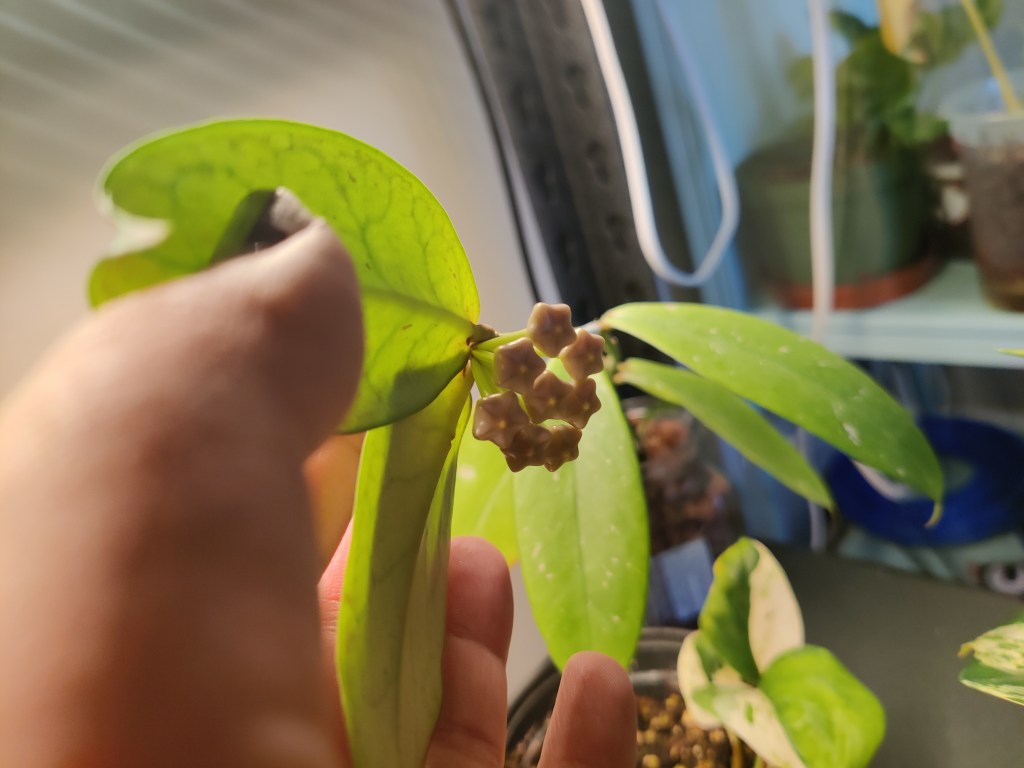
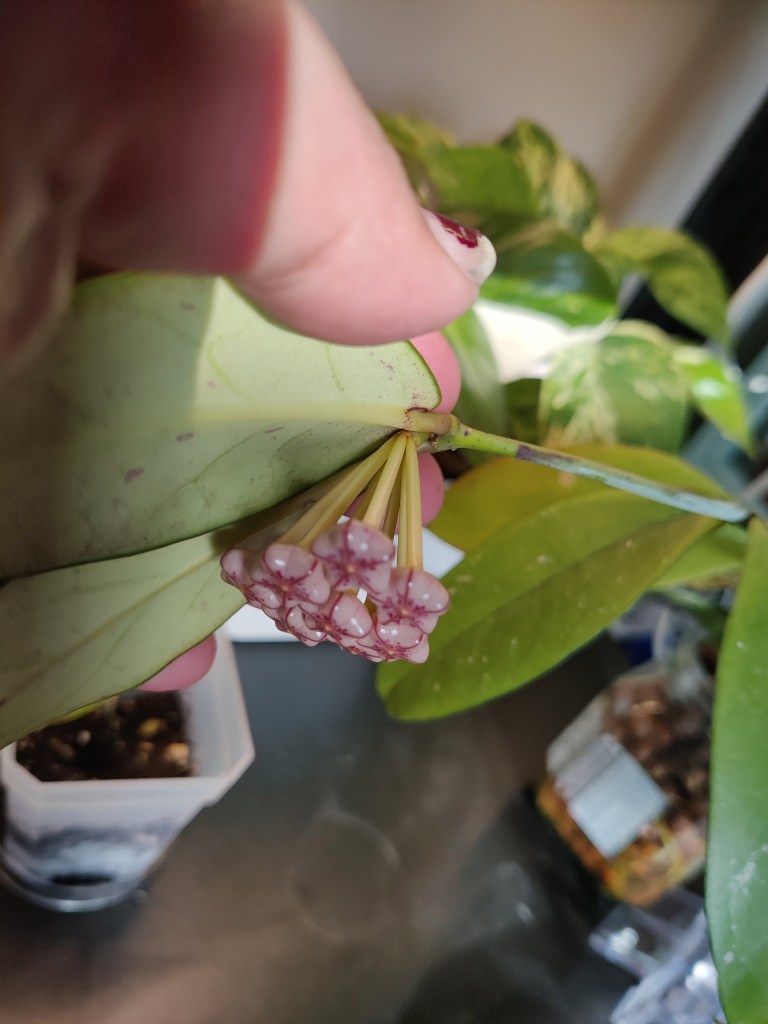
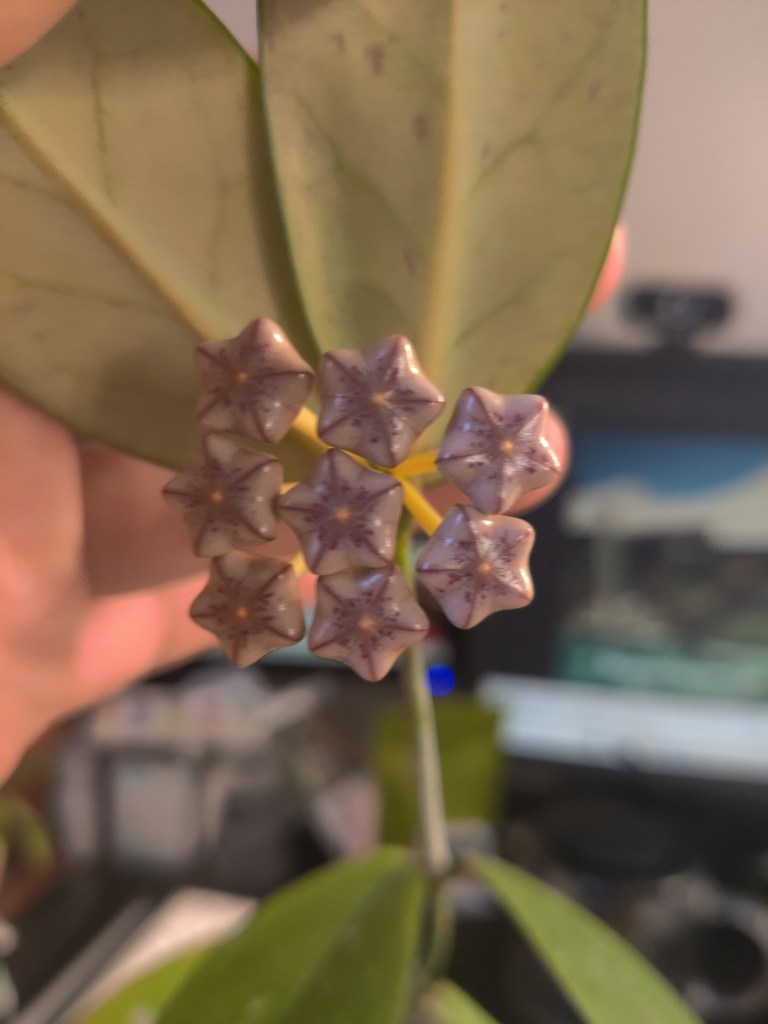
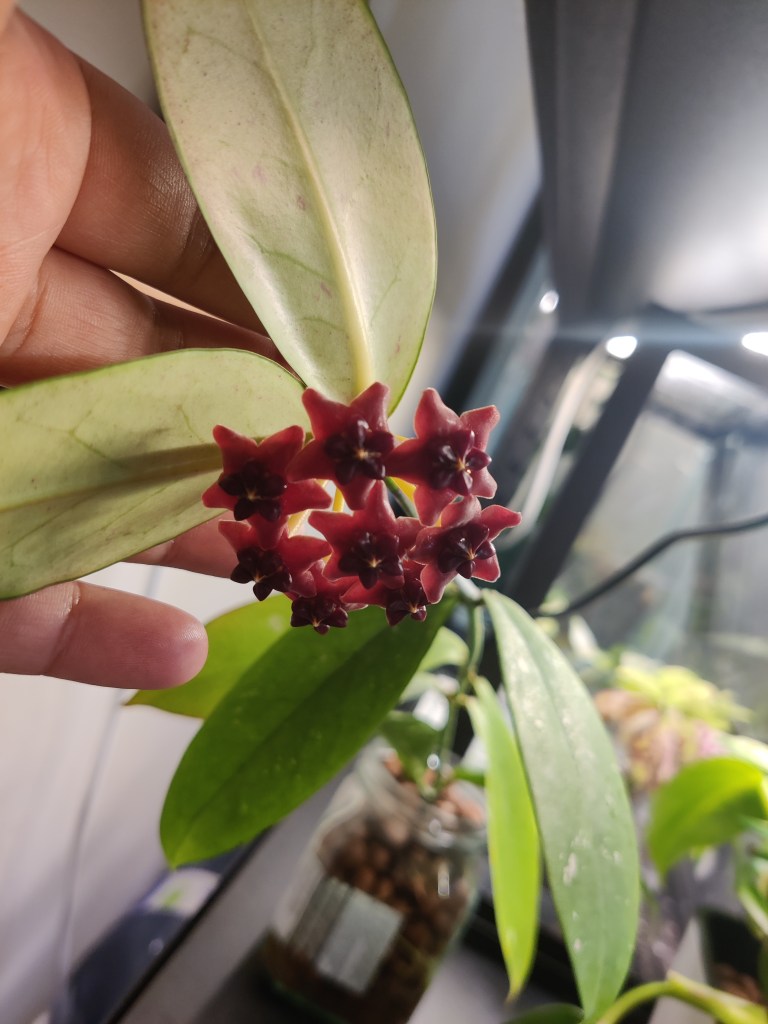
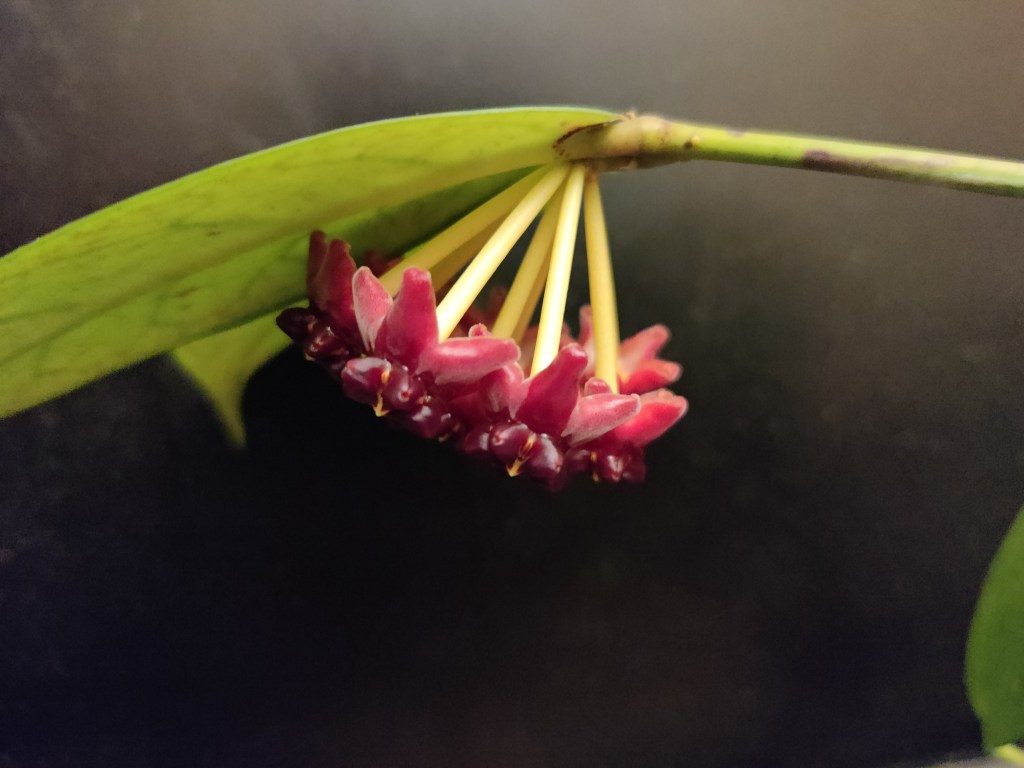
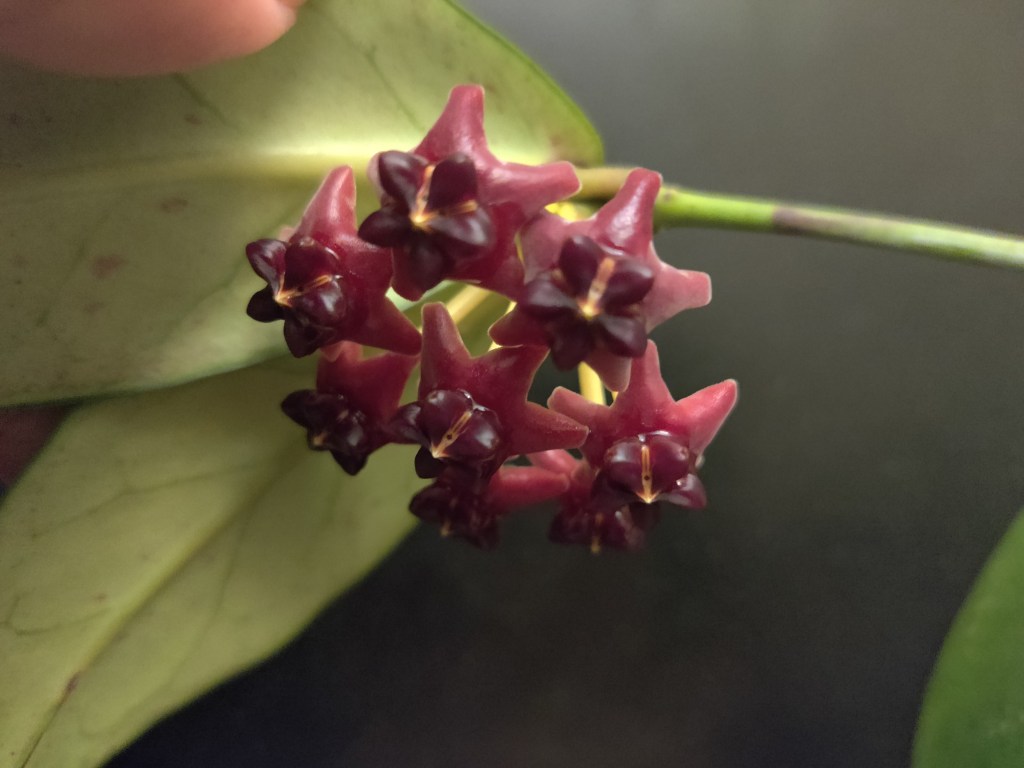
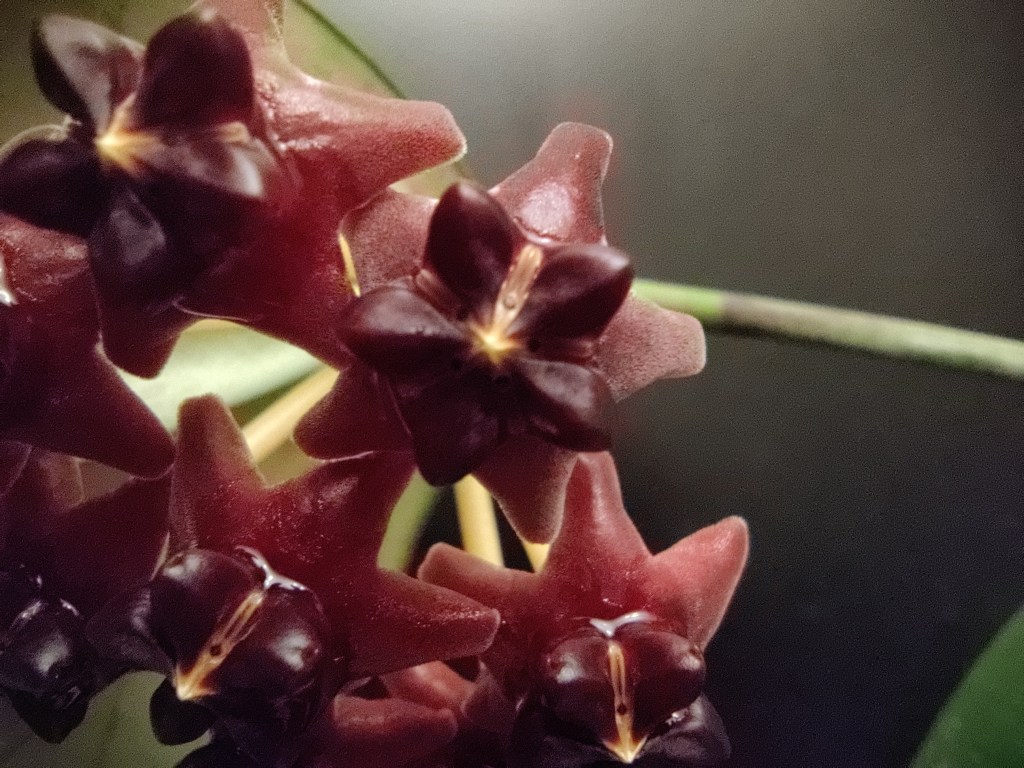
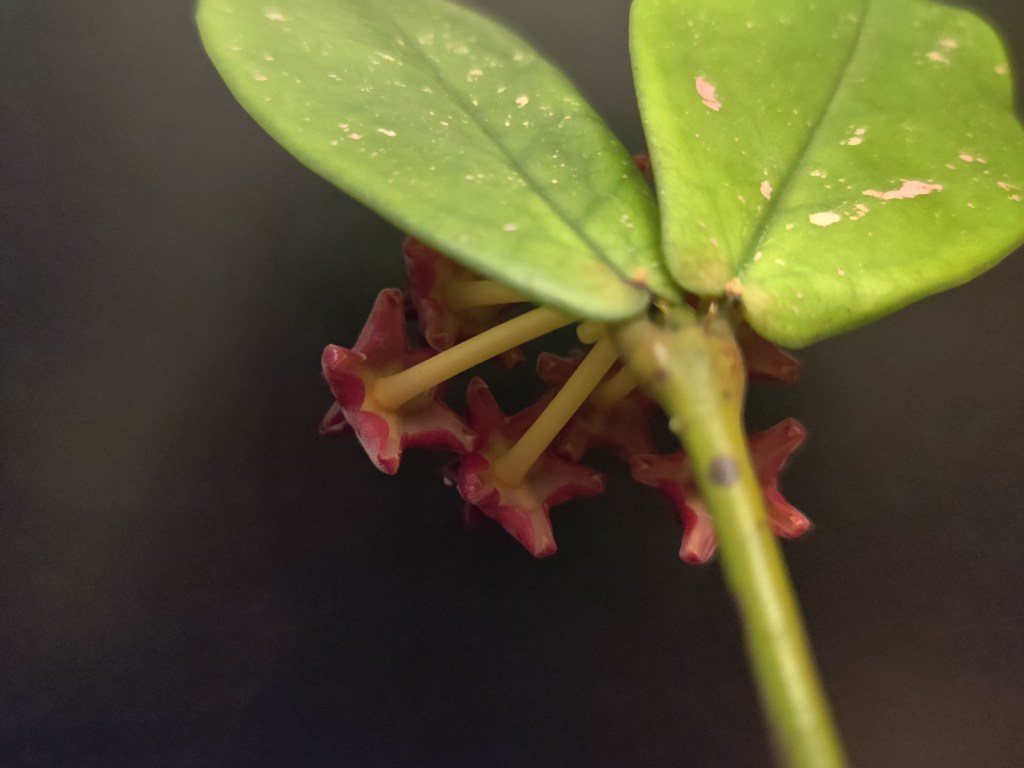
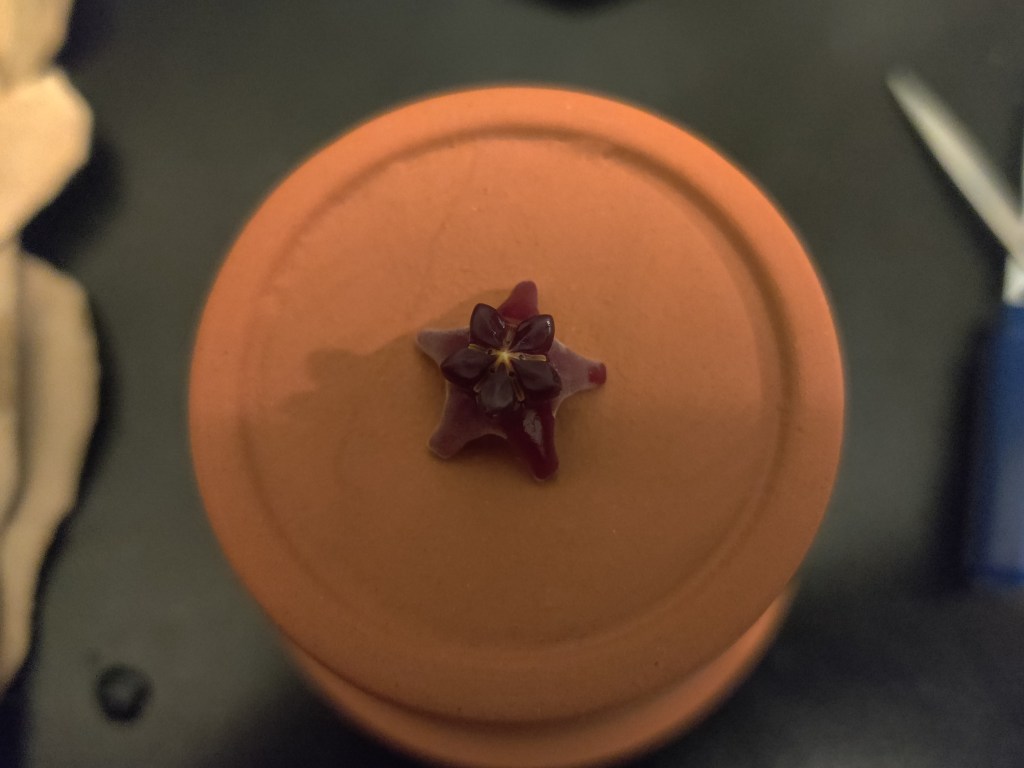
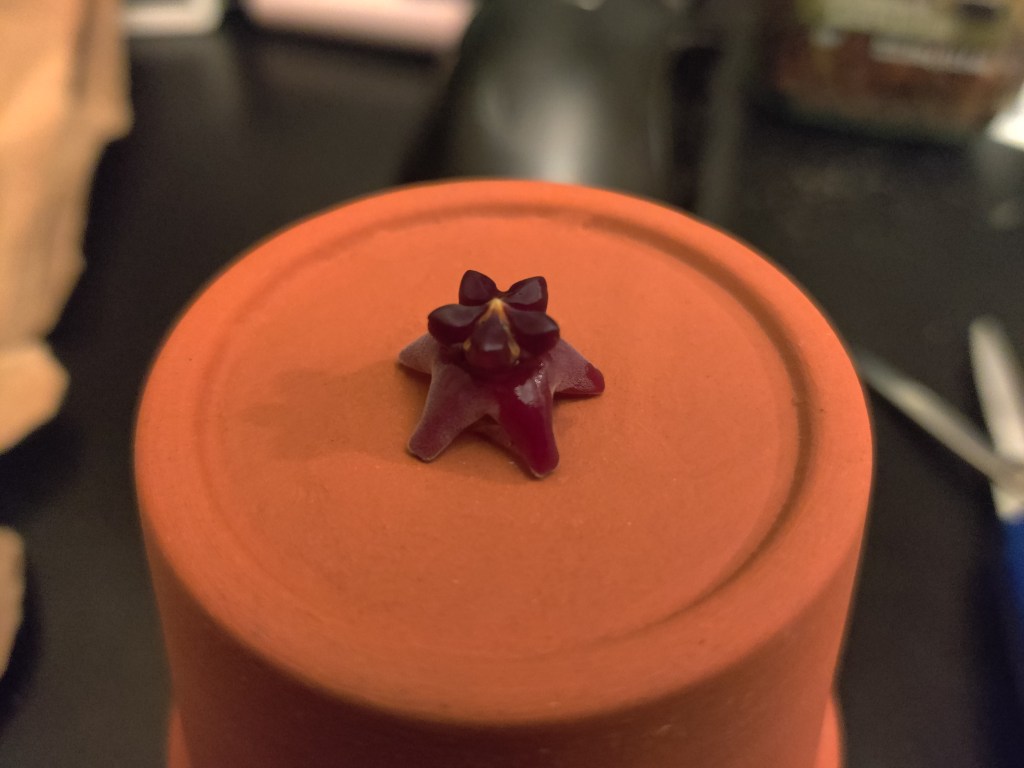
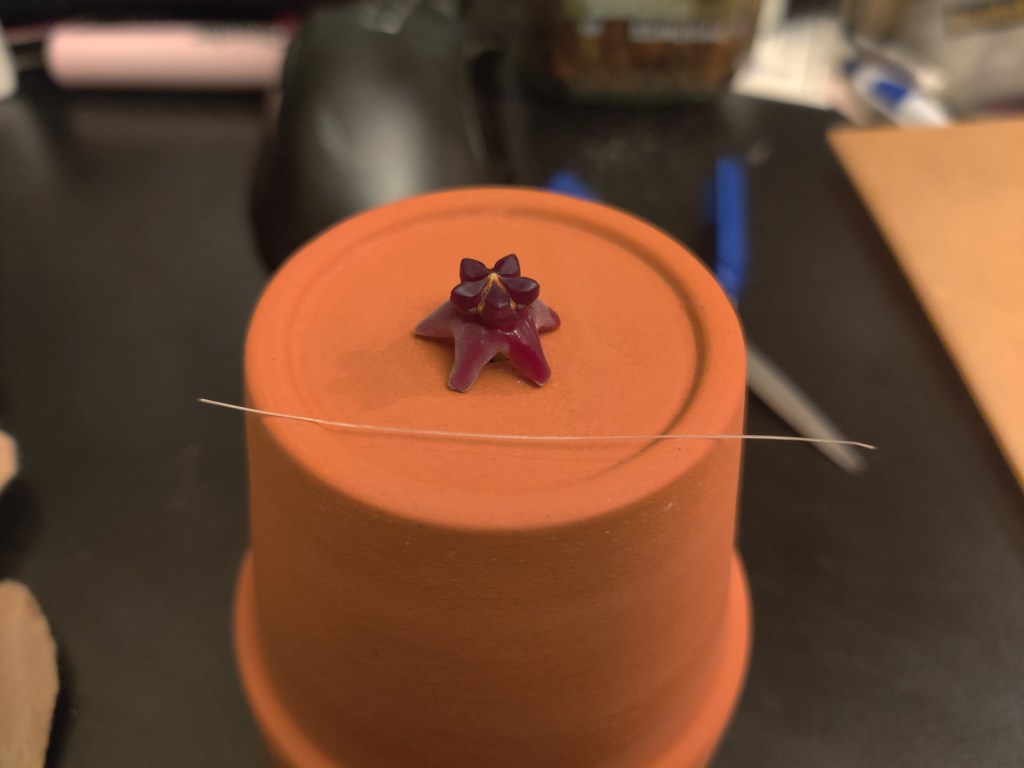
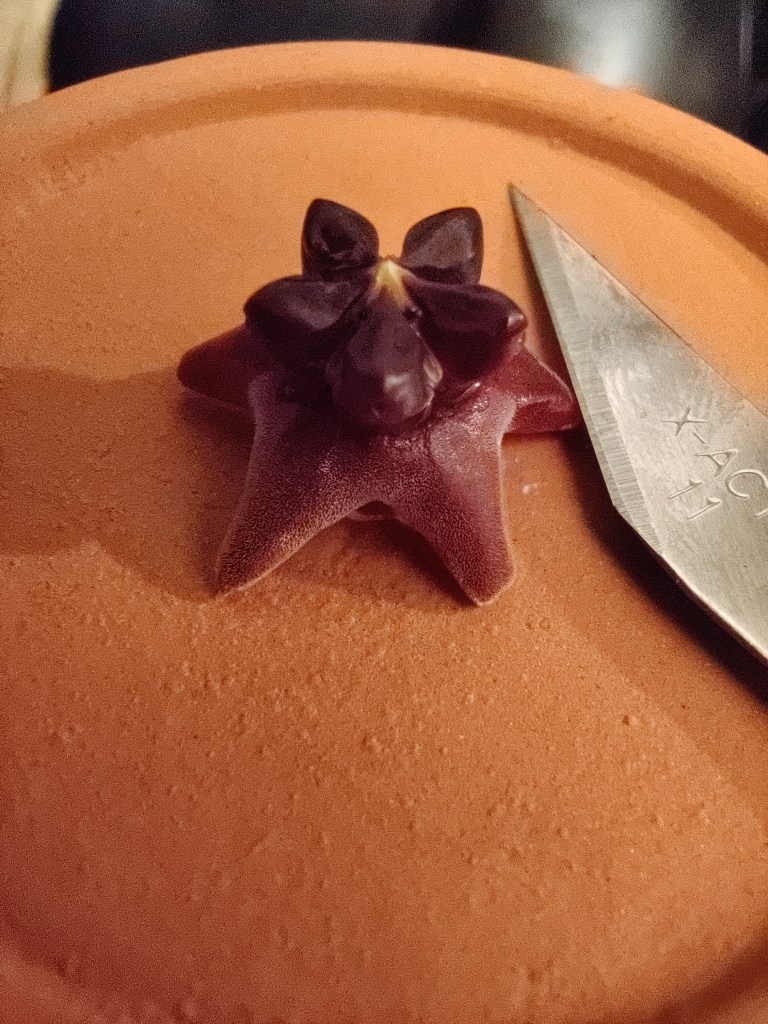
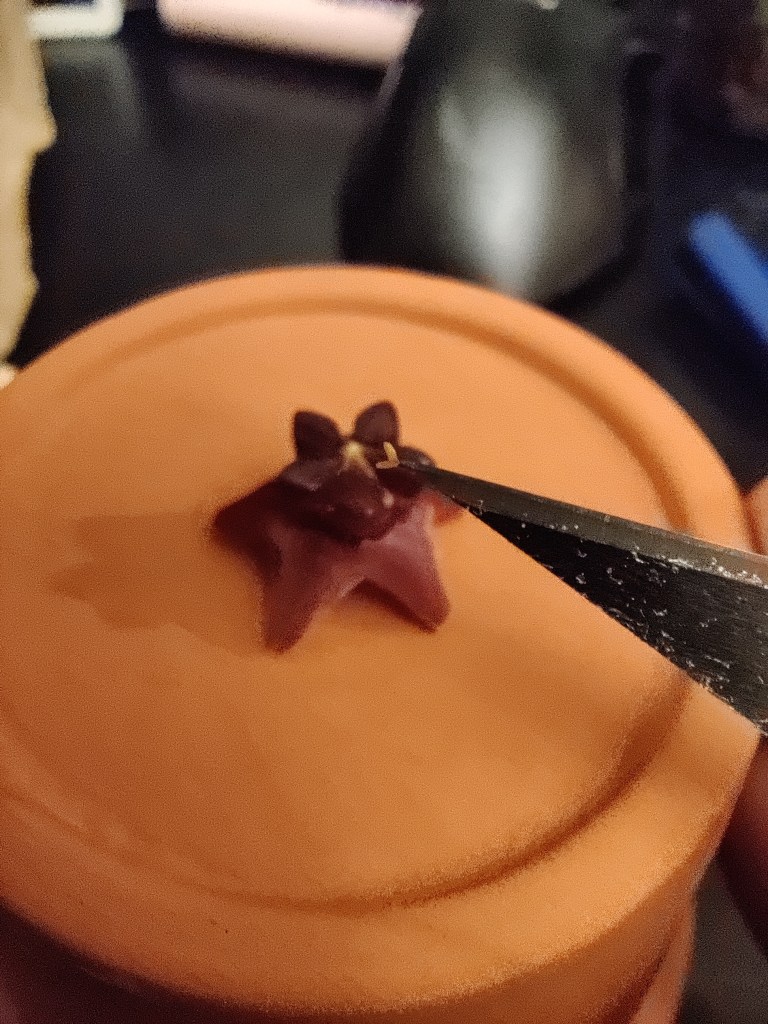
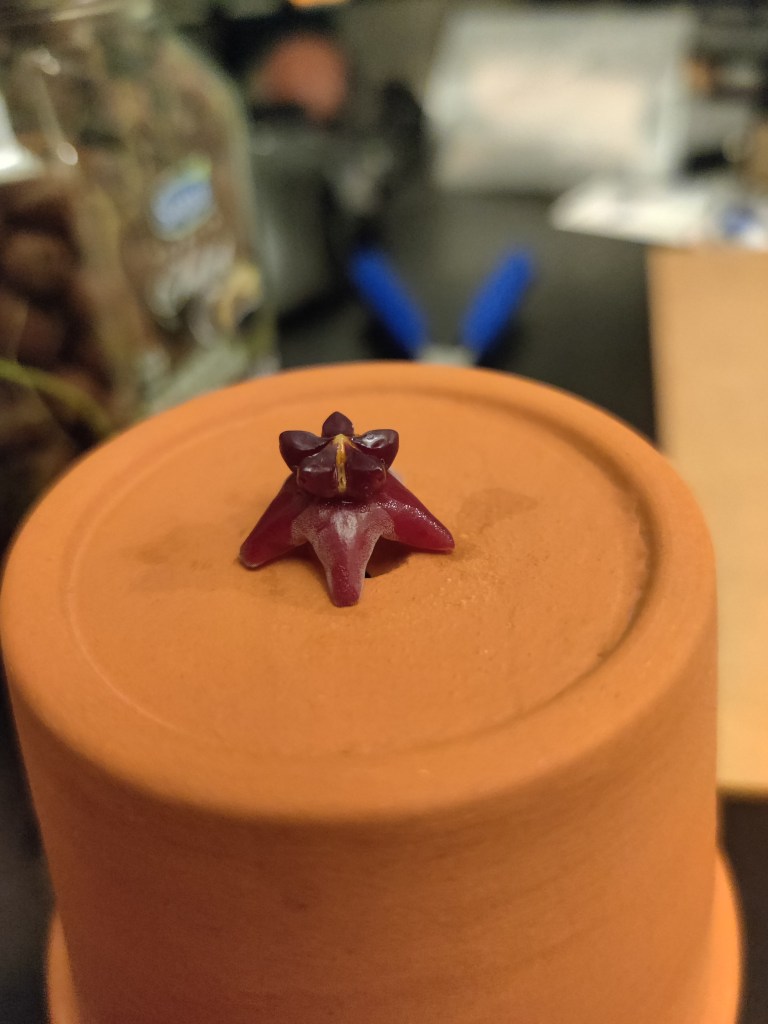
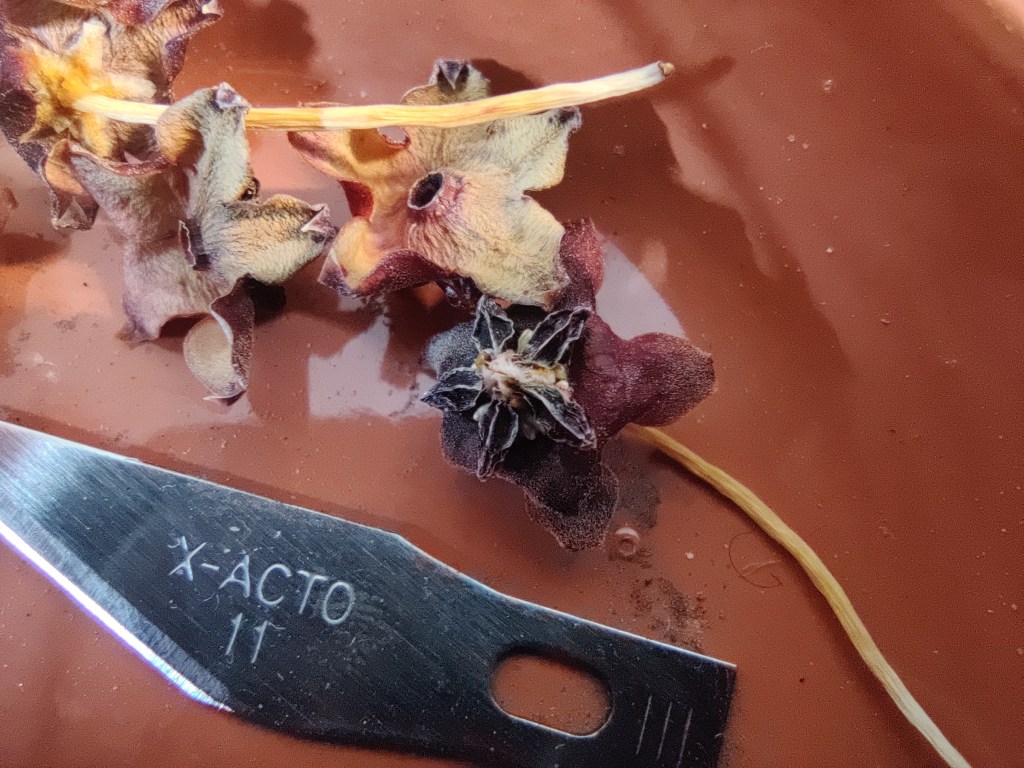
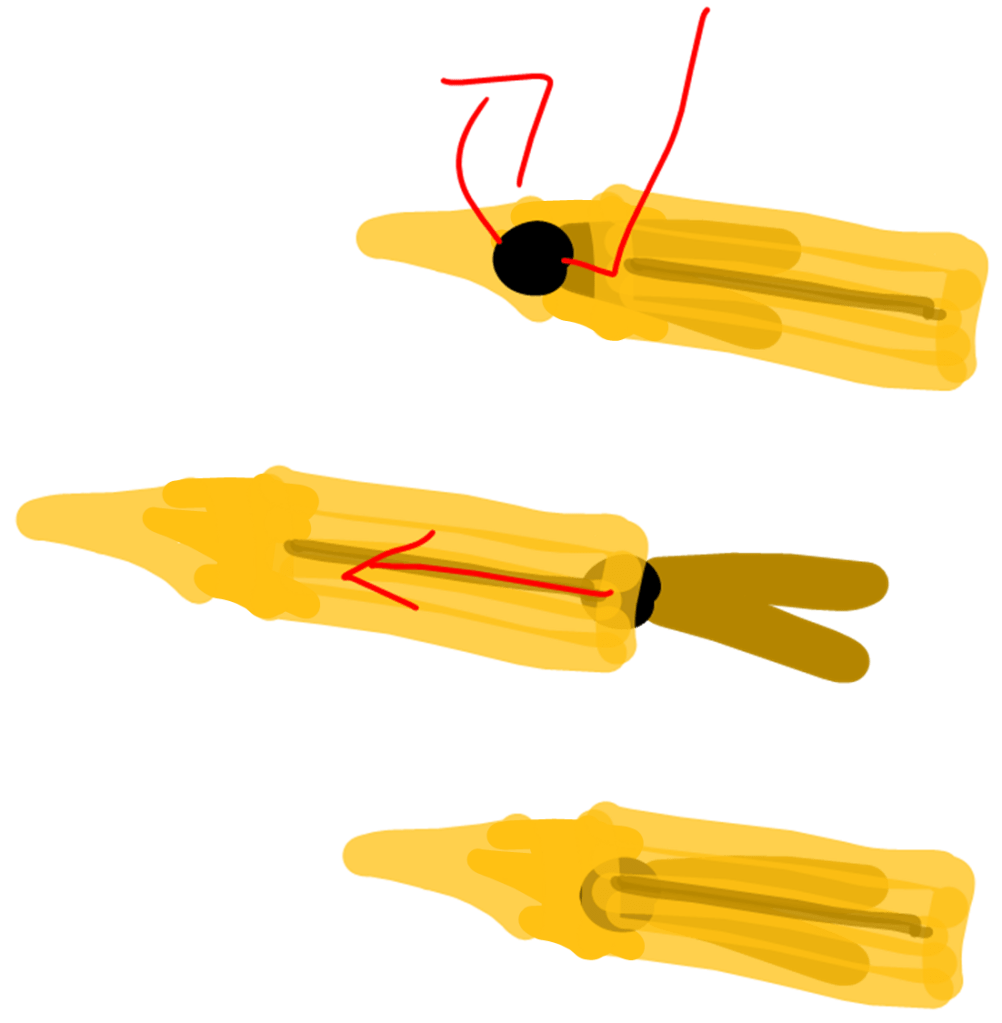
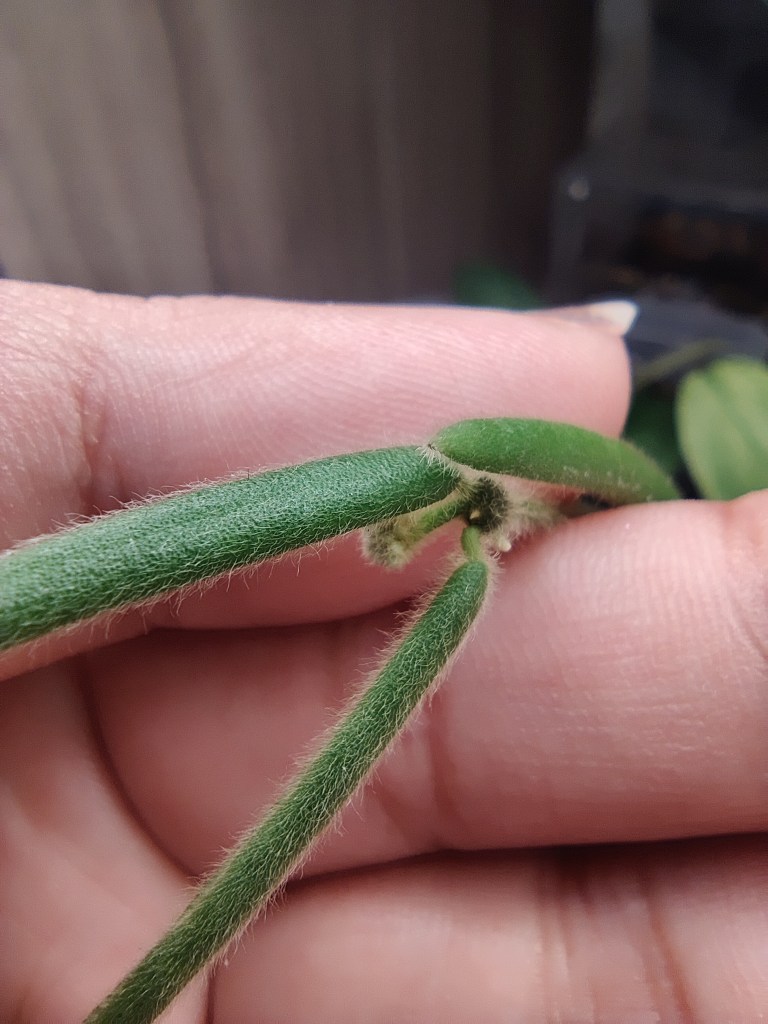
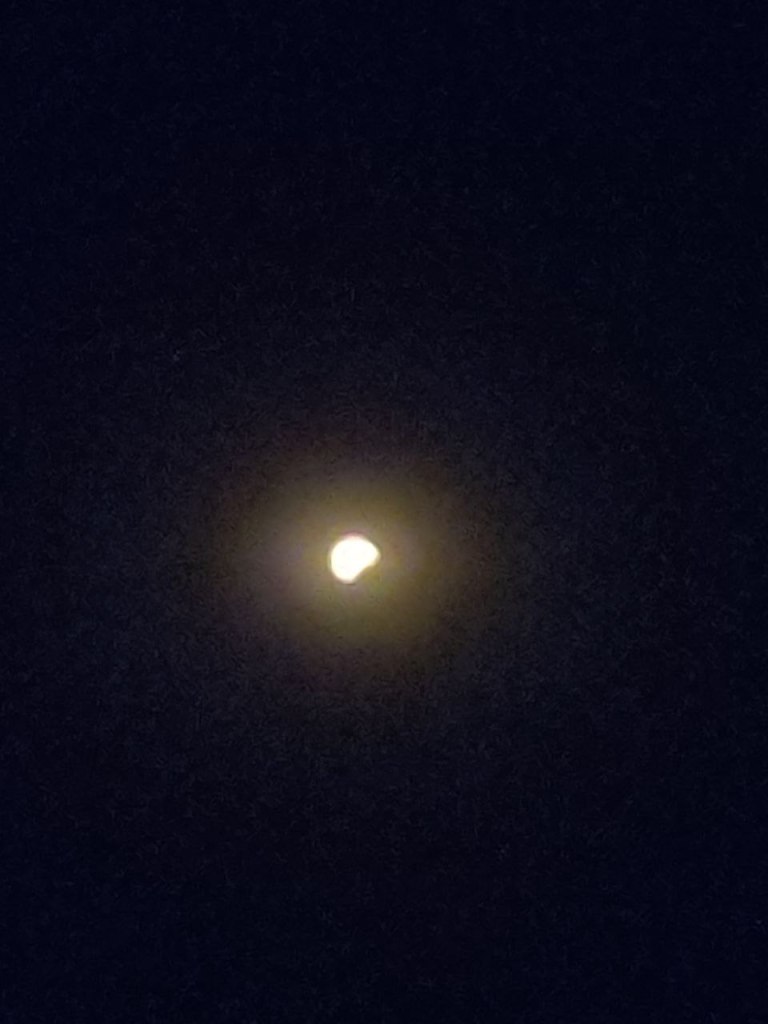
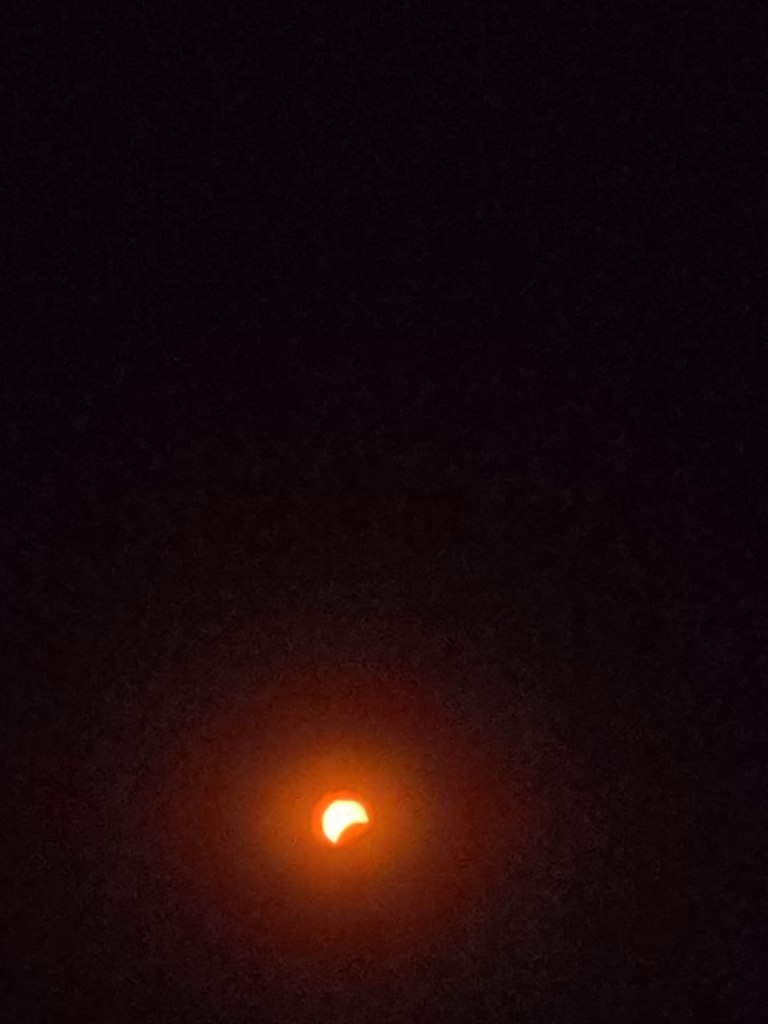
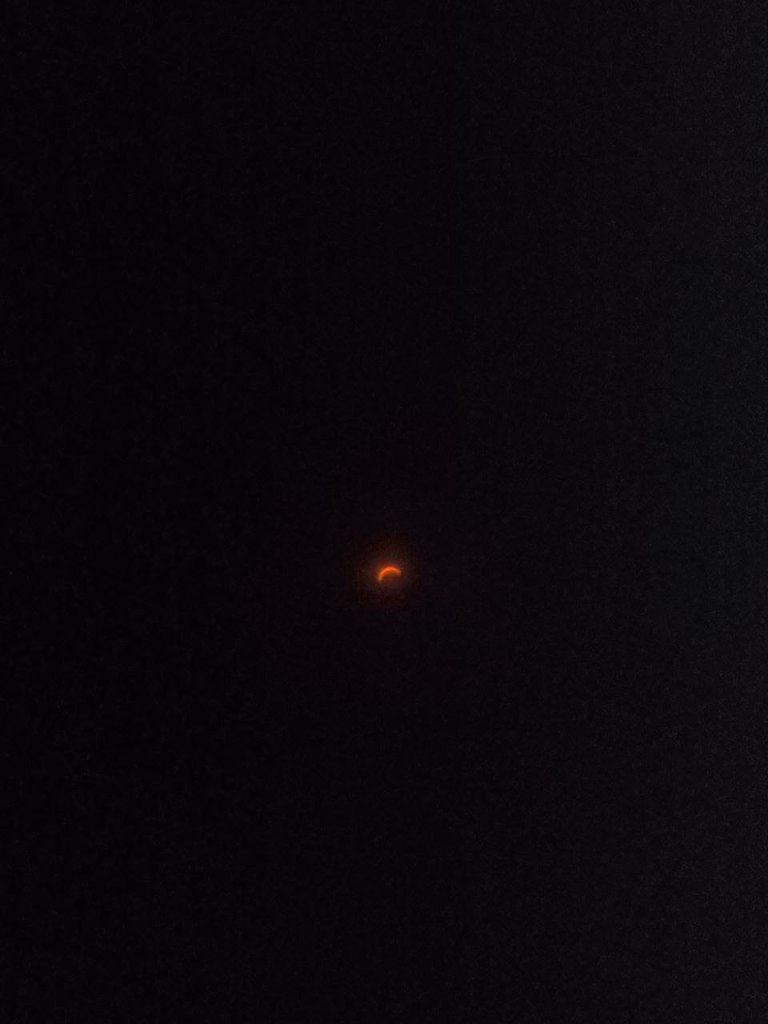
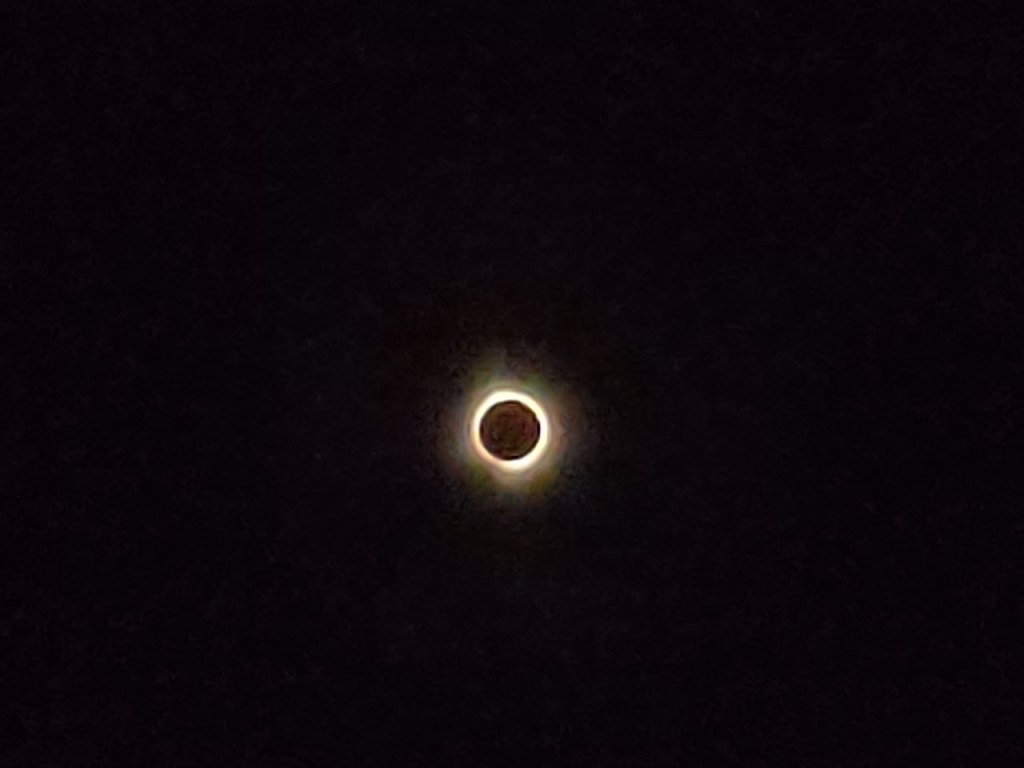
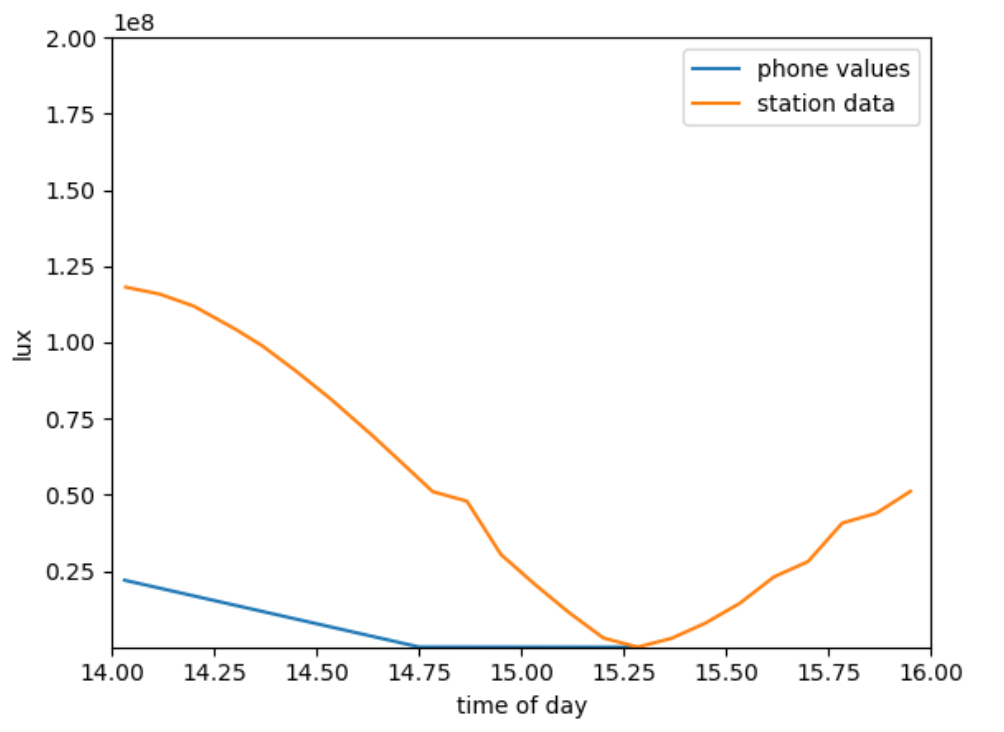
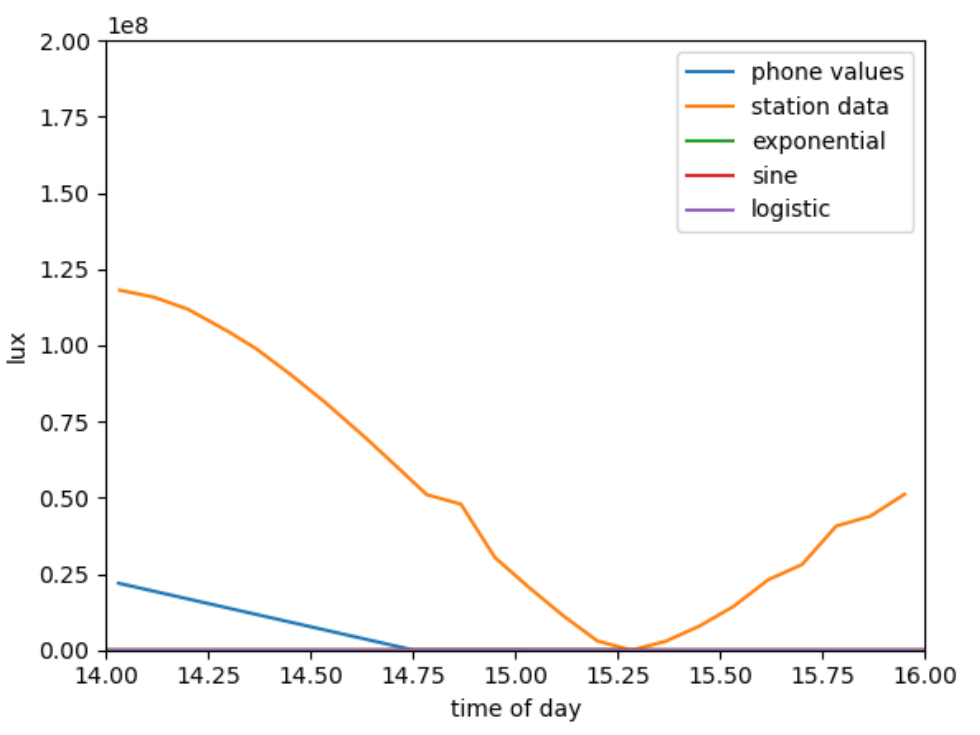
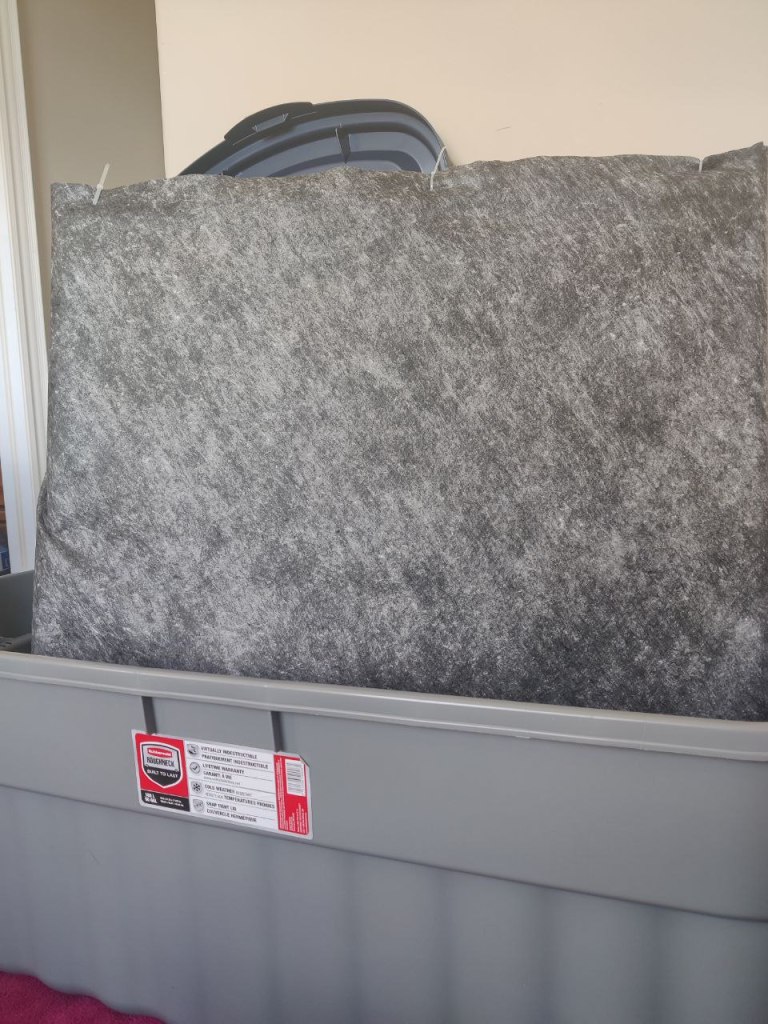
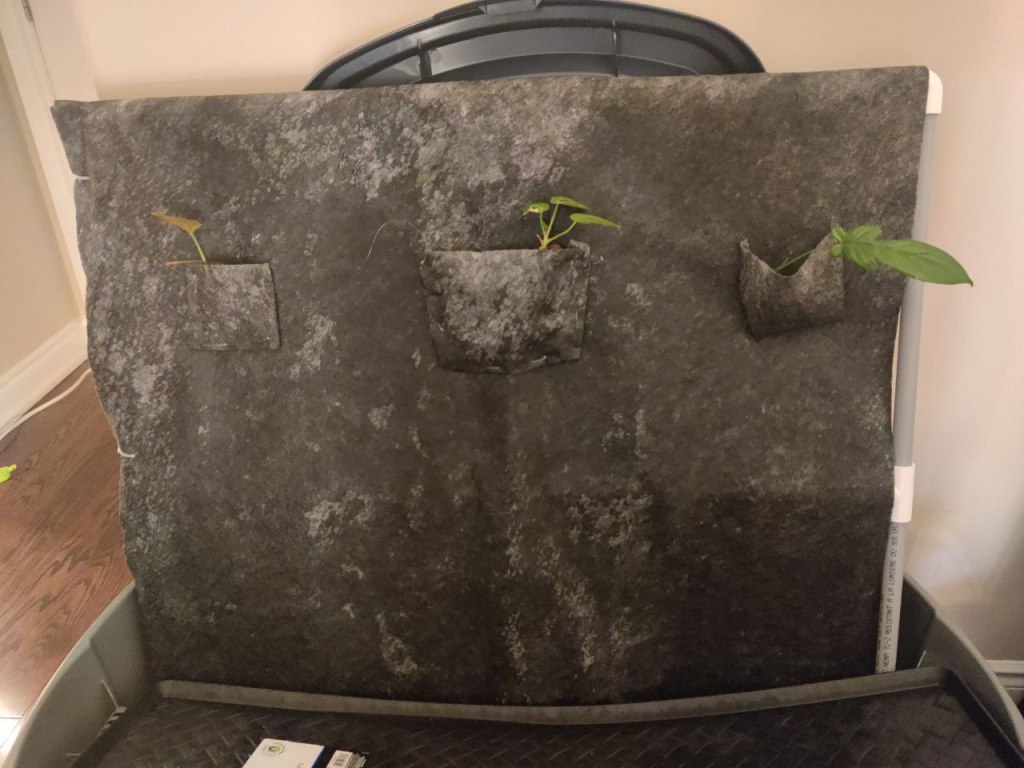
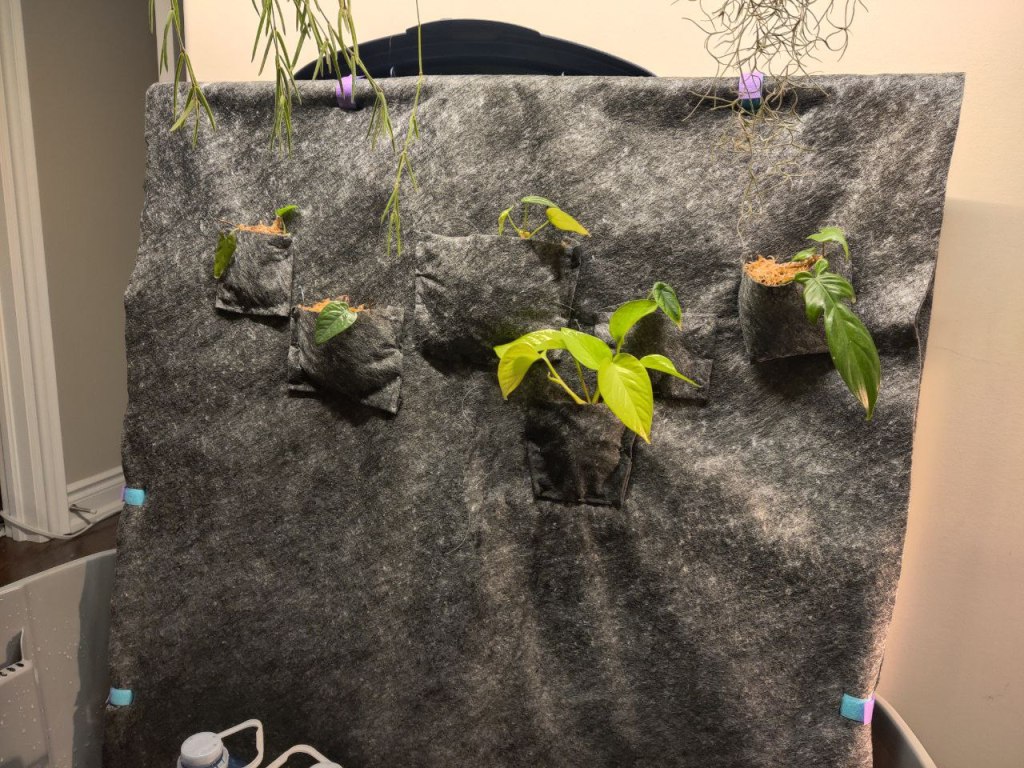
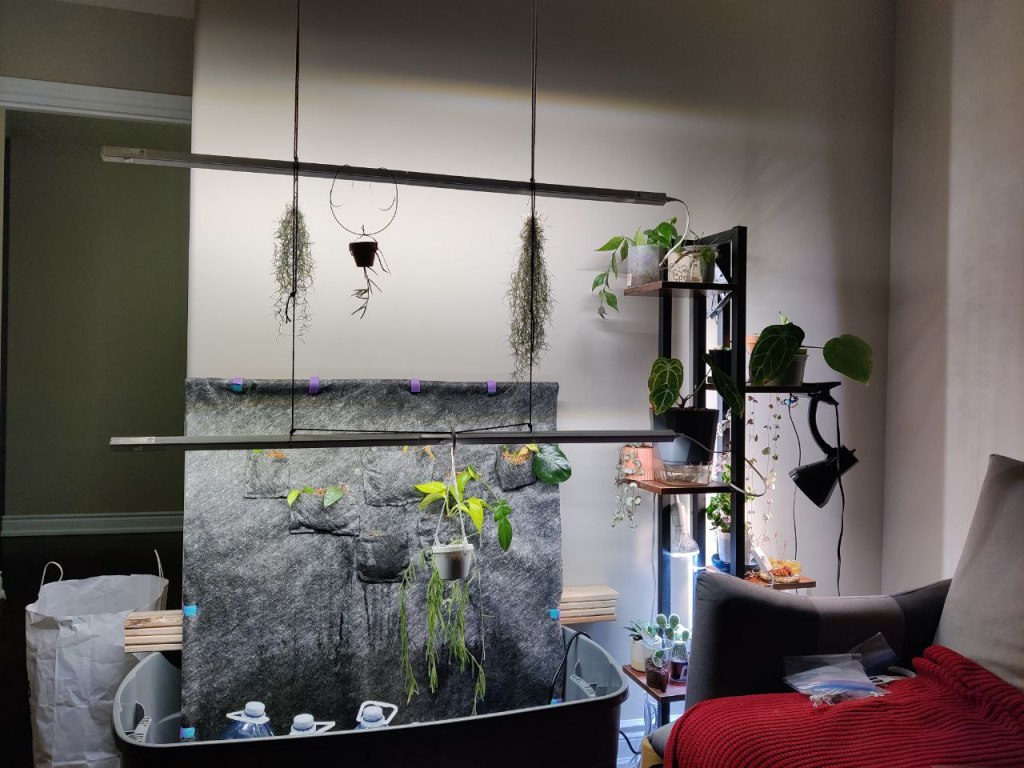
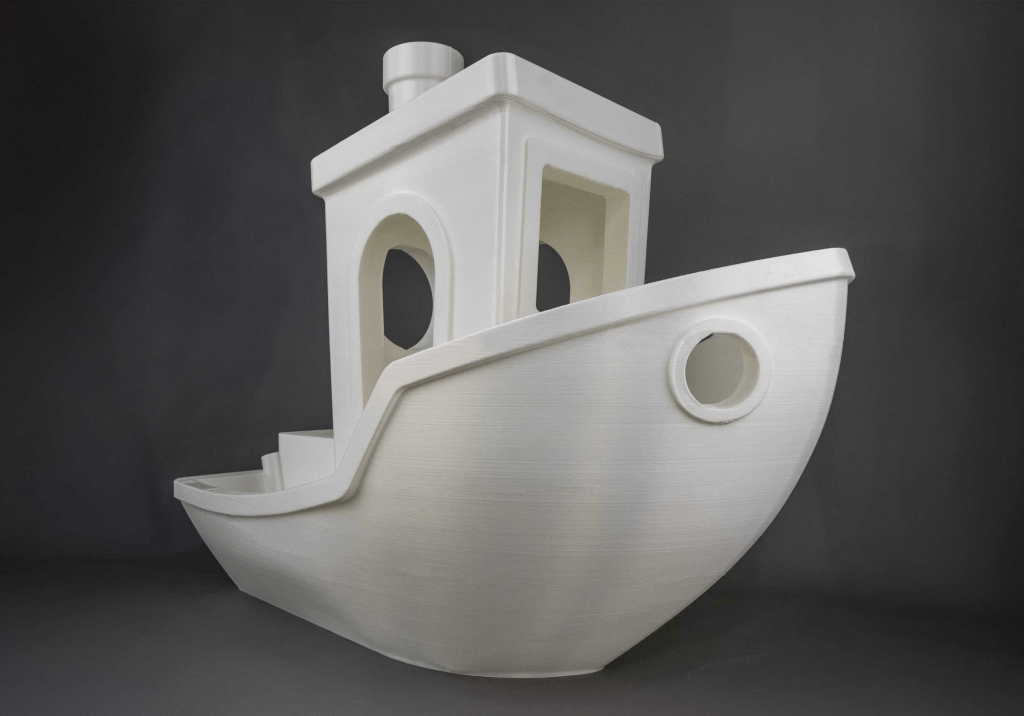
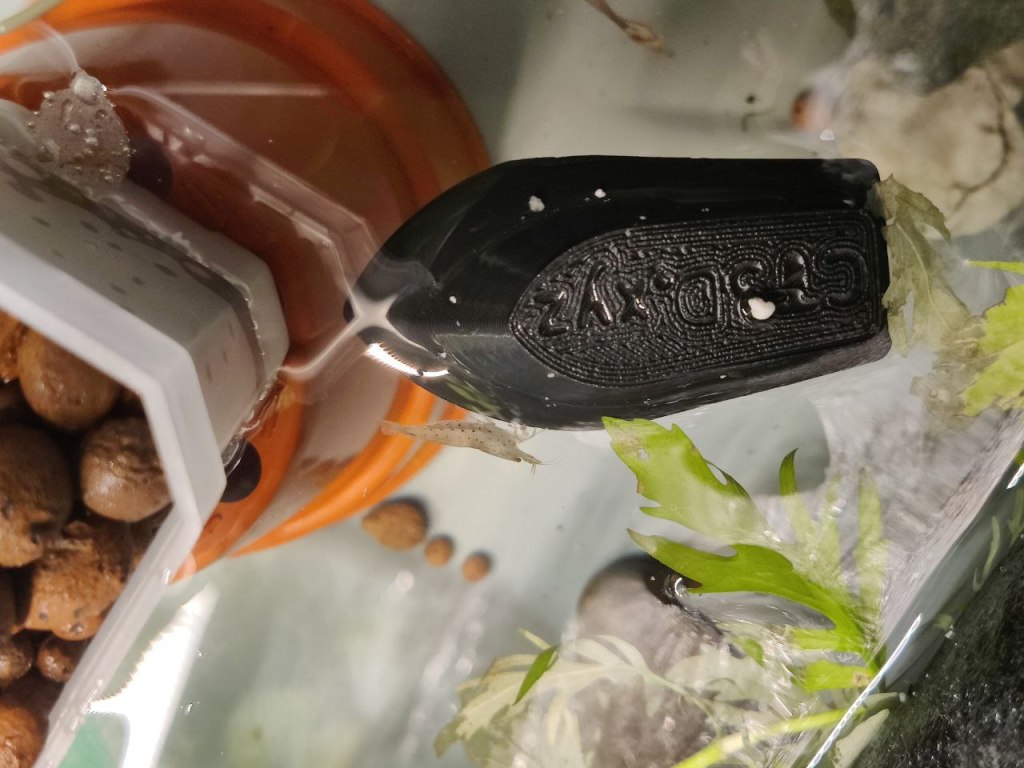
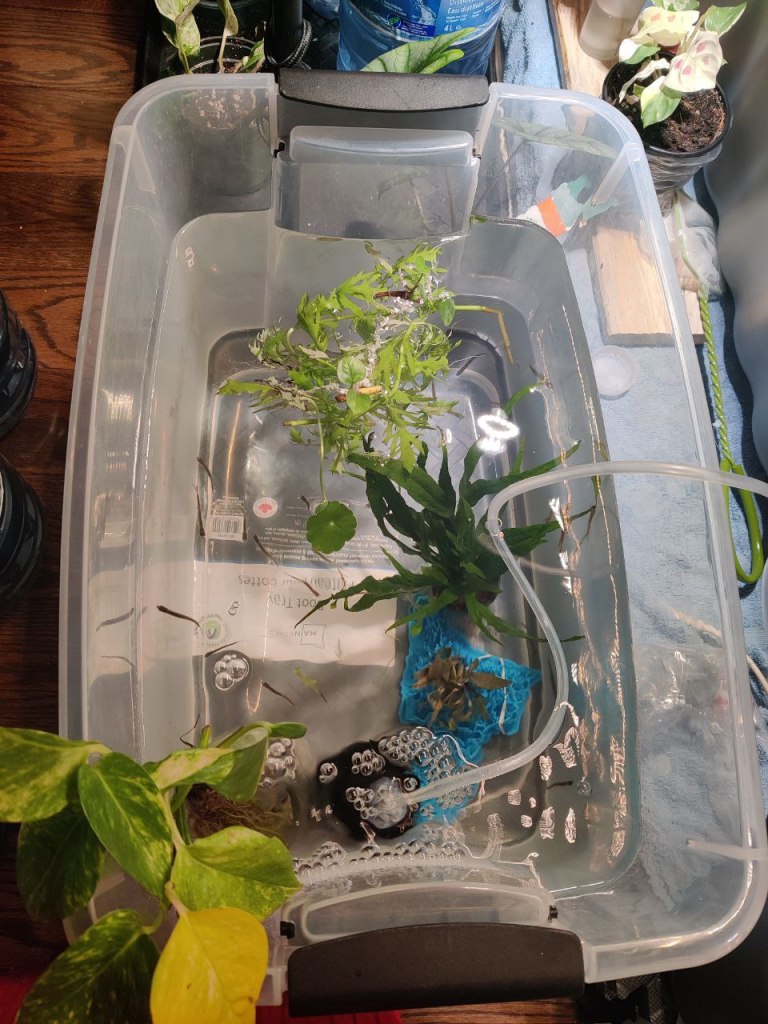
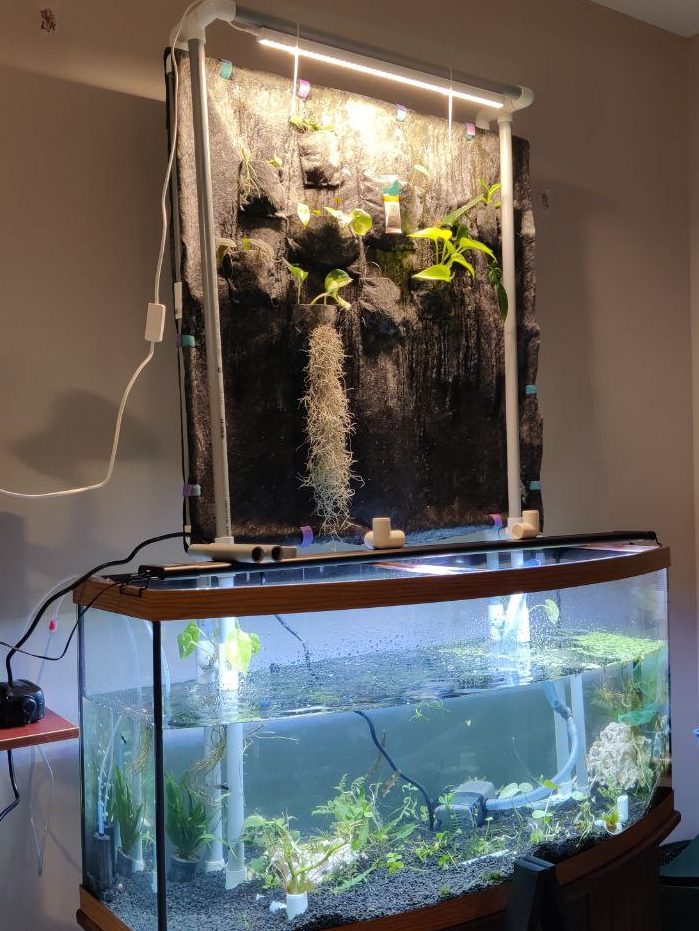
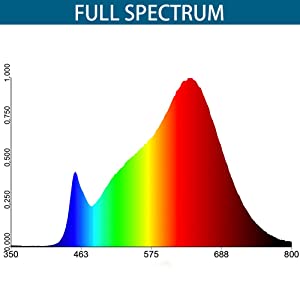
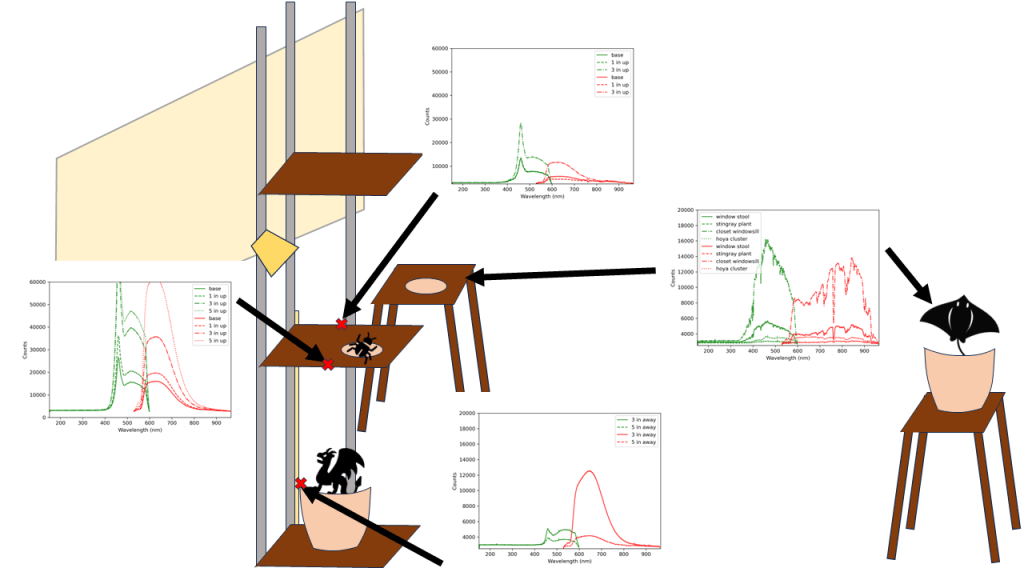
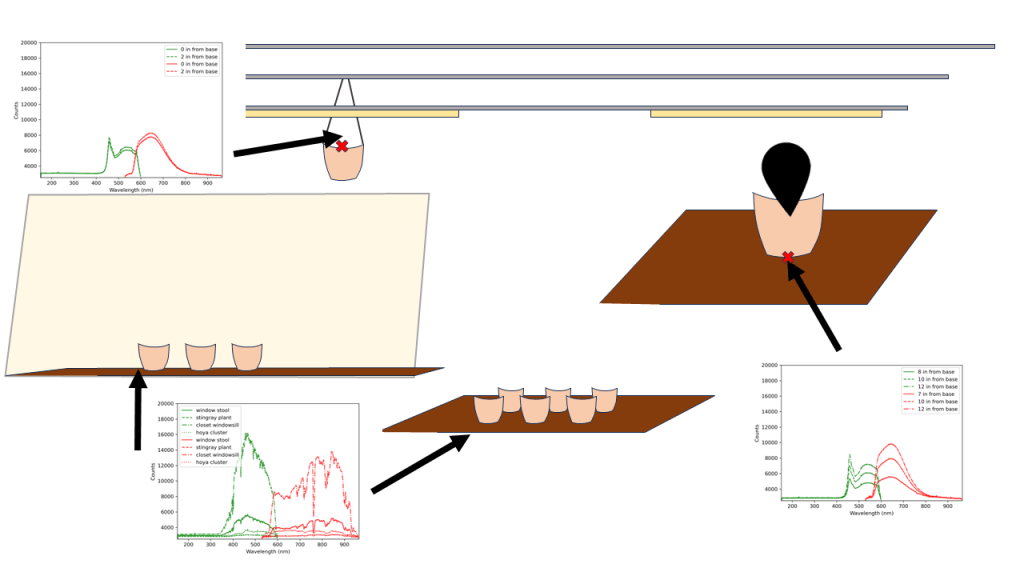



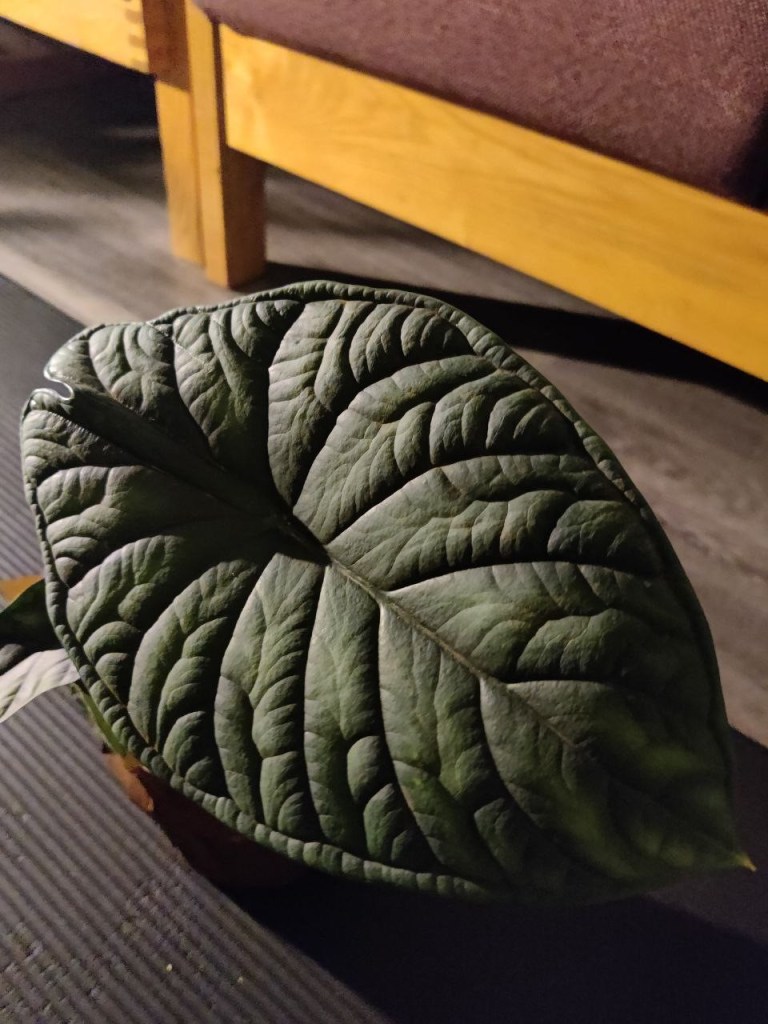
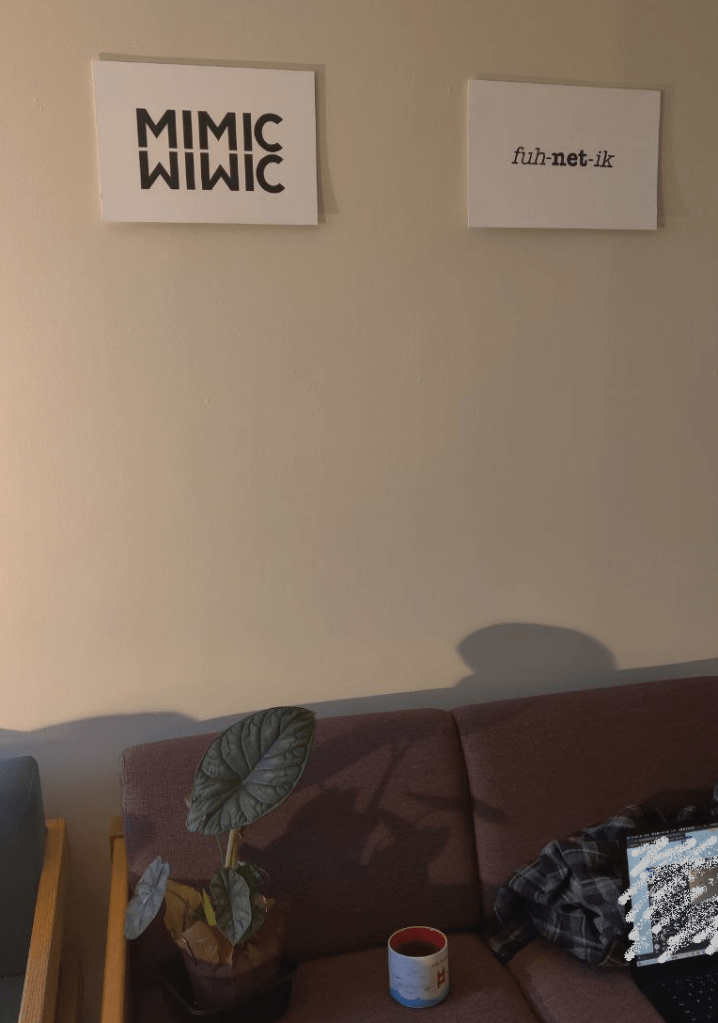

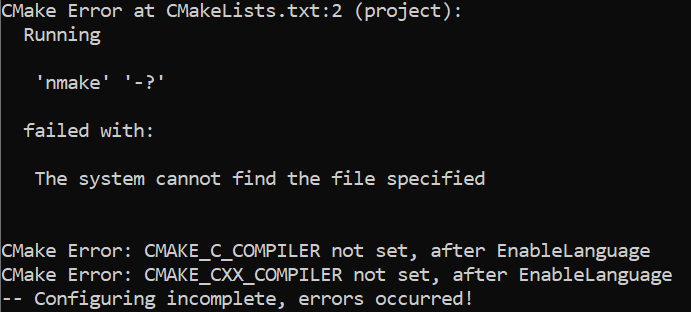
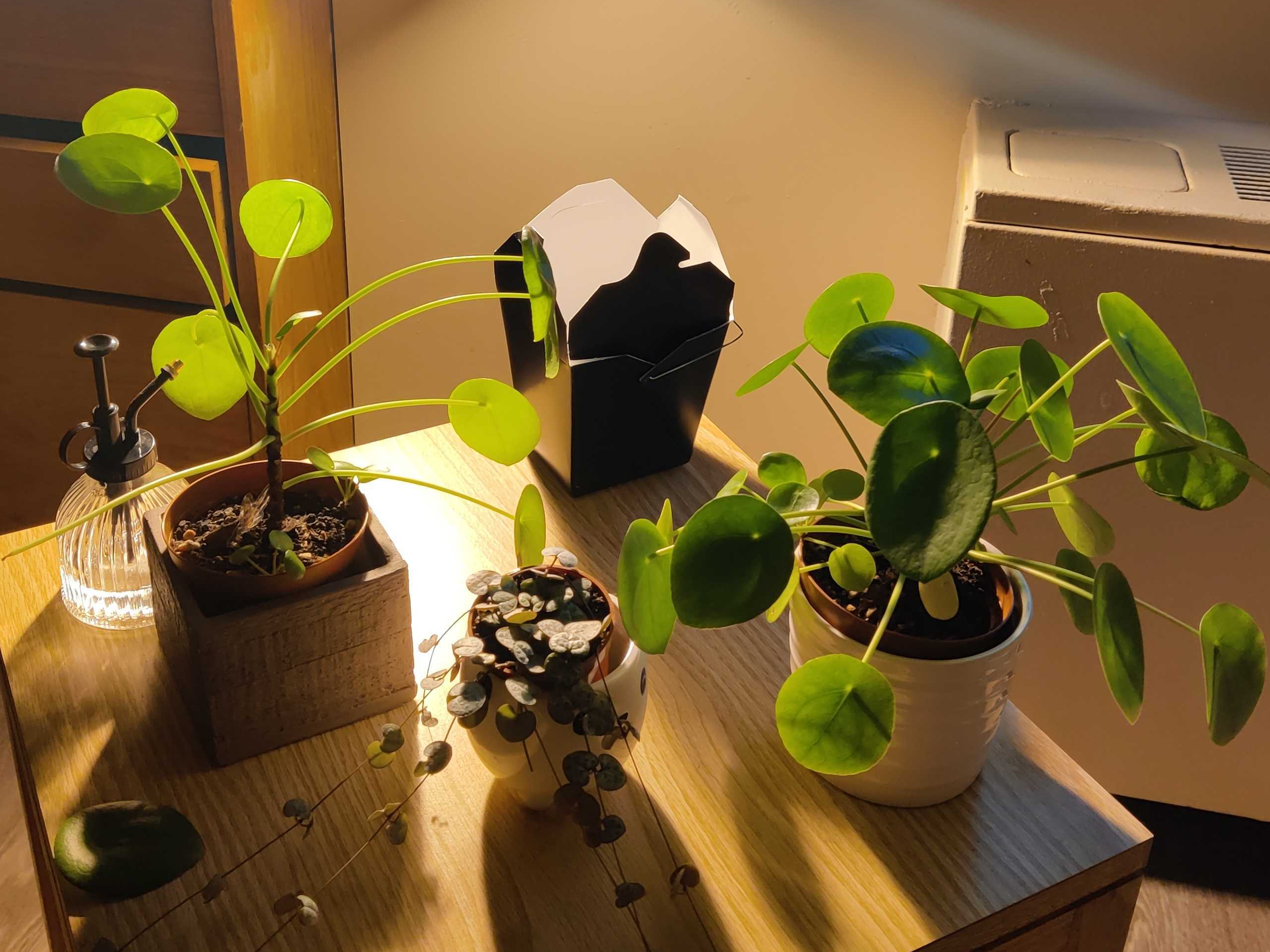
 Abstract ED
