September has been…a month. Conference! Travel! 15 meetings in a week! TA squabbles! Getting towed home for the first time! and wrapping it up with a good dose of houseplants and paper and proposal submissions.
We’ve been using the following format on a shared Google Slides document in the PVL group meetings for the past few months, and it’s been working quite well! It goes: list one accomplishment and one challenge you’ve experience since the last group meeting, and put down your goal to complete by next meeting. Most folks end up putting more than one item, and it functions as a quick status update for everyone. Occasionally we linger longer on certain slides to discuss a figure someone has chosen to represent their week, or we chime in to help out with the challenge or offer support for the goal. My list is rather long since it’s been a while.
Accomplishment(s):
finished putting together animated slides for a presentation I gave at EPSC-DPS! I think the audience enjoyed it
Met a potential postdoc supervisor or two (networking things)
conducted two health and safety inspections (and described 150+ photos as part of the recommendations)
Convinced people to help me with 3 separate Global Climate Models! Yay data!
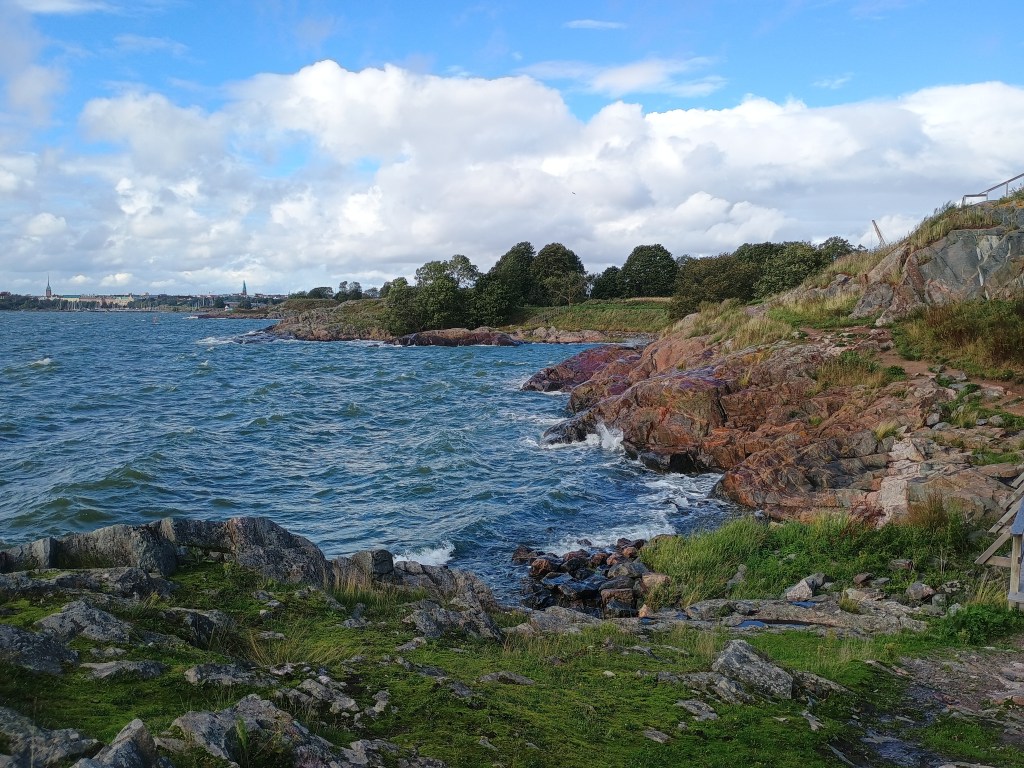
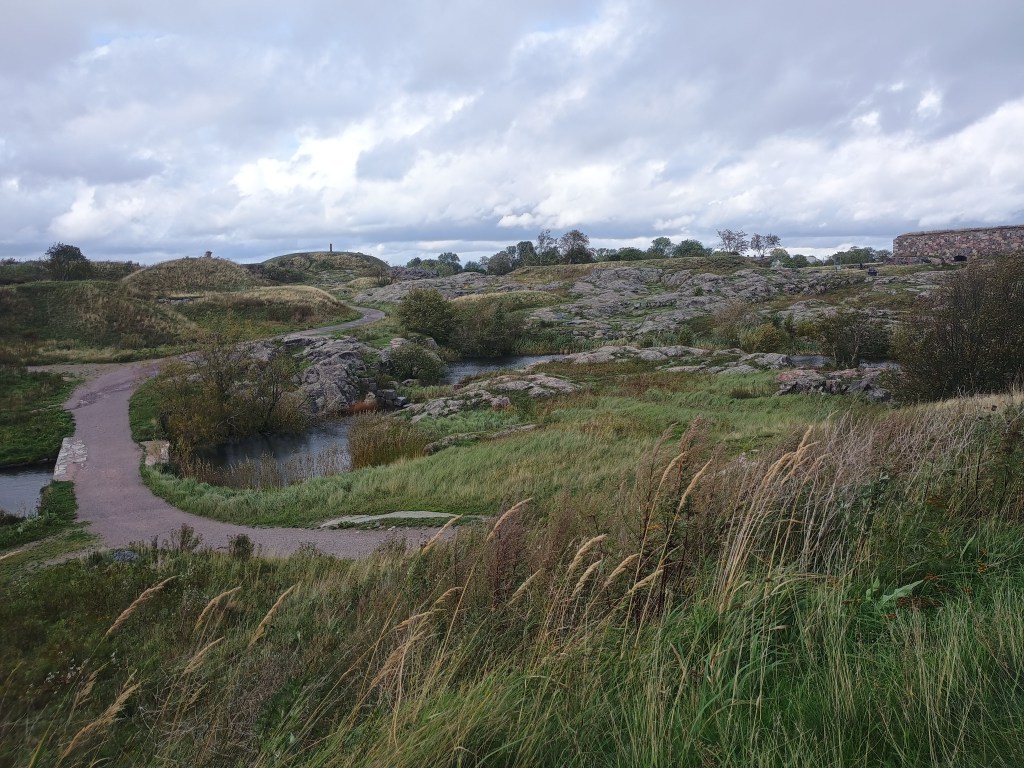
Stayed a few extra days to get to know Finland a little better, meet some friends, and trek around the country! Figures 1 and 2 highlight a couple of easily accessible landscapes
Figure 1. A photo of the southern side of Suomenlinna, the Fortress Island a 15 minute ferry ride south of a Helsinki port. This island has seen three different sets of wartime preparations. The southern coast has numerous cannons, a King’s Gate, and really slippery rocks! Towards the north it looks more like a park. Figure 2. Slightly more inland photo of Suomenlinna. Here you can see the smoothed out rocky features that likely experienced glaciers moving over them. You can also see how different the weather was! Finnish clouds move fast, though we were told this year was abnormally humid at this time of year.
Challenge(s):
Time. It’s always time. I managed to schedule 3 weeks worth of meetings into one week on my return. Ouch.
I might also be feeling a little bit sick!
Goal(s):
Clean up my inbox. There are at least 10 emails I should really get around to responding!
Send in three papery things. A revised manuscript (done!), a fellowship application, and a travel grant. Maybe another fellowship application if time permits
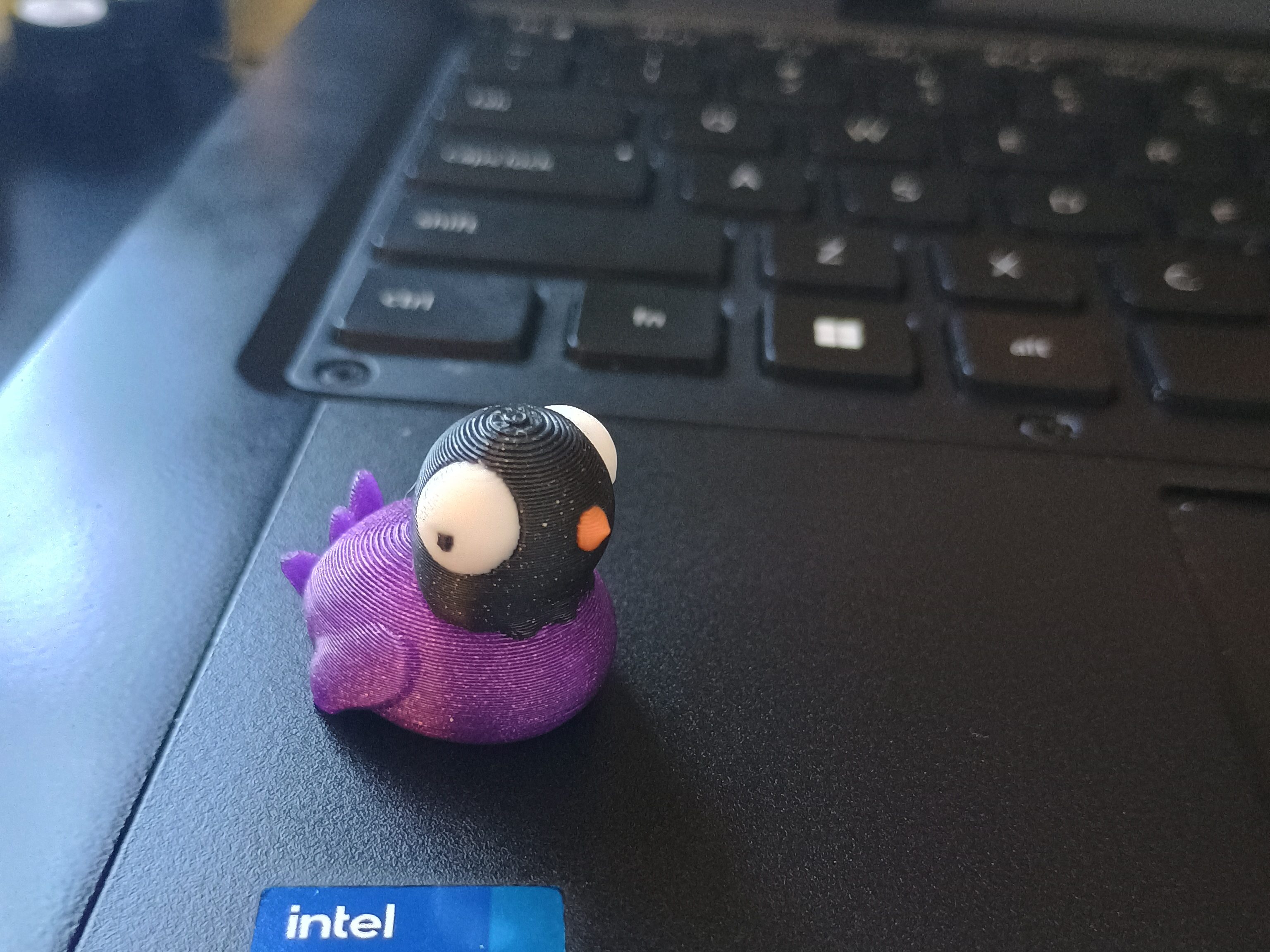
Upload my code already. Xml the pidgeon has thoughts (Fig. 3)
Figure 3. Xml! The judgey pidgeon from the PDS looking at you for not formatting to standard.
Normally I’d be all like, I need to take the weekend and do more work! Squeeze in some extra hours! When I’ve done this in the past, what it really means is I lounge about and feel guilty about not typing away. This time around, I had a few scheduled social events already in my calendar and I simply didn’t have the time to do too much weekend work because I was busy sleeping to have energy to do social things!
Looking Forward into October
Things have relaxed a bit since the hectic go go go upon my immediate return. I’ve pushed back my optimistic (and slightly unrealistic) goal of defending my dissertation super early since all the postdoc positions I’m applying to have a tentative start date in September 2026. Sleep has been caught up on. And I’ve received some excellent feedback on the structure and delivery of some of the proposals and statements I was working on. I did commit to several boardgame and table top RPG sessions this month, so we’ll see if packing in social events bites me in the butt in October.
Personal Updates
Accomplishment(s):
plants are growing! Here’s a list of highlights on blooms
Hoya linearis – these peduncles have been around for months. Will they ever expand? Only time will tell
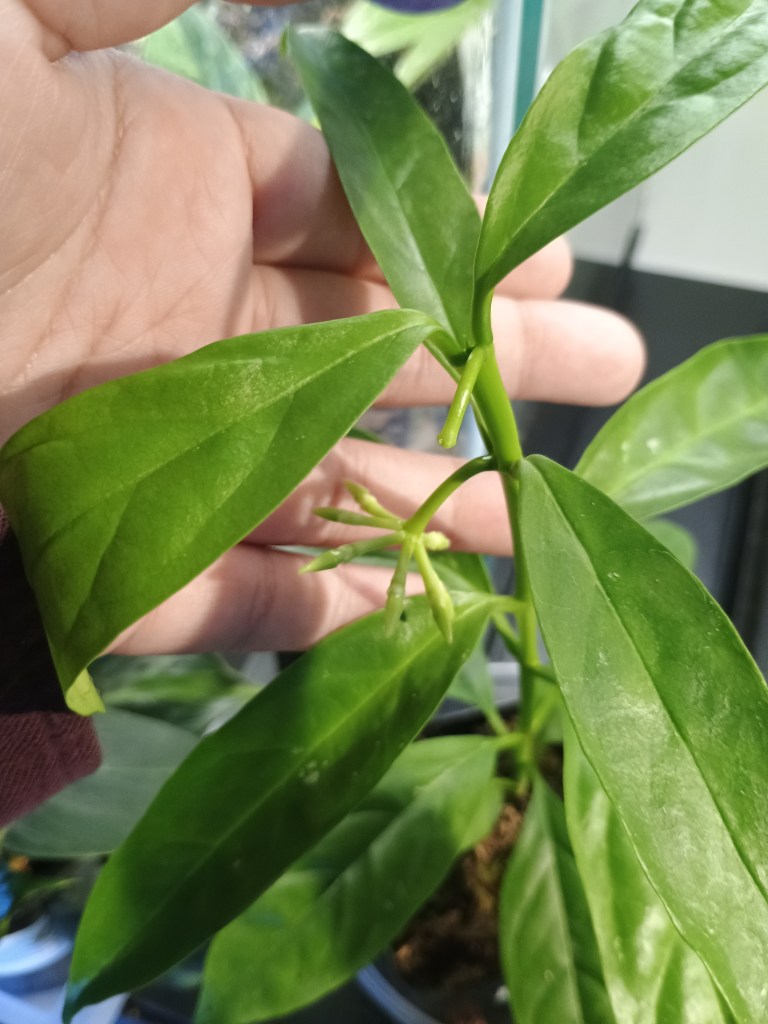
Hoya decipulae – I bought this plant for the blooms, and it looks like I might have two soon! (Fig. 4)
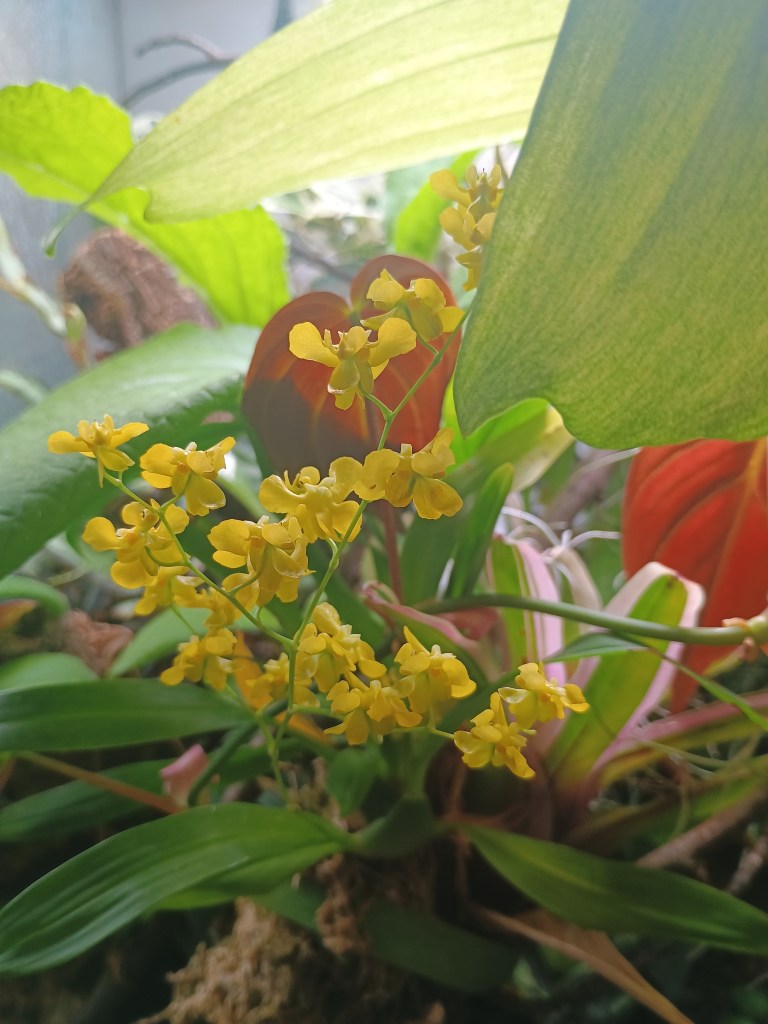
Oncidium cheirophorum- already in bloom, I caught these opening up right before I left the country, so the first stalk has been around for just under a month and the blossoms are starting to dry up. These smell… for lack of better words, clean floral. There’s a faint herbaceousness to it, and damp, but that could be the terrarium it lives in. Figure 5 shows the blooms on the day I got back!
90% unpacked from the previous trip
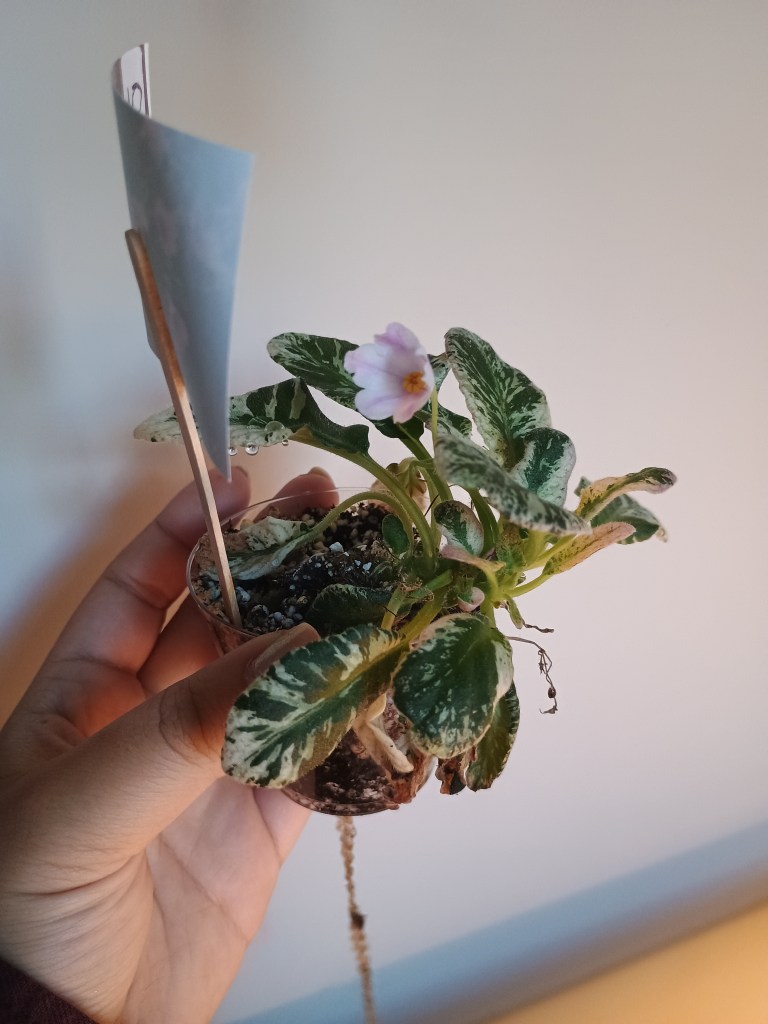
successfully purchased things at the african violet show for a remote friend! Example in Figure 6 of a plant we’re going to split
Figure 4. Hoya decipulae peduncle and flowers on the way! They’re supposed to look like eggbeaters…Figure 5. Oncidium cheirophorum. I bought this in bloom last year as a gift, took a small setion as a backup, and here we are today! It lives in a terrarium mounted in dried sphagnum moss next to a NoID bromeliad, philodendron micans trying to craw over everything, and a philodendron florida ghost casually flopped over it.Figure 6. LE Erika! We’re both excited for this one. It’s a trailing type african violet that seems to be difficult to grow. The white variegation blushes pink with enough light, and it should self-propagate given enough horizontal space to grow into.
Challenge(s):
anthuriums are starting to rot and look uphappy left and right!
Froggy still hasn’t received her upgraded tank
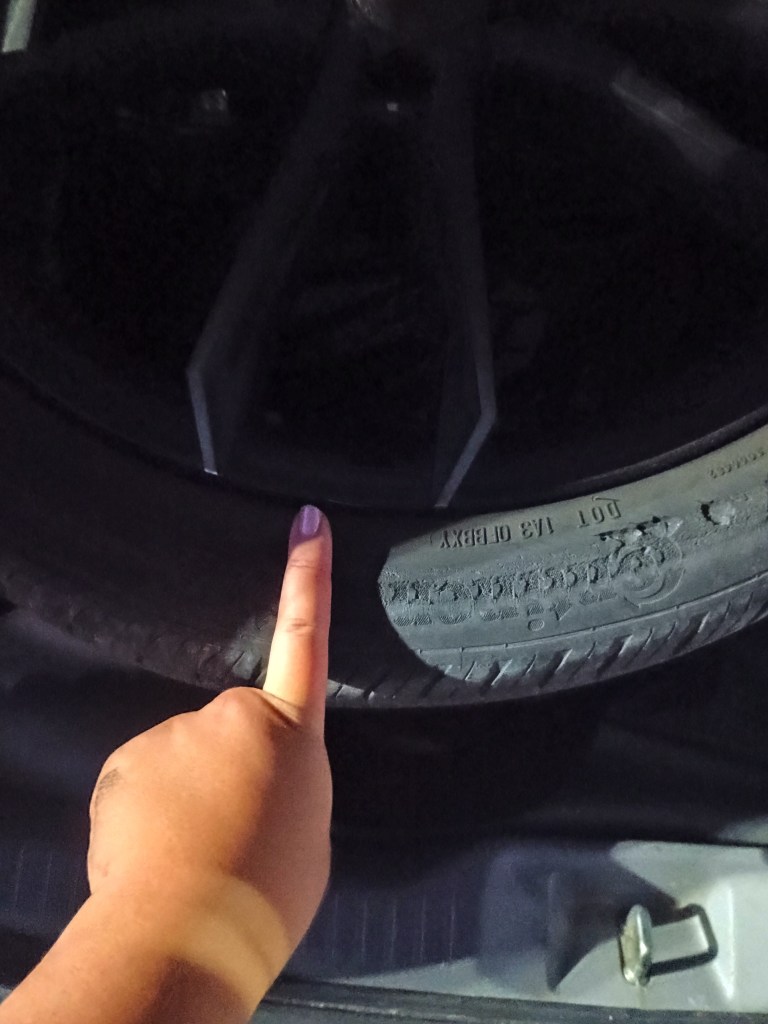
getting towed home was a thing, but this was a surprisingly quick situation to deal with. The major consequence is my wallet being $250 lighter (tire change and then some) and getting bruised on my knee for hauling aroud my previously oversized tires. See Figure 7 for the culprit.
ruined two pairs of pants! I dropped candle wax all over my favourite sweat pants, and had a ballpoint explode on another pair of pants (this one is partially addressed, but still hanging on a rack for me to deal with)
Time, of course
Figure 7. Check out the thickness of that tire post deflation.
Goal(s):
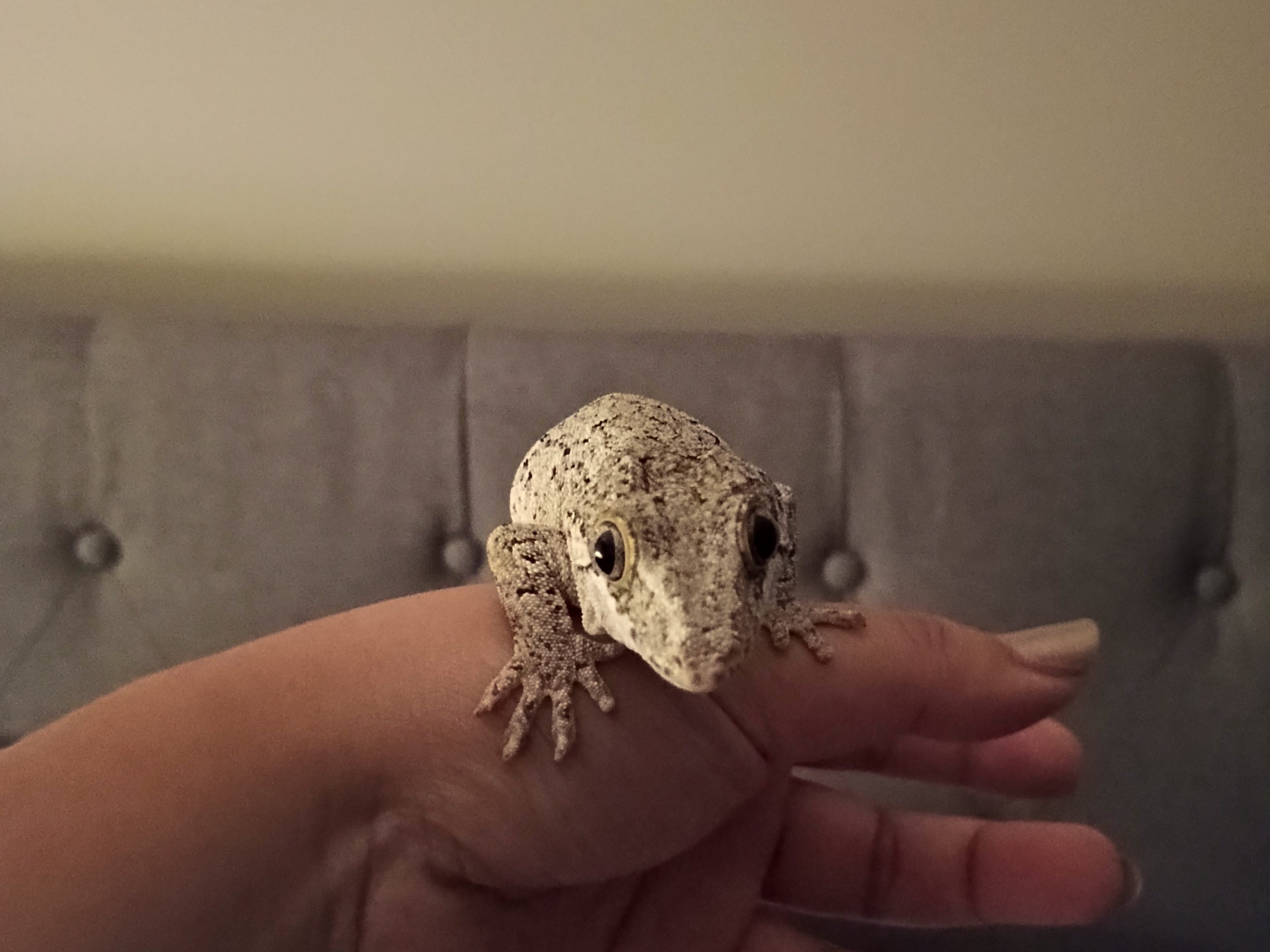
build or find a stand for the custom tank (Figure 8 is an image of the future resident!)
This leads to finally clearing my floor of all the plant propagations I have stacked in bins meant to fill said tank
fully unpack from last trip
finish writing the draft for an RPG module that I wanted to use as an outreach tool (and fun times) that I was hoping to get done in Summer!
take a look at all the moss photos I took in Finland and distribute them as need be!
Figure 8. Frogfoot Meteor awaits her upgrade patiently and not at all threateningly.
Truthfully, my personal life usually is about this chaotic, if not more so. Things are always in motion and mechanical items have limited lifespans. Having hobbies that involve living things also means that sometimes things happen outside of my control. One thing that’s been weighing on my mind is how to pass along all my plants if I move out of the country. Or what to do with my geckos if I move to a place where they aren’t allowed pets. A problem for a future me I suppose.
Figure 9. A realistic representation of me in my daily life.
I’ve been encouraged to write freely this week, so here we are! At first I wanted to discuss travelling in the current climate since I just went down to Baltimore, MD for a workshop (delightful, ended up with some strange plots and more questions than I went with!). I’ve been travelling internationally alone for the last decade or so, and it hasn’t always gone smoothly. Typically my travel related posts have to do with taking care of plants while I’m gone, this time is no different. Except it has a few additional critters in the mix (Exhibit A: Figure 1).
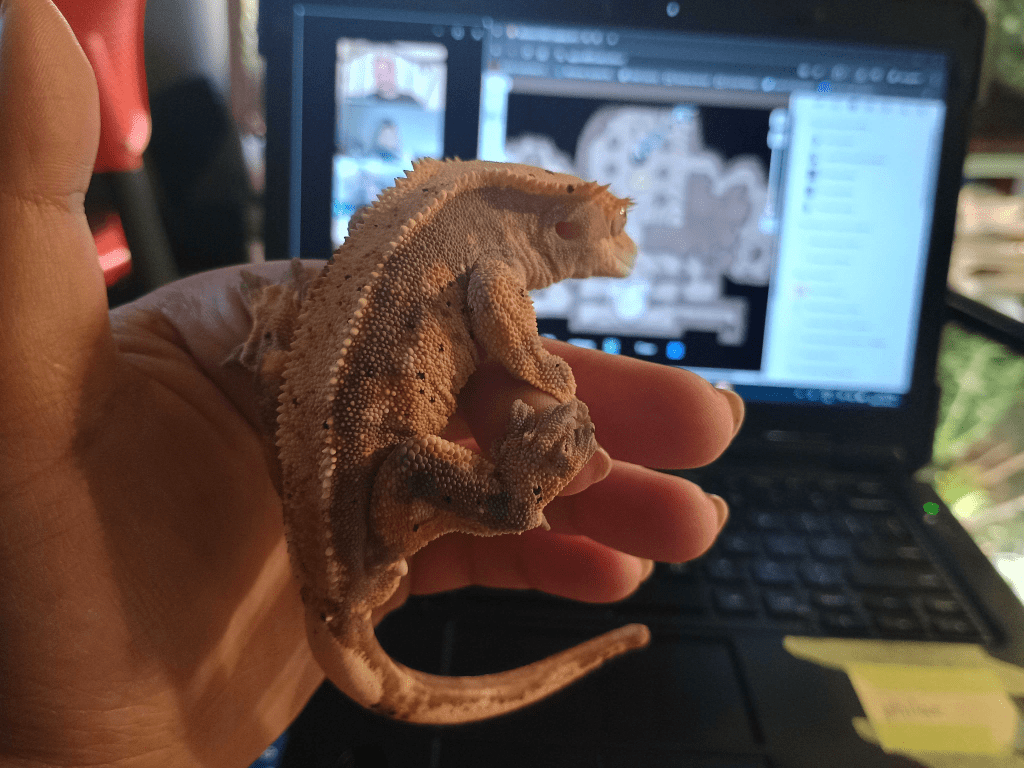
Figure 1. Gecko! Xavion has a little spinal kink from prior to my acquisition, but he’s a delightful gaming companion when he isn’t trying to interact with my touch screens. I got Xavion as a young adult, so his growth will be extremely slow in comparison to the others.
Shortly after I returned from my trip in South Korea, I decided to acquire a single crested gecko. I had some time to dial in the terrarium that I had built for my plants to survive my time away, and build a second one just in case I got a very small gecko. There’s no real compelling reason to put a very small gecko in a smaller enclosure, but I figured it would be better for me to keep an eye on the health of a very young animal in an easier to scan through enclosure for a while before upgrading it as it grew larger. In the back of my mind, I was looking for a high-contrast gecko with long, fluttery lashes. On an aesthetic level, I was looking for a red and white pattern. After quite a bit of research however, I concluded that all crested geckos were cute (except for the ones with genetic problems from bad breeding, looking at those is somewhat distressing) and I’d be happy with a patternless one as well. My goal was to have a happy and friendly gecko that was not opposed to being held from time to time (Figure 2 is an example of an endlessly smiling gecko that is very relaxed when hanging out. So relaxed that he tends to go to the bathroom on people once settled in).
Figure 2. A Spicy Cream Cheese Wonton. Spicy enjoys hanging off my plants and prefers his food to be a day old at least. I got Spicy fairly young, and he’s expected to pack on quite a bit more weight in the next couple of years!
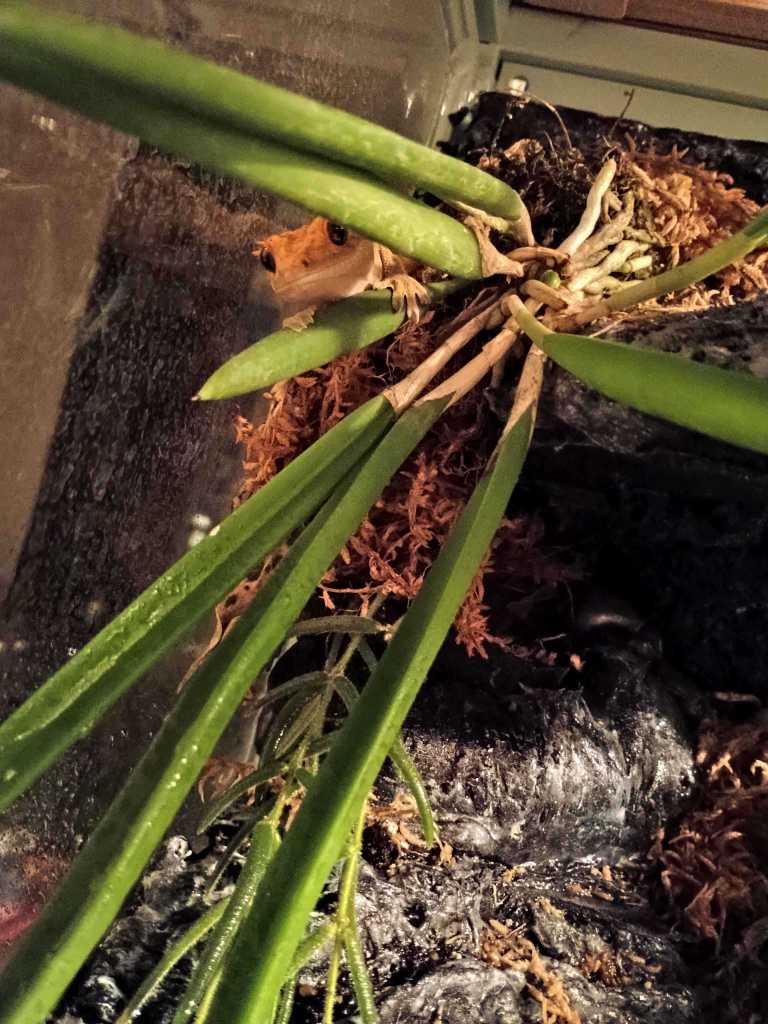
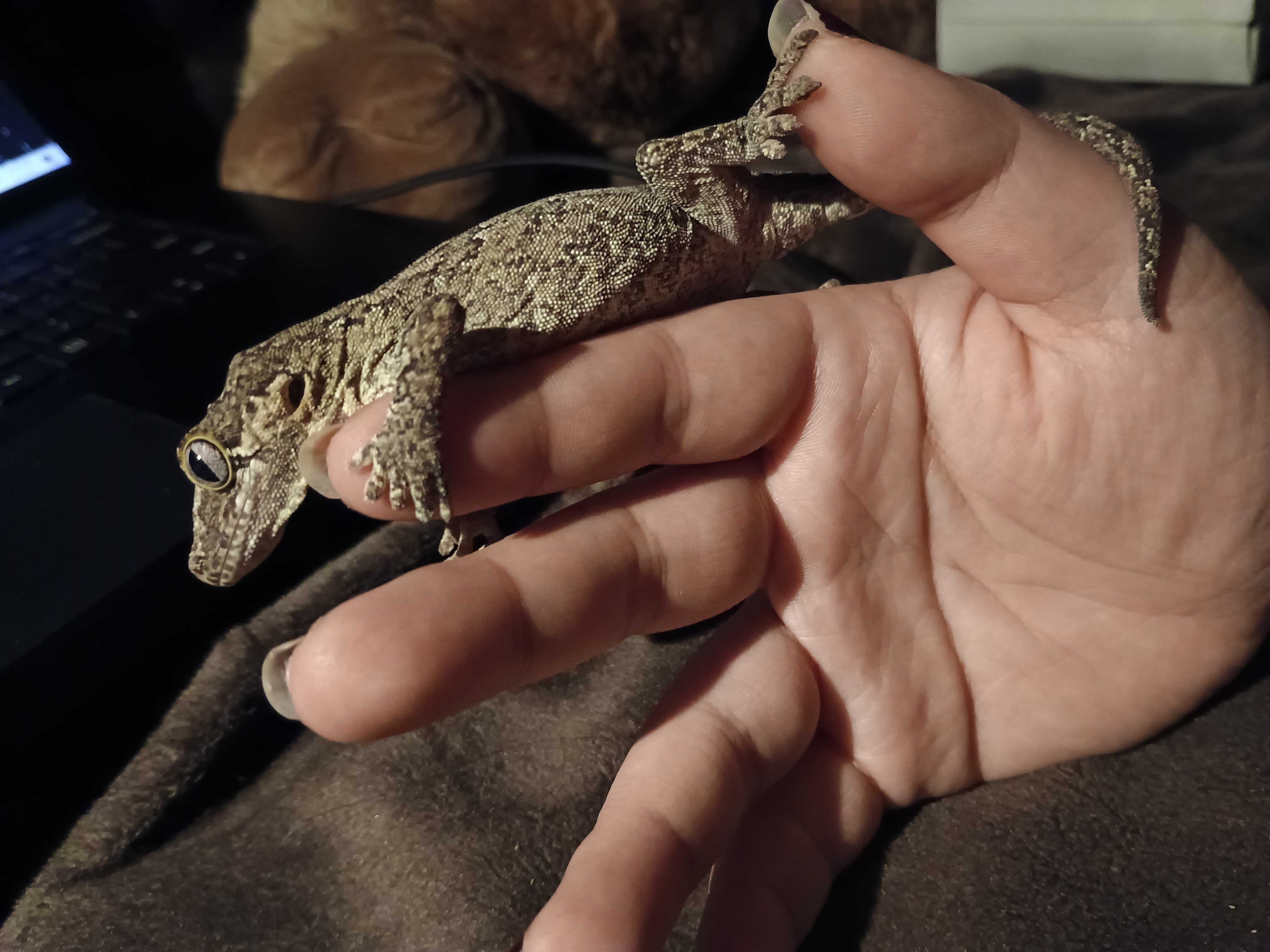
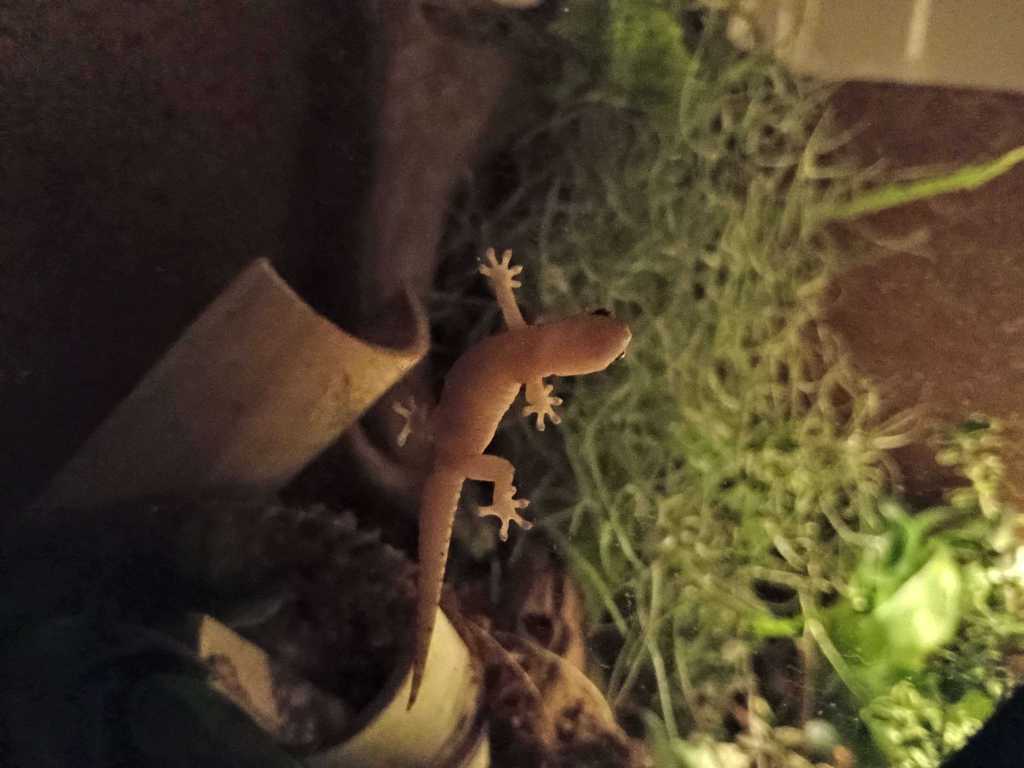
Anyhow, I ended up with two after visiting a local breeder (Xavion – 32.7 g to 38.6 g, and Spicy Cream Cheese Wonton – 13.5 g to 23.7 g, respectively, see Figures 1 and 2). Not too long after, I acquired a gargoyle gecko in relatively poor health (Frogfoot Meteor, 11.9 g to 30.1 g, Fig. 3). She was somewhat underfed, and terrified of humans. I’m happy to report that she’s doing much better now and lives in a far larger enclosure than what the breeder insisted was her “upgrade”. She’s put on a healthy amount of weight and is significantly less skittish than before.
Figure 3. There’s a Froggy in here, promise!
Here she is! She’s short a few toes and has been steadily moving towards adulthood (the tummy is normal for gargoyle geckos). She has the most robust appetite of all the geckos and I expect her to hit full adult size before Spicy does.
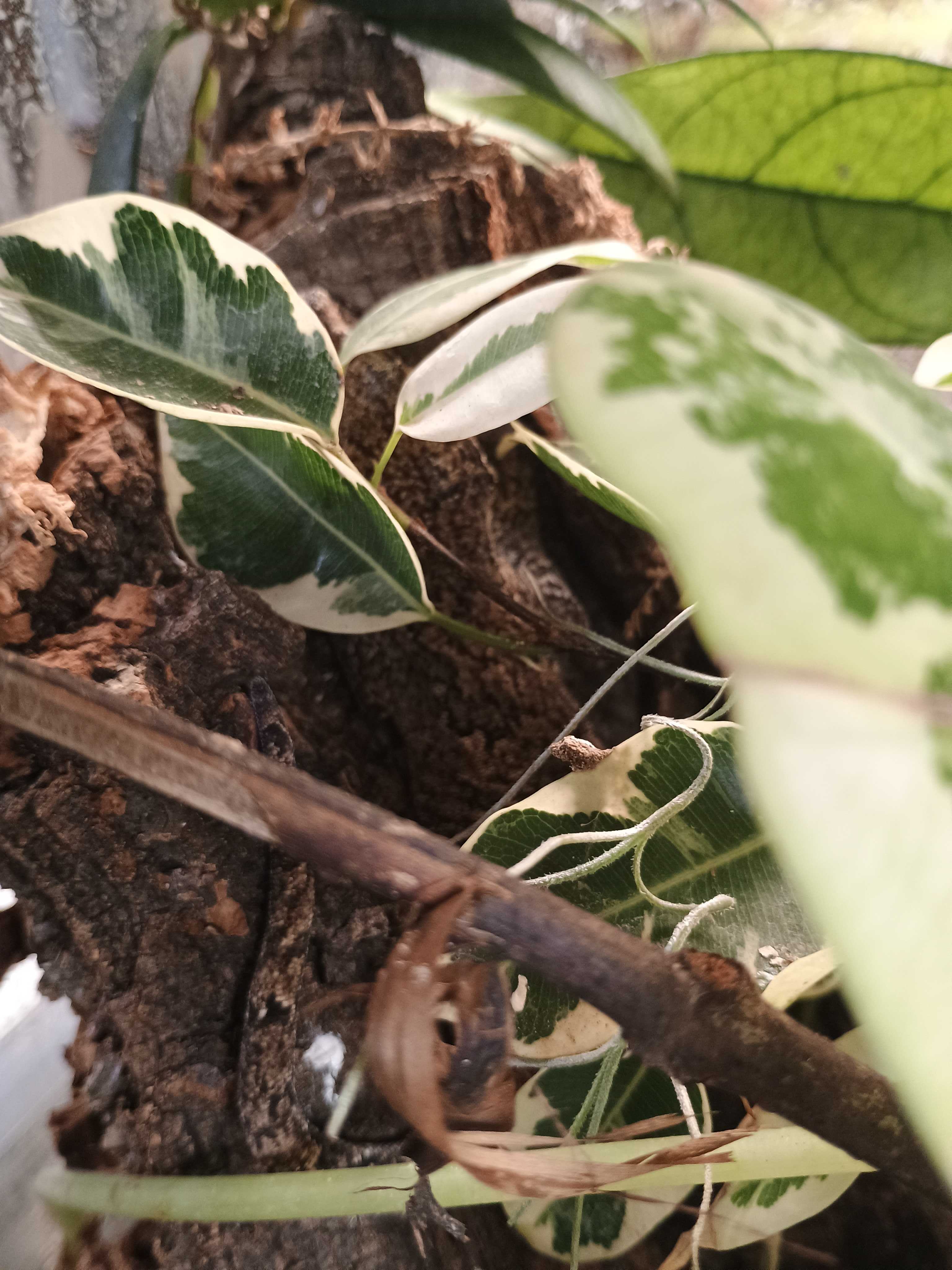
A few months later, I helped out with some folks who were undergoing a legal dispute over their housing situation by rehoming a few of their mourning geckos (Katana and Wheelbarrow, Fig. 4). At this point, there are 5 additional animals to take care of. Perhaps surprisingly to the reader, this takes about 3 – 5 minutes of my day most days. I would also argue that it can’t take much less, since fresh water is a necessity and its important to have a bowl of water readily available all the time. This can’t quite be replaced by an auto-mister unless I also add in a way to sterilize the water bowls. A “self-cleaning” water system wouldn’t work either, as it would have to be large enough that its presence would present a drowning risk or required some form of UV sterilization (impractical). Feeding has mostly moved from once every 2 days to once every 3 days for all but Spicy.
Figure 4. This one is most likely Wheelbarrow. I tell them apart by their tail thicknesses. She’s halfway to her maximum size!
Why am I listing all of this down? Mostly I think they’re cute, but I also wanted to note the care requirements. That is, they need to be interacted with ideally every 24 hours, with 48 hours somewhat pushing it.
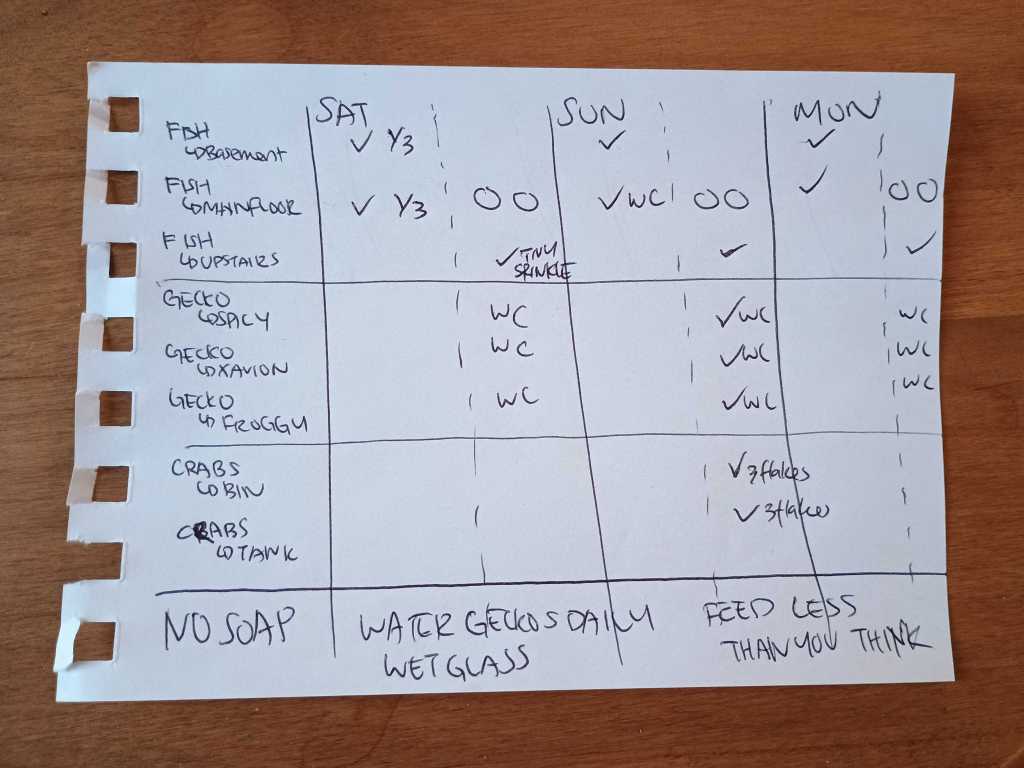
I listed all these details to make the point of: Do not acquire pets that require regular care unless you have a solution for their care when you are gone. For the less than 72 hours I was away, I had someone spray down the enclosures and change out the water bowls daily (Fig. 5). They were fed once during this time with food I had pre-made. The animals are well taken care of, and the chances that they are overfed or go without critical needs is negligible.
Figure 5. A cryptic list of instructions. The crabs are another story.
This was quite unlike my plants, which I left no instructions for other than to optionally water my carnivorous plant bowl with rain water if so desired, it is quite important to leave detailed care instructions and run them through the caretaker prior to departure.
The Circle of Life
Okay so, I mentioned feeding and watering, but what about bedding changes? and cleaning?
The short answer is, there is none to do! While there may be quite a few water stains that are unsightly, the enclosures are self-cleaning for the most part. During the daily watering and spray down, excess food and waste are washed to the base of the enclosure, where my secondary pets live. I have a full cleanup crew in each of the gecko enclosures. They breakdown waste to be further decomposed and eventually converted into fertilizer, and the plants in the enclosure take up the nutrients to keep growing. The more complex and the more layers and redundancies added to this cycle, the less something is likely to go drastically wrong in a short amount of time.
I use the same principle for my aquariums. Generally, I’ve set everything to be reasonably self-sustaining, with plants uptaking waste that might otherwise be toxic, and critters at the bottom level that break down food and waste into ammonia. Periodically, I check for signs of nutrient imbalance and correct them before the living standards decline. For my fish tanks, this might be as simple as a water change and removing some mulm from places that do not get a lot of water flow. If I were running more high-tech tanks, this might also mean dialling in the CO2 flow and light levels. As it is, I skip the use of aqua soils and opt for either an organic mix that is then topped heavily by sand to minimize leaching into the water, or a highly porous substrate mixed with sand. The denizens at the bottom of the tanks snuffle about looking for food, and push the small waste particles into the sand until they eventually breakdown further and get added to the base level. I have algae eaters to pick at spots that get a little too much light or have low water flow.
For terrariums, they operate similarly. There is a drainage layer that stays consistently damp so that plants have theoretically unlimited access to water should they need it. The substrate is designed to hold plants, moisture, and maintain some void space for oxygen. Isopods roam the lands, breaking up leaf litter and chunks of waste that make it to them. Springtails scrub up inaccessible corners to prevent mold from growing in high humidity and low airflow environments. The things I check in on are how often I spray the tank and water the plants directly, how much airflow the tank gets, and where things are placed with respect to lighting (and gecko trampling). Periodically I may need to supplement the soil layer with more organics and airy components to prevent it from compacting (which the isopods delay when they burrow).
There is an old adage that goes, “the bigger the better”. This is generally true to an extent. For example, I would go no smaller than 10 gallons for a fish tank as a “first fish tank” unless you are doing an exceptionally niche project such as caring for brackish shrimp or raising scuds and have quite a lot of time to commit to doing water changes as the tank stabilizes. For a terrarium that is meant to house an animal, 12x12x18 (inches, barbaric, I know) is the smallest I would consider if I want to have the full cycle of cleanup running, and only if the animal is very small and doesn’t move much in nature.
If you are just considering raising plants in either scenario, 1.5 gallons for a tank is excellent for plants, though you may need to manually remove a lot of algae and a fast growing plant will require a lot of trimming. Alternatively, go up a bit larger and you can include a few snails to help break the surface tension and get some movement into the tank to prevent stagnant sections. Similarly, for a terrestrial based terrarium, you can go much smaller, though you’ll ideally include a culture of spring tails to prevent mold, and ensure that you can give it periodic airflow. You will also likely want your plant looking nice, so that may mean quite a bit of light and heat. Less condensation will block your view if you do allow for airflow, which means finding the minimum size enclosure to maintain moisture in the system as well. I’d recommend at least a 2 L container for your first time if you want it to last a long time.
It’s still on my to-do list to put up a guide to set up a terrarium. But here’s a short version for now!
Beginner’s guide to a sub-tropical to tropical terrarium
Materials:
container, at least the minimum size for what you plan on housing.. Should have a lid with ventilation
mesh/drainage barrier. I like weed blocking fabric, but any synthetic material that will not decompose or rust when wet will work
drainage layer. LECA is my recommendation. Lightweight, relatively cheap, lots of surface area
growing media. Mix of peat OR coco coir, orchiata OR coco husk, spaghnum moss (dried, shredded), activated charcoal chips, perlite OR pumice OR vermiculite OR LECA OR your preferred highly porous, rocky material. Bark and husk are to provide aeration, but they degrade over time to your cleanup crew. Due to the elongated shape, they also provide some irregular sturcture in the media, unlike the more sperical inorganic components. Inorganic porous material also gives aeration, but can very in weight and expense. Perlite is also very ugly because it is a very bright white and tends to “float” towards the top with how light it is. Charcoal acts as a filter for smells, growing media for spring tails, and also acts as aeration. Spaghnum moss (dried, shredded) adds humidity to the mixture without being soaking. Lastly, leaf litter may or may not be optional depending on what you are planning on housing. Rainwater or distilled if you plan on misting the enclosure and don’t like water marks
lighting. Optional but highly useful if you can control the lighting since the enclosure walls will filter out most of the usable light spectrum as is
circulation. Can be a fan, regularly opening the enclosure, or built in fentilation. Remember that it is unlikely you will perfect the gas exchange processes in one shot, and plants produce carbon dioxide at night, so let fresh air in
slim pipette. Scale up depending on the size of the terrarium and how much water the drainage layer can hold.
Set up your drainage layer. 1 in minimum is a safe amount
Cover it with your drainage barrier
Place your growing media overtop to a thickness of at least 1 inch (likely want more depending on the growth pattern of your plants)
Plant in your plants!
Add springtails
Gently water in
Set in a place with light and provide air flow and top up water as needed. The growing media should not be sodden, and excess water should drain into the drainage layer. Under warm conditions, some of the water should recirculate upwards and never be entirely flooded. If it does become flooded, use the pipette to pull out some of the water from the bottom layer
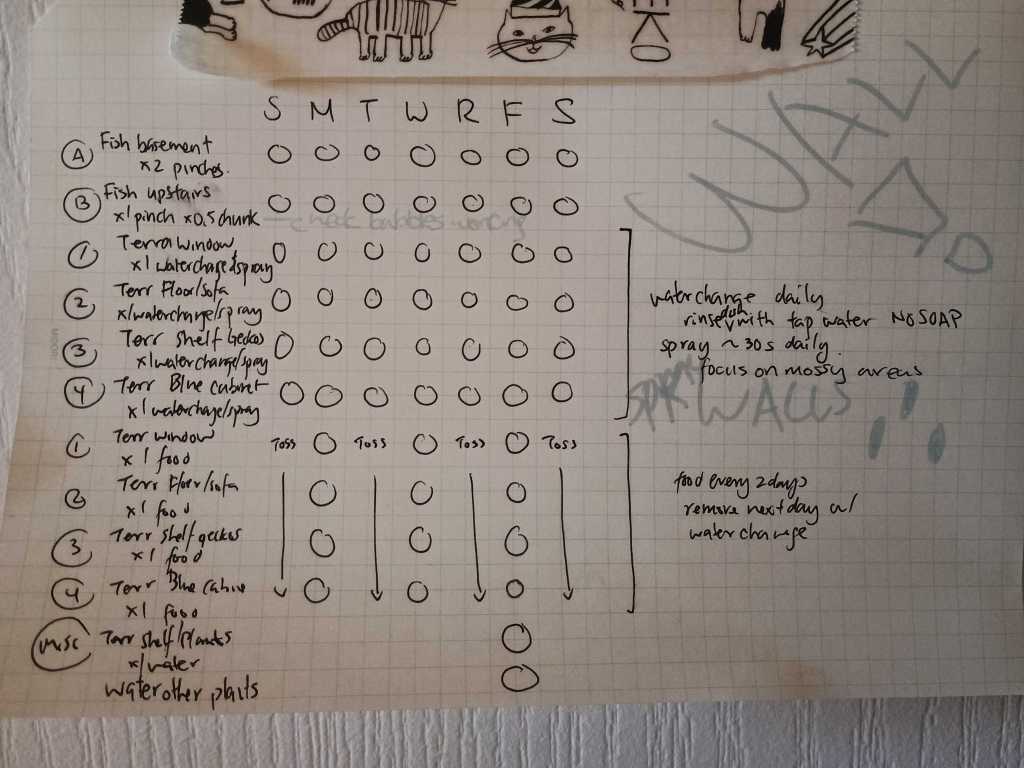
If you are opting for a more designed terrarium, add in a step 3b. Include hardscape that builds a story using either natural (e.g. rocks, wood, bones) or man made materials that will take a long time to degrade to create a framework. This can build up height and mounting places for plants. This can also create shaded areas that might allow for lower light plants to stay compact with minimal growth (and trimming). If you’re anything like me, the building many worlds process can kind of run away from you (Fig. 6), but eventually you’ll work out a good balance for the time you have and the commitment you can make to care for things.
Figure 6. A set of instructions back when I was gone for 8 days. This is the most complex care schedule I’ve ever had to give someone. I’ve since consolidated a lot of things and streamlined the process both for myself, and those taking care of things when I’m gone for more than 2 days at a time.
In summer of 2024, I took a train from Seoul to Busan.
Prior to depearture, I was informed that there was a movie that was based almost entirely on this premise, so I went about watching it as self-assigned mandatory reading. Without spoiling the contents of the movie itself, it was a zombie movie that was focused on humanity and the reactions of individuals in high stakes environments. For me, this was a sneak peek into the trains and the potential luggage room available.
I confess, I was misled. Google and reddit supported the idea that there would be extremely limited luggage space, and rolling travel bags would be at risk of not fitting. As such, I opted to bring duffle bags to squish into the overhead compartments, which I knew from the movie could fit an adult human.
As it turns out, I was not the only one who took the train to Busan. Several COSPAR2024 (Committee on Space Research 2024 meeting) attendees I met also mentioned that they had opted to fly into Seoul from whatever country they had previously been in, and taken the train. Direct flights to Busan were about twice the price from Toronto at the time I was looking, and to me it made sense to stick around in Seoul a few days after the conference to get to know the city. I assumed that I would have gotten enough from Busan by the time the 8 day conference was over. I was very wrong on this point, Busan is THE coffee city in Korea, and I felt like I really missed out! Food and activities were also far cheaper in Busan than they were in Seoul, and it only became sunny after the conference had ended and I was on the train back to Seoul. That said, I really was there for work related matters.
Let’s talk about the conference. I spent most of it “live-slacking” interesting tidbits from all the talks I went through. This conference was heavily focused on the presentations, with the poster hall being fairly quiet. I personally had a talk during the ocean worlds session. Navigating the sections was interesting, there was a letter number system that broke down large topics (Space Studies of Earth, Space Studies of Small Bodies, Space Studies of Atmospheres, Space Plasmas, Astrophysics, Life Sciences, Materials Sciences, Fundamental Physics, etc.). For Scientific Commission B, small bodies, the numbers were labeled Bx.x, where the integer indicated the relative subpanel (my guesses are that B3 was exploration and the moon, B4 were the inner planets, B5 the outer) and the decimal indicating the specific name of the panel (B4.3 was Mars Science Results). Each subpanel was further divided into presentations and posters that were relevant to each subpanel.
One interesting aspect of COSPAR is the numerous “business meetings” that take place for each panel throughout the conference. Several representatives give reports, and explain their rational for how many quarter-days they would like in the next conference. During the one I attended, there was also quite a lot of discussion over cross-linking into different panels so that attendees would not miss talks that would be relevant to their work. There was also some discussion on how to revitalize the poster sessions which were relatively poorly attended despite the free alcohol and beverages on site. I was attending to comment on the relative lack of participation and attendance from early career scientists that were not exceptionally gung-ho about sharing their work and putting their names out there in this particular panel (the astrophysics and life sciences sections conversely appeared to have many early career scientists!). I found the overall discussion very interesting. Feedback and discussion for other conferences I’ve attended typically occurs after the conference ends, and this type of business meeting is not open to all attendees.
Despite the extended length of this conference (and extreme heat and humidity that found its way into the conference centre), I found that I was engaged for most of the time and there was less rushing about the building in comparison to some other conferences. It was easy to talk with people during downtime and a great way to meet folks who were doing relevant work, but you might normally not encounter in a more niche conference. There was time for coffee with my coauthors and dinner with my fellow Canadian delegates. Overall I’d say it was an excellent experience, and my main regret is not keeping my mouth shut a little more and doing a bit more active listening.
Some interesting things that happened during the conference that were not work related… A flight show happened! The Korean Space Agency opened in 2024! I found an alien themed coffee shop!
I also would like to shoutout the Canadian Space Agency for making attending COSPAR2024 possible in the first place. This is typically not a conference I would be attending without a thoughtful justification and clear goal in mind. I hear the next one will be 9 days long. As an aside, every single submitted abstract is still visible on the site and can be viewed.
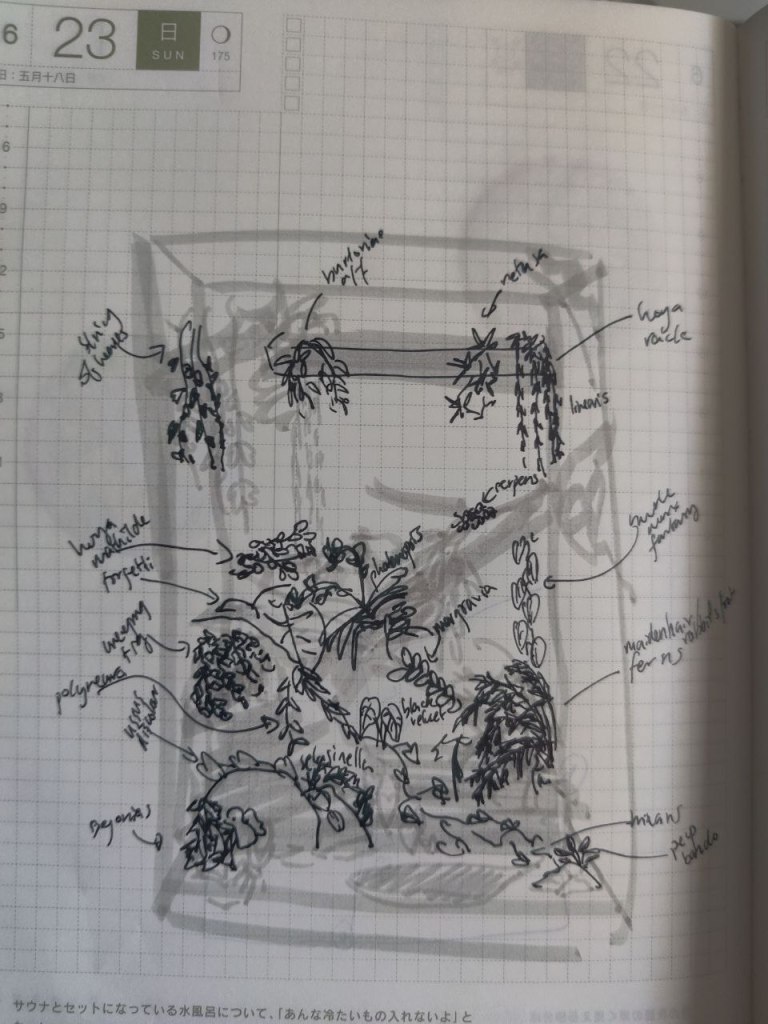
Some time ago last year, I wrote up a blogpost on how to increase the likelihood of having your plants mostly survive when you’re out of town for an extended period of time. Whether that’s conferences, or field work. Things have changed a little since then, and my environment is now different. The room where my plants mostly reside is hot, very hot during summer months. This means watering some of my plants nearly every day to keep up with their requirements and the methods I had come up with in the past wouldn’t quite cut it. If I was gone for more than a week, I was sure to have casualties with the way things were currently set up. What was the solution?
Figure 1. My grand plan for where all my plants would go, with some hopeful new plants to add in!
Rising Action
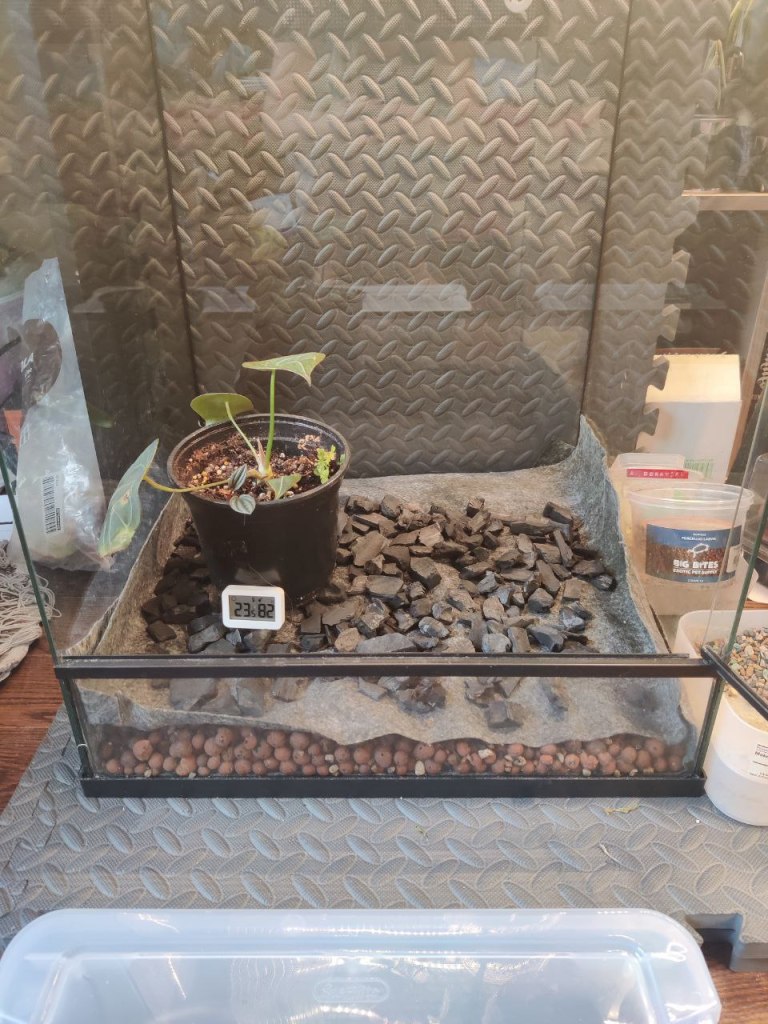
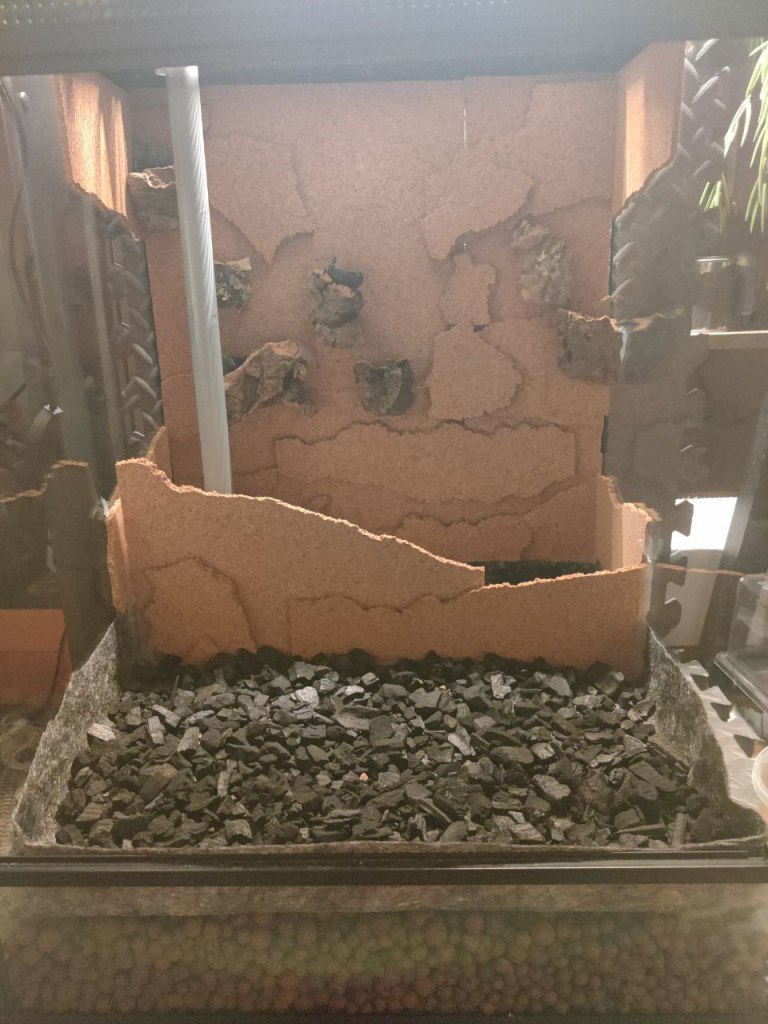
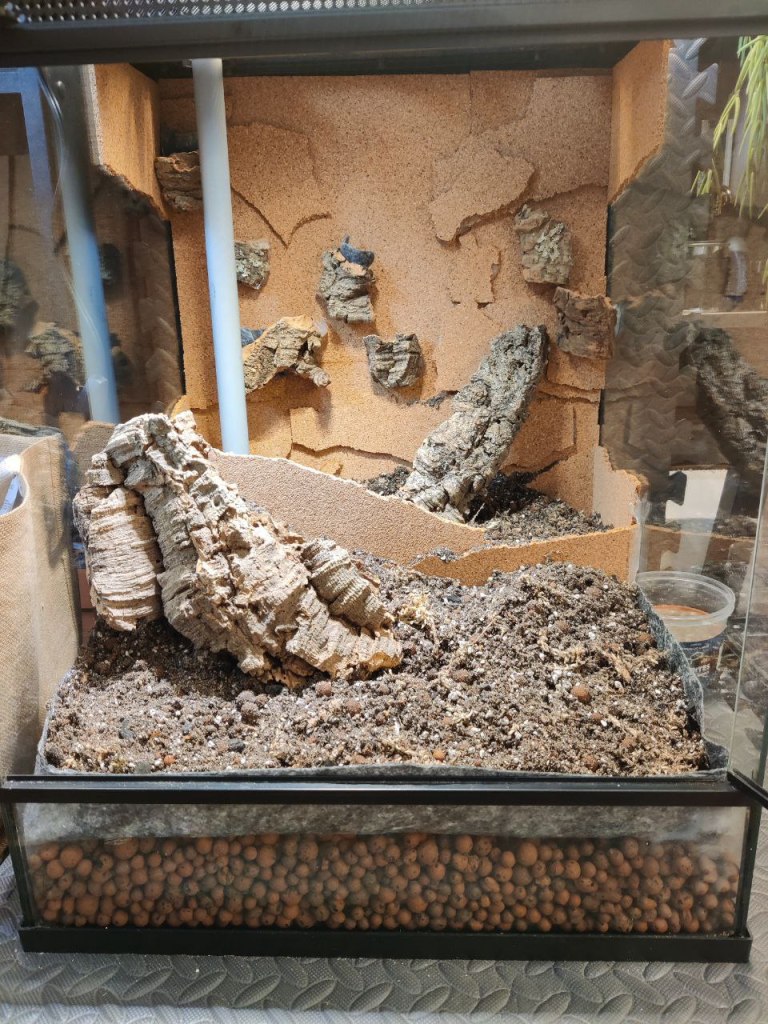
Apparently, it was to purchase a large glass box and build a terrarium. I also wanted to make it bio-active, with little critters eating all the mold and decay that was sure to happen in a partly enclosed, high humidity environment. Some of the materials I had already, which is why I felt it was perfectly reasonable to go ahead with the idea with a little over a week to spare. I was able to put together all the components together in a couple of hours, and the next day after the silicone had cured, I dumped in my drainage layer, added some weed blocking fabric, sprinkled some charcoal, and topped it all off with the weirdest soil mix I have ever put together. It didn’t actually work out exactly this way, as I vaguely remember digging up parts and trying to stuff in more drainage a few days later after purchasing some additional parts after I had already set up part of it (see Figs. 2 and 3).
Figure 2. A quick test run to see how humidity would hold up. I was about to start dumping soil in when I decided that I didn’t have enough of a drainage layer. This was addressed by a trip to Provision Garden Supply, a store that sells lightweight expandable clay aggregate (LECA) in bulk, and has a huge variety of soil bases available.
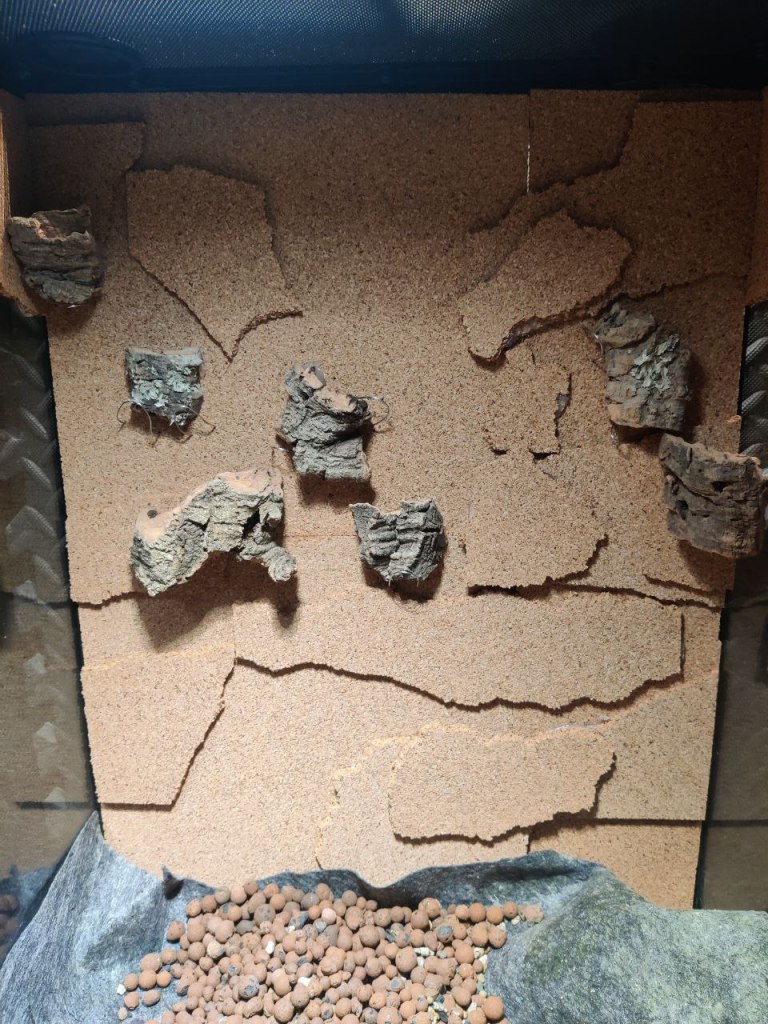
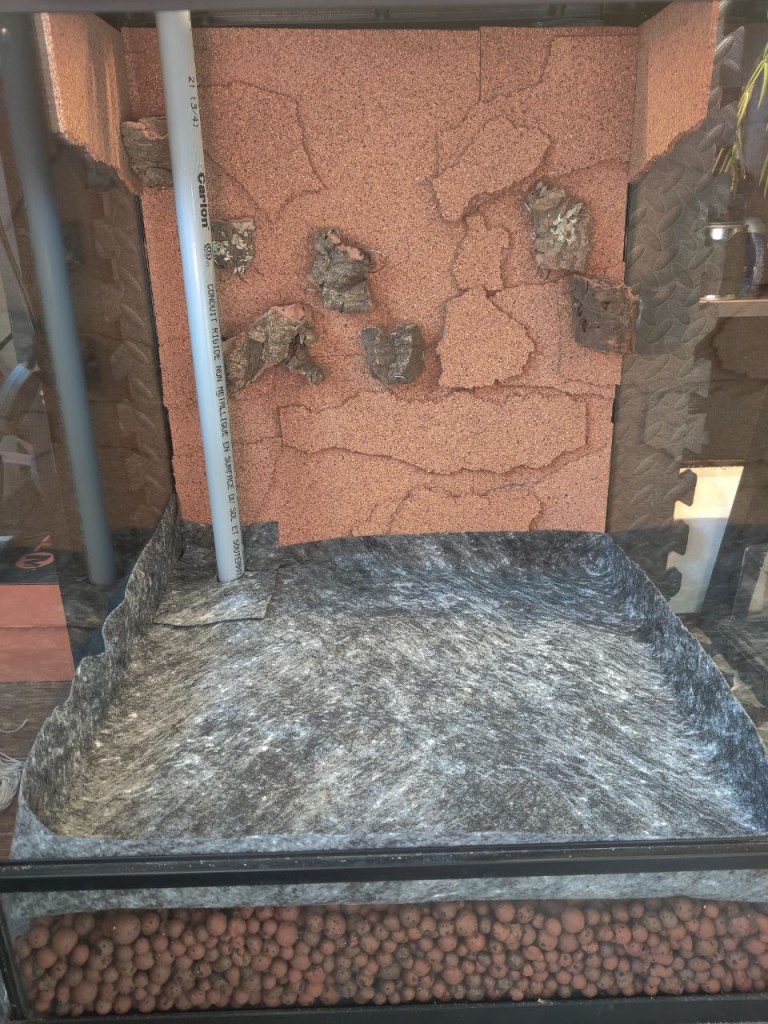
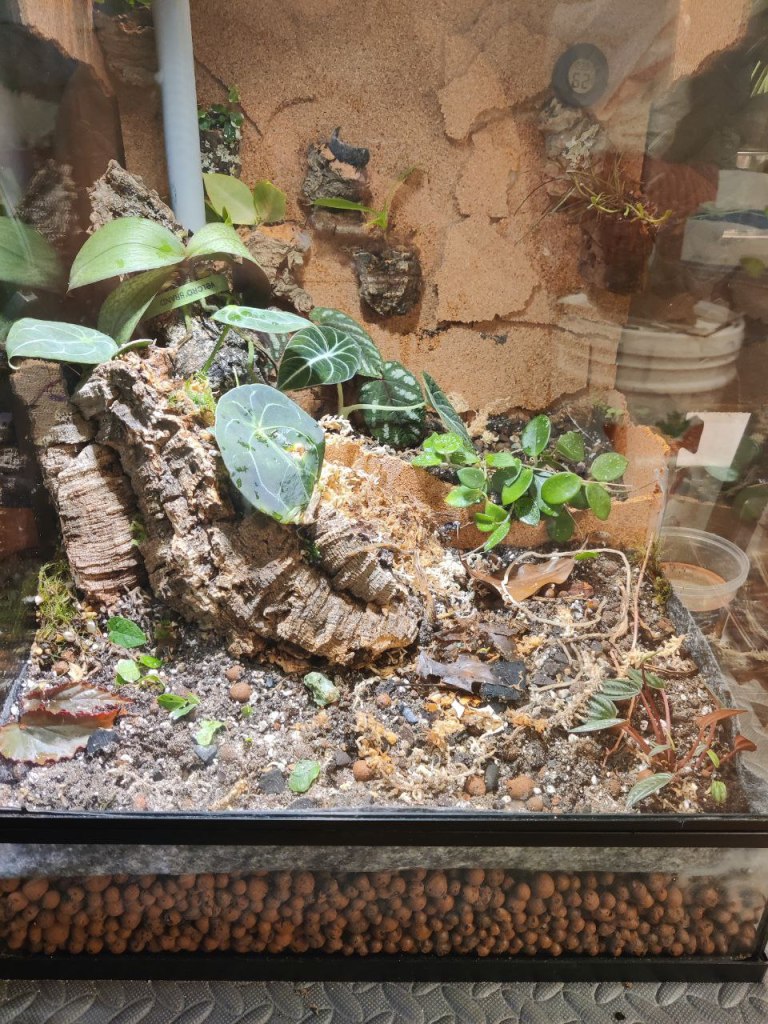
After the structure and soil had been put in, it was time to add some “hardscape” (Fig. 3). That is what “scapers” refer to as the chunky elements that guide the overall composition of a scene (scape). In this case, I had a pile of miscellaneous rocks I had collected over several years, and some corkbark flats that I had purchased by the pound. Then I stuck in all the plants and fussed over their placement in proximity to the light source and soil depth over the next few days while figuring out precisely how frequently they needed to be watered.
Figure 3. Build progression over a few days after I aquired the materials. This PVC pipe was taken from my previous aquarium living wall. In retrospect, I didn’t need one that spanned the whole length and out of the exit hole in the top of the frame. I later found that it also impeded opening of the top frame because it was a hinged mechanism.
Things were going well, I knew the watering schedule, and I knew that there would be family members who could check in fairly regularly rather than leaving everything in darkness for 2 weeks.
Climax
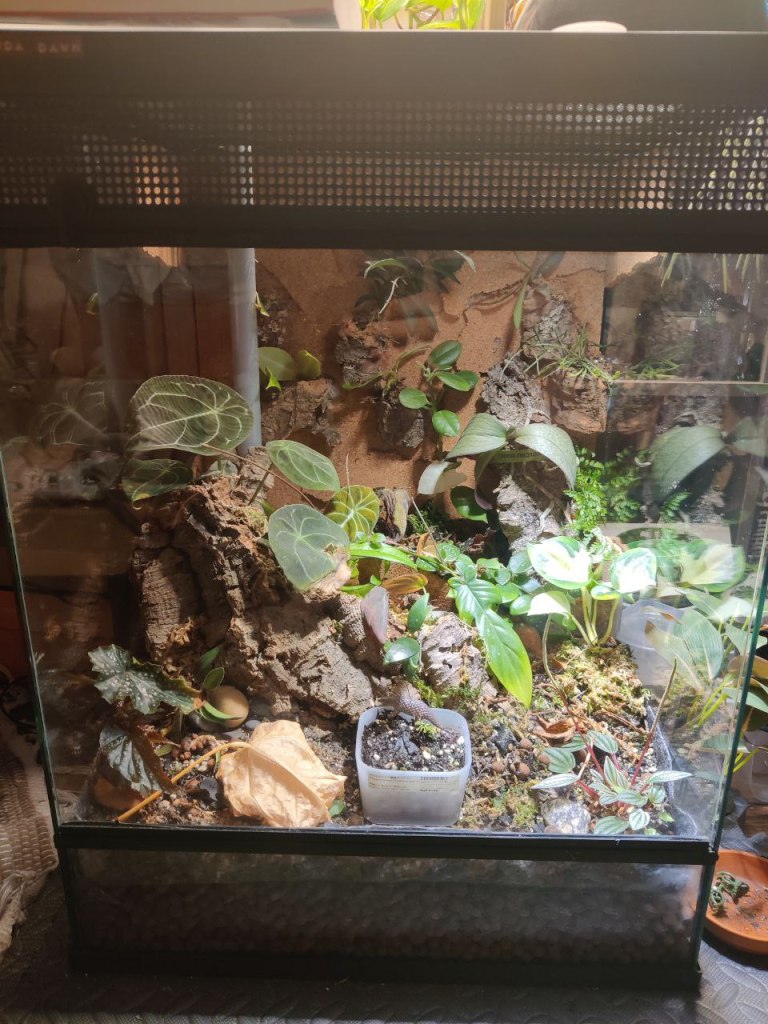
I came back and… not too bad. There were only a few casualties, a spider mite boom, and some very happy isopod colonies. I spent my first full day back cleaning and inspecting the plants in between unpacking and seeing what I had missed while I had been gone.
Figure 4. You may be able to spot a very yellowed alocasia black velvet kicking around in the back there. Also my attempt at fungas gnat control with carnivorous plants did not take. Fortunately this hasn’t been a real issue. In the foreground is a mix of scattered dead leaves and some algae from my fish tanks that act as food sources for the little critters when I’m not feeding them something fancier.
Falling Action
Life moved on, I had work to catch up on, and I was happy that most of my plants were stable. It was highly convenient to be able to water the vast majority of them all at once! Naturally, I also purchased some terrarium specific plants to add in once I saw that everything had been established and was growing in (Appendix, section B). I felt like things were about wrapping up in this terrarium, and as time progressed, I relocated some of my remaining shelf plants into the terrarium.
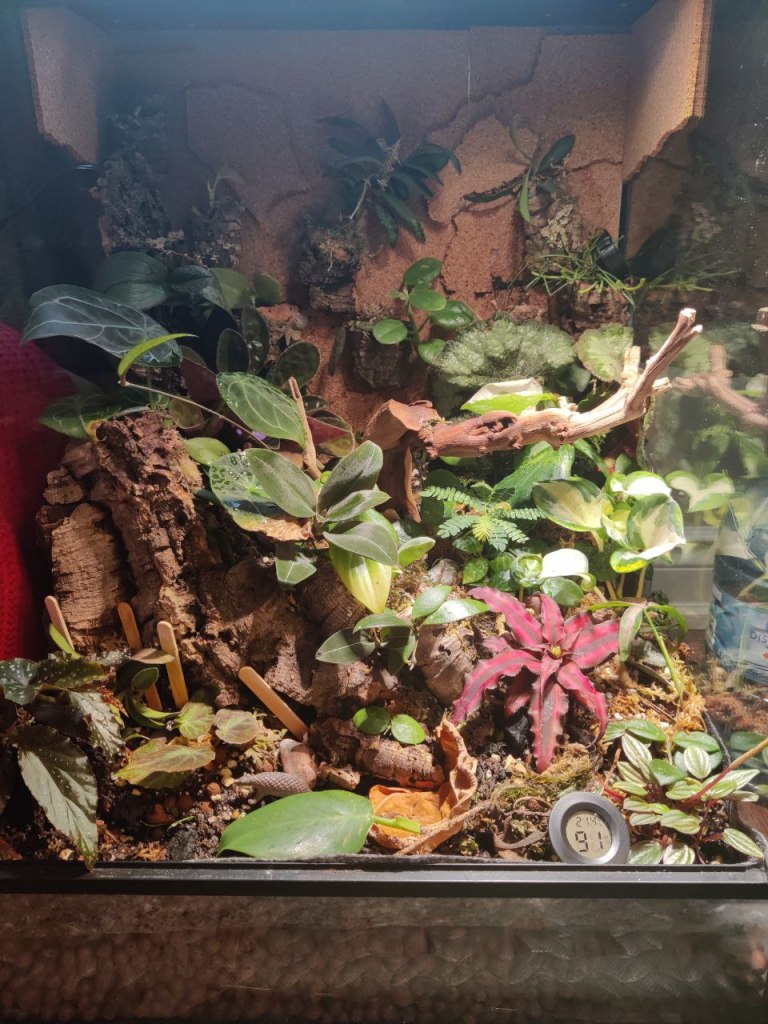
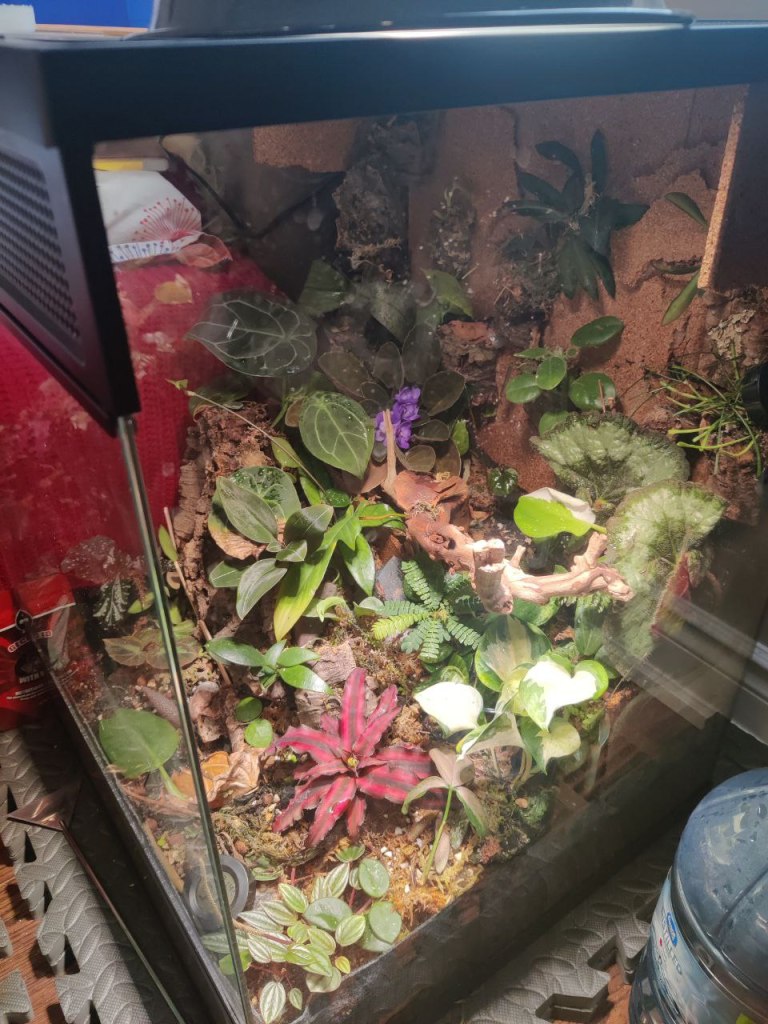
Then, just this weekend, I went to a plant swap in Toronto. The event has been on my radar for the last couple of months, and I even had a hopeful wishlist of things I would love to find. I brought 8 plants with me to give away, and took home 10 or so. While I did side-eye the health of a few of the plants, I gave everything an intense blast with water and stripped most of them down to the root. No obvious pests. So… I recklessly placed some of them inside as well (Fig. 5). I was feeling pretty comfortable about the whole situation.
Figure 5. New plants acquired and added! The big red one is a cryptanthus that I actually purchased, The extra branch was something I picked up on my way back as well. You may notice some popsicle sticks added in, those are for support in case I get a sudden tumbling of material from all the new added weight. The second image shows my usual view when I swing around my desk chair looking for a distraction.
Denouement
Is the plant care optimization and acquisition adventure over? Probably not. I’m planning on going to a Plant Expo later this year, so chances are I may come across something that I fancy. I might also be able to harvest some of the alyssum seeds out of my potted plant container from outside and see how they fare indoors. This also means, I probably need to look into building more enclosures. The current set up is almost a little too easy to take care of, and its been taking out some of the fun and enjoyment out of plant care and maintenance. I’ll be looking into building an automated watering system, which sounds like it could be the next big adventure. Depending on how things progress, I may also need to look into adding some mini fans to help circulate air and dry out the terrarium faster.
Reflections Upon Return
Despite some losses while I was away, having a main set up has definitely a time saver when it comes to watering and general care. I’d argue that I’ve already earned back the time spent sourcing parts and constructing the entire enclosure. Plus its nice to see all the plants placed so closely together, in comparison to pots dotted about.
While I still like watering my potted plants at weird intervals, daily spraying is a far easier task. It usually ranges between 70 – 90% humidity in there if I’m watering twice a day (trying to get into the habit in case I go forward with the plan of acquiring a gecko, though I would open up the ventilation more for it to drop quite a bit before adding more water!). I also happen to have a pressure sprayer that holds 4 L of water from a whiles back when I was doing preventative spray downs of my plants so watering is extremely quick. I’ve been filling it up with rain water and using it for just about everything.
Mind you, it’s not just watering I have to do. Since it’s a bio-active setup, I still have to feed the critters from time to time. They get any of the following: crushed egg shells for extra calcium, special Soilent Green from Repashy, select dried leaves from elsewhere in my room, and piles of algae and duckweed from my aquariums. So much duckweed. I don’t think they’re big fans to be honest, but it is very nutritious, so they’ll just have to deal. Definitely one of the more fun projects for the summer though. As for the other “worlds”, I’m waiting on them to establish well enough to share any successes and failures.
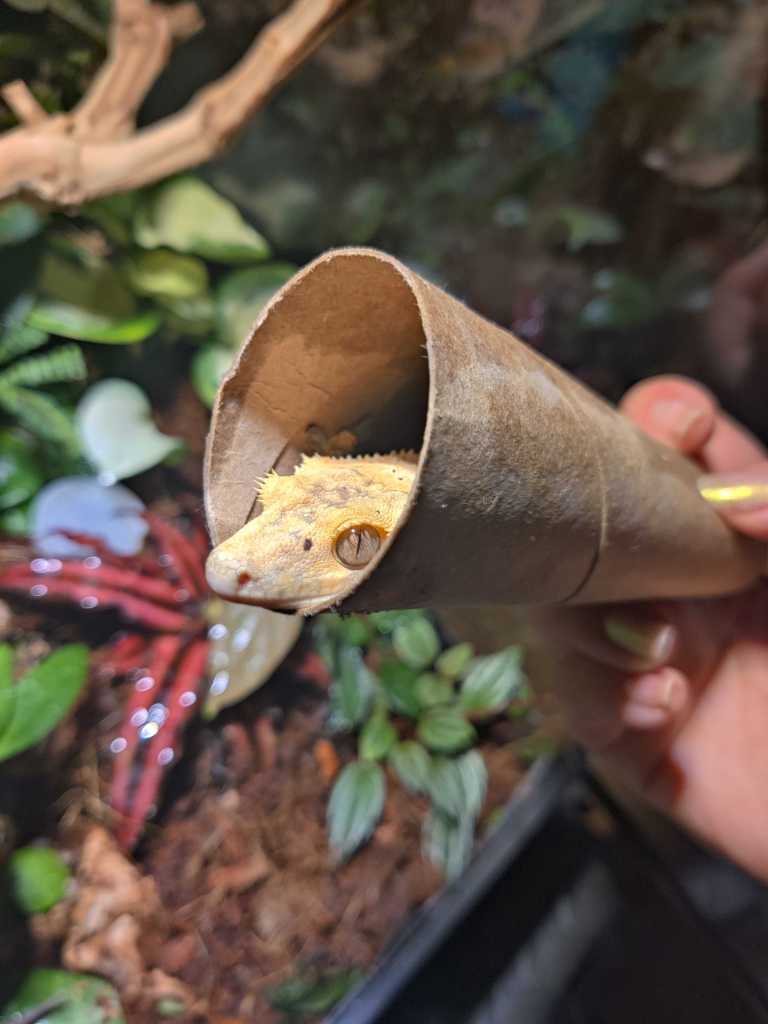
Figure 6. A little spoiler of the new occupant in this world! He’ll be joining a squad of springtails and isopods. Depending on his activity levels and whether he continues sizing up, this may only be a temporary home while I set up something a little more suitable for him. Only time will tell.
Appendix!
A – Initial Setup
Approximate cost breakdown of the terrarium (initial setup) in CAD:
$100 tank (second hand, 18”x18”x24”)
$20 cork bark (by the pound)
$11 wood
$15 silicone (caulking gun was borrowed)
$10 spring tails (culture from much earlier in the year)
$15 isopods (dairy cow isopods on sale, it’s possible to get them for cheaper and much more)
$0/$50 weed fabric barrier (from a previous project)
$2/$60 spaghnum moss (I’ve been using the same bale for nearly 2 years! I’m finally running out)
$10 lamp (this is the cost of the LED bulb, the lampshade came as part of a store display set)
$10 peat moss/perlite mix (wrong choice by the way, I later topped this off with $5 of coco coir bits)
$3/14 biochar
$5/$60 LECA
$3/$15 mineral magic (pon-like blend)
$5 perlite
Plants that I jammed in there (some of these were added much later when I returned though!):
plant species (personal):
alocasia black velvet (melted away, this sucked since my backup plant dried out while I was gone)
anthurium forgetii
anthurium dorayaki
begonia lynda dawn
cissus discolor (pinky leaves! Though most of it melted away)
davallia fajeensis (rabbit’s foot fern)
ficus pumila green (dried to a crisp!)
hoya crassipetiolata
hoya GPS 7240
hoya mathilde
hoya retusa (finally growing!)
pepperomia bando
phalenopsis (of some spotted leaf variety)
philodendron florida ghost
philodendron micans
pothos manjula
Added after I got back:
begonia fannie moser
begonia escargot
hoya burtoniae aff
hoya coroniae (red)
hoya fitchii
hoya memoria
hoya polyneura
hoya rebecca
hoya sigillatis
maranta var
philodendron white princess (ish)
pothos global green
B – Additions to the Terrarium
Plant species (purchased for terrarium):
begonia burkilii
biophytum sensitivum (I don’t recommend purchasing this one, it seems to just pop up on its own if you purchase other terrarium plants!)
cryptanthus (very pink!)
ficus pumila quercifolia
selaginella sp “Pachitea Dark” (I’m not sure if this is alive and growing or totally dried out)
selaginella uncinata (sold as peacock club moss)
Plant species (plant swap/gifted):
ludisia discolor var. nigrescens (jewel orchid)
monstera lechleriana
syngonium pink spot
hoya nova ghost
dischidia hirsuta (?)
Crested gecko:
2 year old male crested gecko with minor spinal deformity
C – Reviews
Provision Garden Supply – I went to the one in Newmarket and have gone a few times in the past. Usually I’m looking for something specific, like fertilizer or a soil replacement. This time I was looking for a few types of soil, biochar, and LECA. The staff was really helpful in narrowing down the best base “soil” for a terarrium that might one day host a live creature. He pointed me to Lamberts since they had a claim about being entirely organic, though wasn’t convinced it meant all that much. I appreciate the candor though!
JOMO Plant Studio – I’ve shopped from JOMO a few times in the past, and attended one previous plant swap event. It is a store that targets people interested in plants for aesthetic, but has been slowly moving into trendy plants that are often priced pretty high in comparison to their older pricing that was mostly scaled on the size of the plant. The swap event itself was fairly well organized, with drinks and 3D printed freebies as well. It also stayed remarkably on schedule. I have mixed thoughts on the health of their plants, but I have never once seen pests upon arrival. I seem to have bad luck with the few things I’ve gotten from them though.
Understory Enterprises – the source of my terrarium plants (and an ill-advised decision on fruit flies, my fault, not theirs). They were quick to email back on an inquiry for local pickup, it was easy to organize, and the plants were healthy. All are still doing well at this moment!
The Gecko Hub – April at The Gecko Hub responded to my immensely sketchy Instagram message with a lot of grace and let me visit her residence to interview the geckos. She selected 5 based on what she thought I was looking for, and also let me look around the breeding room while chatting about general gecko care and husbandry (and pointing out other geckos that I might be interested in! She was right). I was pretty impressed by her professionalism and knowledge base, as well as her firmness on which animals would be “pet only” due to concerns over passing on unhealthy traits.
My last post discussed catching COVID-19 and all the fun I had with the resulting data that came about it. What I didn’t cover was the conference I was attending remotely during the bulk of the time I was sick. At first, I was supposed to attend the 54th DPS (Division for Planetary Sciences) meeting in person. Alas, this was not possible after contracting a very contagious virus. Instead, I found myself prepping to check in online and make the best of it. Here are some of the tips that I developed when I was getting ready for another conference online (AGU). An alternate version of these tips can be found on the PVL blog (http://york-pvl.blogspot.com/).
Tips for attending a scientific conference (when you’re remotely at a hybrid event):
Identify your favourite conference snacks and drinks
Purchase, make, or make student-budget friendly versions of said snacks and drinks
Plan chores that require at most 1 hour of your time. Preferably a bunch of 10-15 minute chores
Acquire bluetooth headphones
Identify some clothes for dressing up (or down)
Pick a few “key” sessions you want to be awake for and some interesting ones to pad out the rest of your time
Chat with your lab mates on your preferred communication method of choice.
Let’s break these down a bit. Say you were really looking forward to attending the conference in person and had already planned for those days to be away. However, you’ve fallen sick or some event has taken place that prevents you from attending. You might as well try to get part of the conference experience at home! While there will be significantly less mingling with others and networking opportunities will be at most, awkward and stilted, you can still delight in the little snack breaks while reflecting on the state of the field.
This brings us to tip number 1. If you’ve been to a conference before, what snacks did you enjoy during the breaks? Personally I like that there are usually several tea options, and sometimes the coffee is palatable. The previous conference I had attended online (planned), I had the time to order some coffee samples and pick up a variety of snacks from the asian supermarket. This time I was stuck in quarantine, so I made sure I had a kettle and a massive stock of tea bags. This covers tip number 2 as well. It doesn’t have to be fancy, but having the ability to make hot drinks on demand is quite nice. It’s reminiscent of downing drinks to soothe your throat in the dry, conference room air.
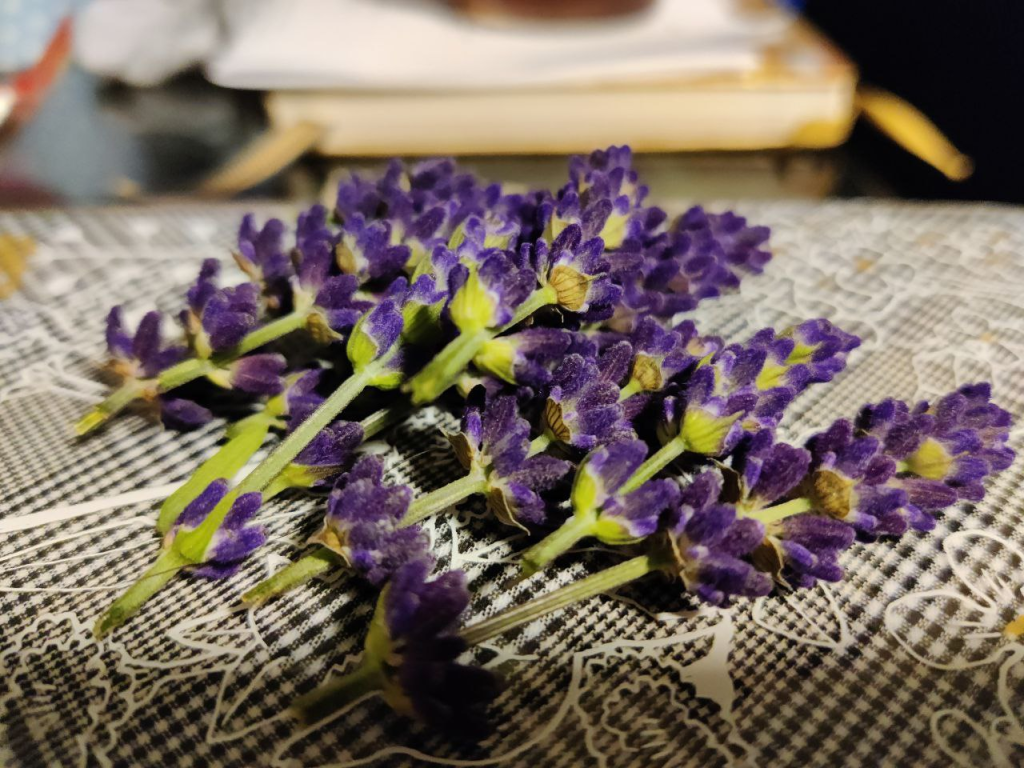
Since I had to attend the conference online rather last minute, I wasn’t able to grab a photo of all the cute snacks and drinks that I had during this time. I will say that my favourite snack was a soft matcha flavoured cake. My favourite drink was lavender tea, freshly plucked from the front yard when my folks could remember to grab some for me, since I was functionally under house arrest.
Lavender from my folks. This + honey made my sore throat much better. Herbal tea (infusion if you’re picky) is a nice alternative to the gallons of coffee I usually imbibe.
Tip number 3 and 4 involve keeping yourself busy. Unlike an in-person conference, there are very few things you can look at that you are unfamiliar with. You likely won’t have access to the attendees (no camera facing that way, zoom only shows the speakers) so figuring out who else is at that session is out unless they speak up during Q&A. Instead, you could be getting some mundane tasks done! I personally can’t look at a screen continuously, so laundry, cleaning the kitchen, organizing bookshelves, watering/trimming plants, etc. all give me breaks away from the screen, but I’m not doing anything so critical that I can’t check what’s on the screen if it’s particularly important. Tip 4 gives you the flexibility to move around without fear of wires tangling or blasting the audio (less of an issue if you don’t have roommates, but still a nice option). Earphones are also an option, but I find headphones to be a bit better with universal fitting. Also, you now have the wonderful ability to choose to go to the bathroom while still listening to the sessions.
It’s all good to be perfectly cozy while stuck at home (or if you’re so inclined, going outside while still plugged into the conference). A big part of the conference experience is being present though. For me, that means dressing in a slightly snappier manner than I normally might. Regardless, I would want to have a change of pace for “conference time”, much like when working from home, it’s helpful for me to dress up for “work hours”. Dressing down could be a fun alternative to this though. After all, no one can see that you’re in the goofiest of onesies. Similarly, no one will know (other than your housemates) that you attended in a full ballgown and mask. So that’s tip 5.
Tip 6 is applicable to any conference you attend. There is only so much time in a day, so pick your favourite events to go to. Figure out what’s relevant to your interests. Not much more to say about this one. Tip 7 is similarly applicable always. Should you find yourself longing for some company, or wanting to experience the social aspect of the conference, checking in with your lab mates or anyone else at the conference can be nice. If you’re all together (remote or in person), it can be nice to schedule some hangout time outside of the planned events.
Lastly, it’s always a good idea to tap out whenever you’re feeling tired. No point attending a conference in your brain is on the fritz. Return to your comfy couch, or pop back into that hotel room as need be. Enjoy your next conference!

 Abstract ED