Exposition
Some time ago last year, I wrote up a blogpost on how to increase the likelihood of having your plants mostly survive when you’re out of town for an extended period of time. Whether that’s conferences, or field work. Things have changed a little since then, and my environment is now different. The room where my plants mostly reside is hot, very hot during summer months. This means watering some of my plants nearly every day to keep up with their requirements and the methods I had come up with in the past wouldn’t quite cut it. If I was gone for more than a week, I was sure to have casualties with the way things were currently set up. What was the solution?
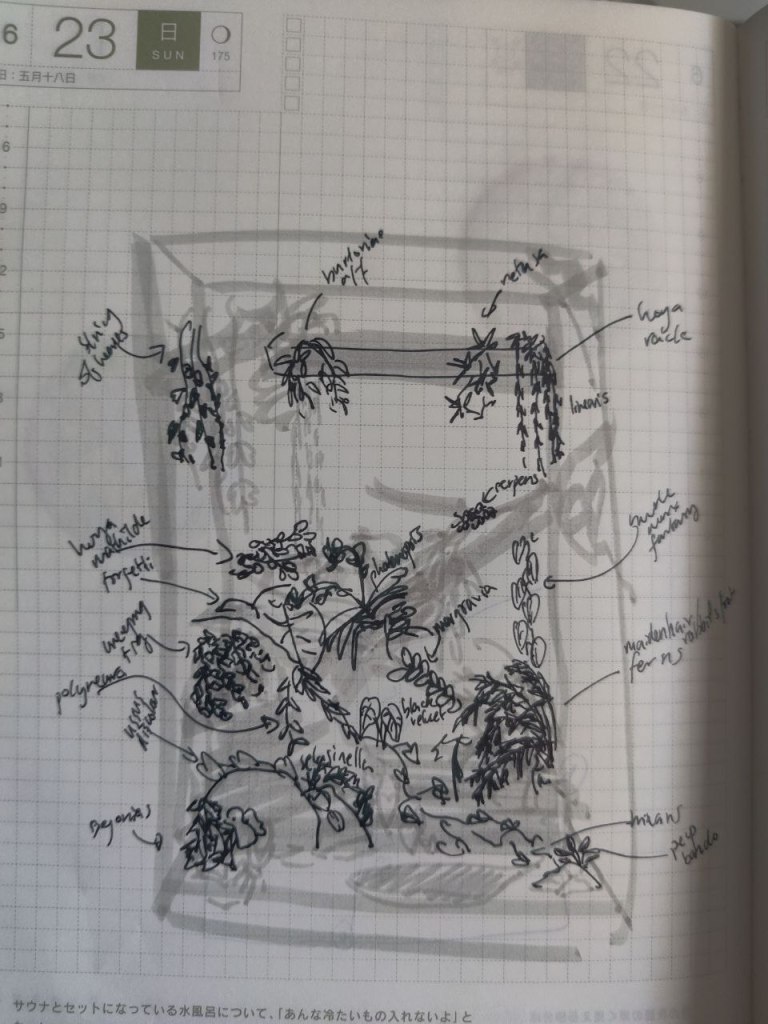
Rising Action
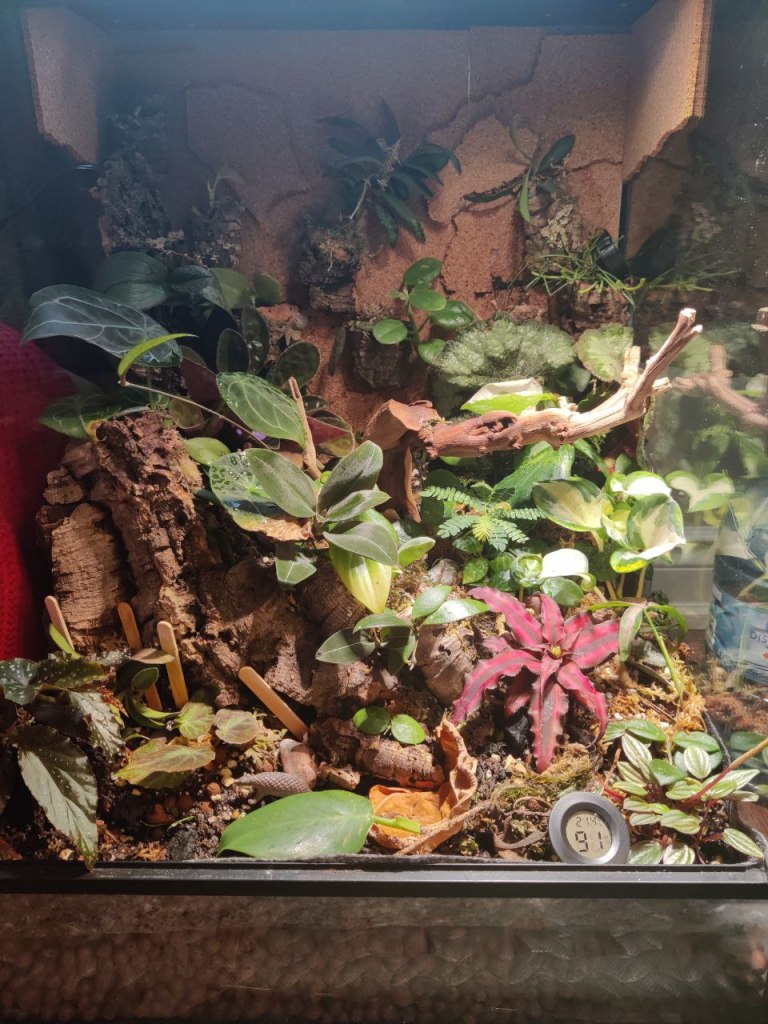
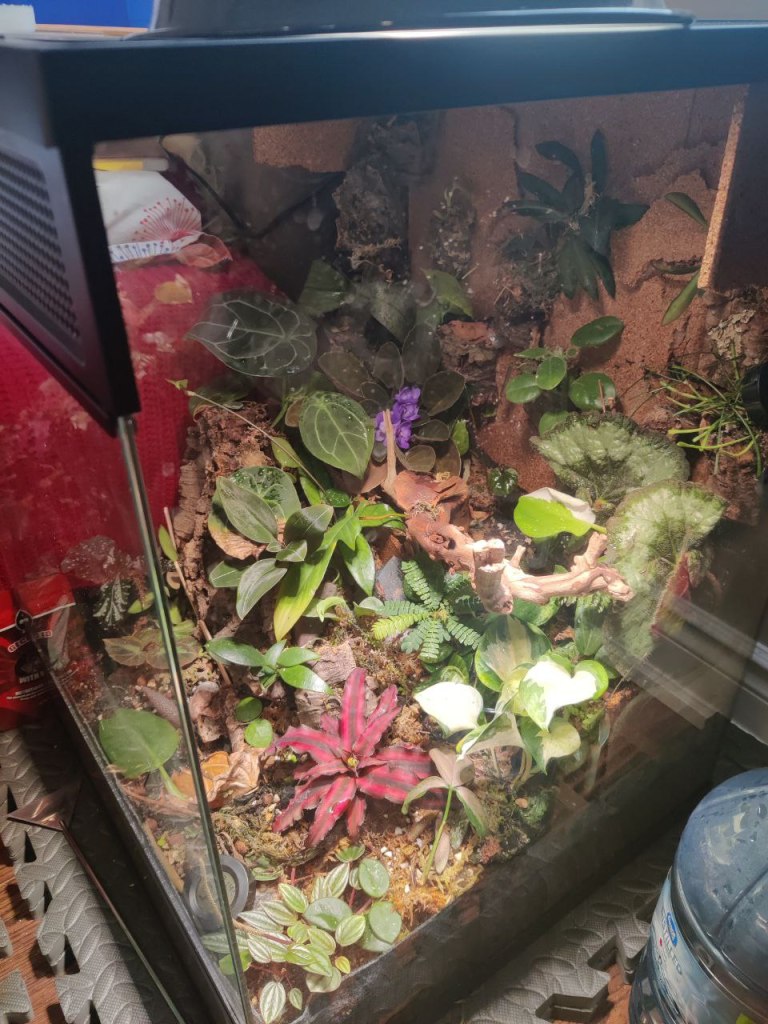
Apparently, it was to purchase a large glass box and build a terrarium. I also wanted to make it bio-active, with little critters eating all the mold and decay that was sure to happen in a partly enclosed, high humidity environment. Some of the materials I had already, which is why I felt it was perfectly reasonable to go ahead with the idea with a little over a week to spare. I was able to put together all the components together in a couple of hours, and the next day after the silicone had cured, I dumped in my drainage layer, added some weed blocking fabric, sprinkled some charcoal, and topped it all off with the weirdest soil mix I have ever put together. It didn’t actually work out exactly this way, as I vaguely remember digging up parts and trying to stuff in more drainage a few days later after purchasing some additional parts after I had already set up part of it (see Figs. 2 and 3).
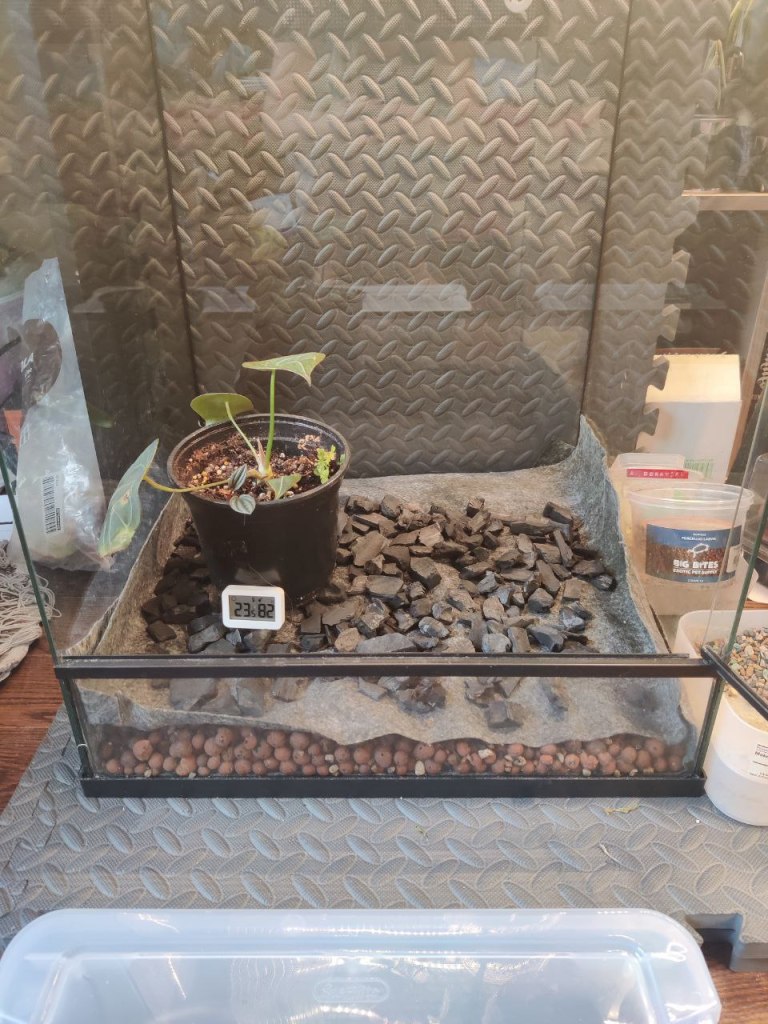
After the structure and soil had been put in, it was time to add some “hardscape” (Fig. 3). That is what “scapers” refer to as the chunky elements that guide the overall composition of a scene (scape). In this case, I had a pile of miscellaneous rocks I had collected over several years, and some corkbark flats that I had purchased by the pound. Then I stuck in all the plants and fussed over their placement in proximity to the light source and soil depth over the next few days while figuring out precisely how frequently they needed to be watered.
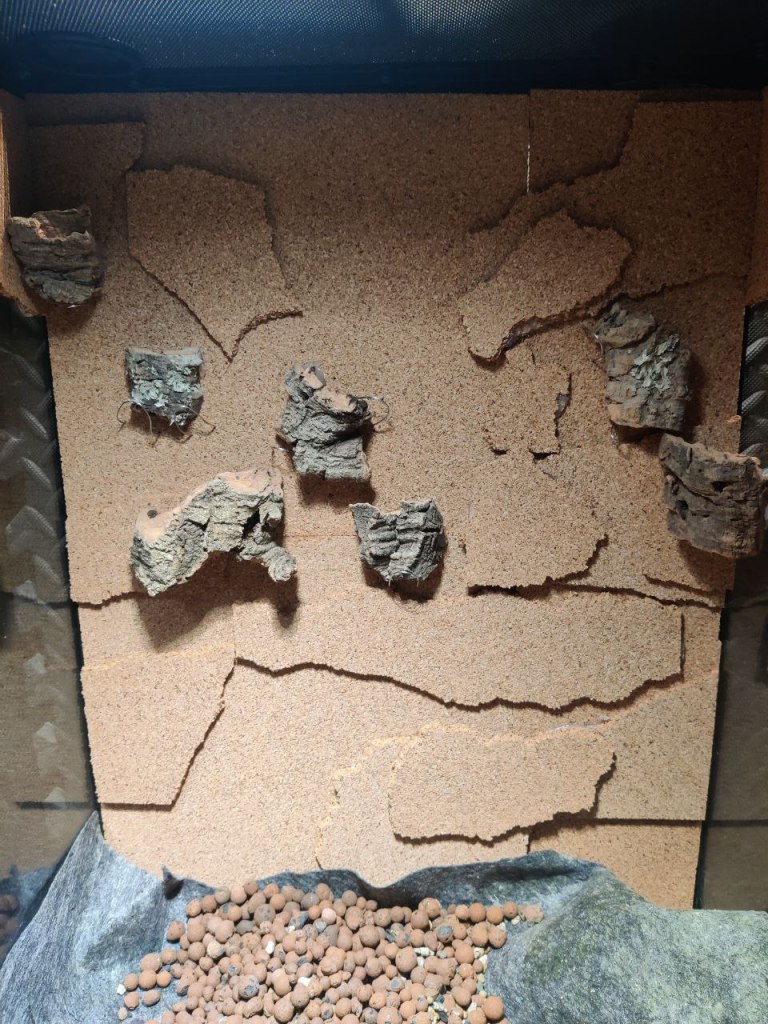
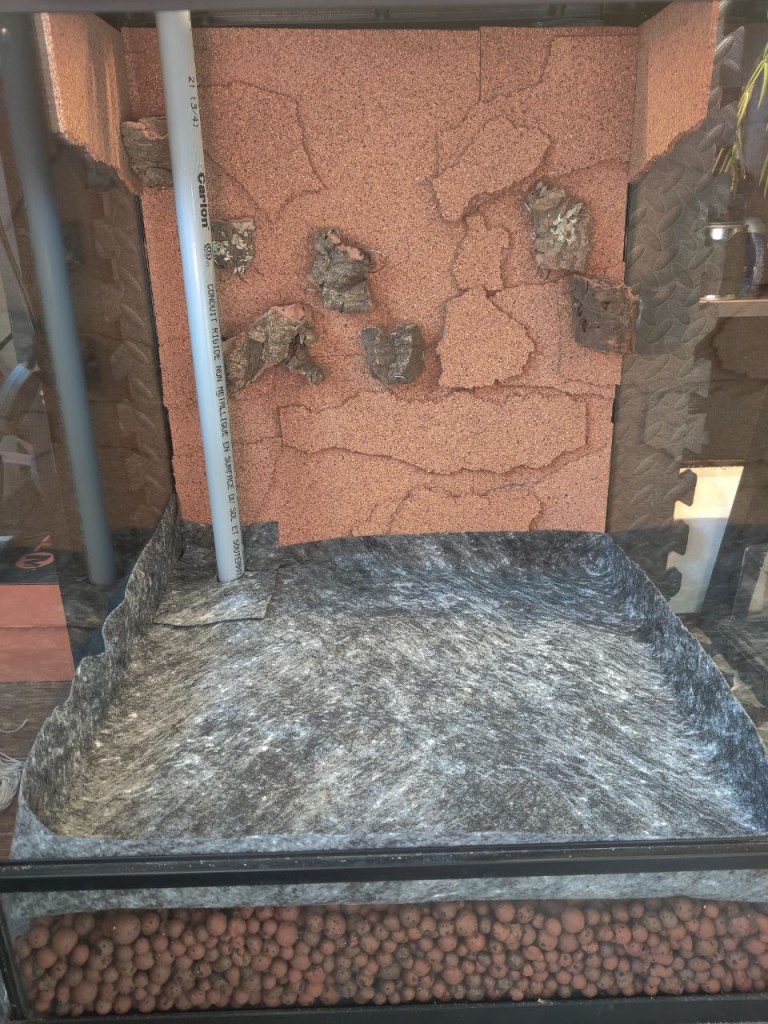
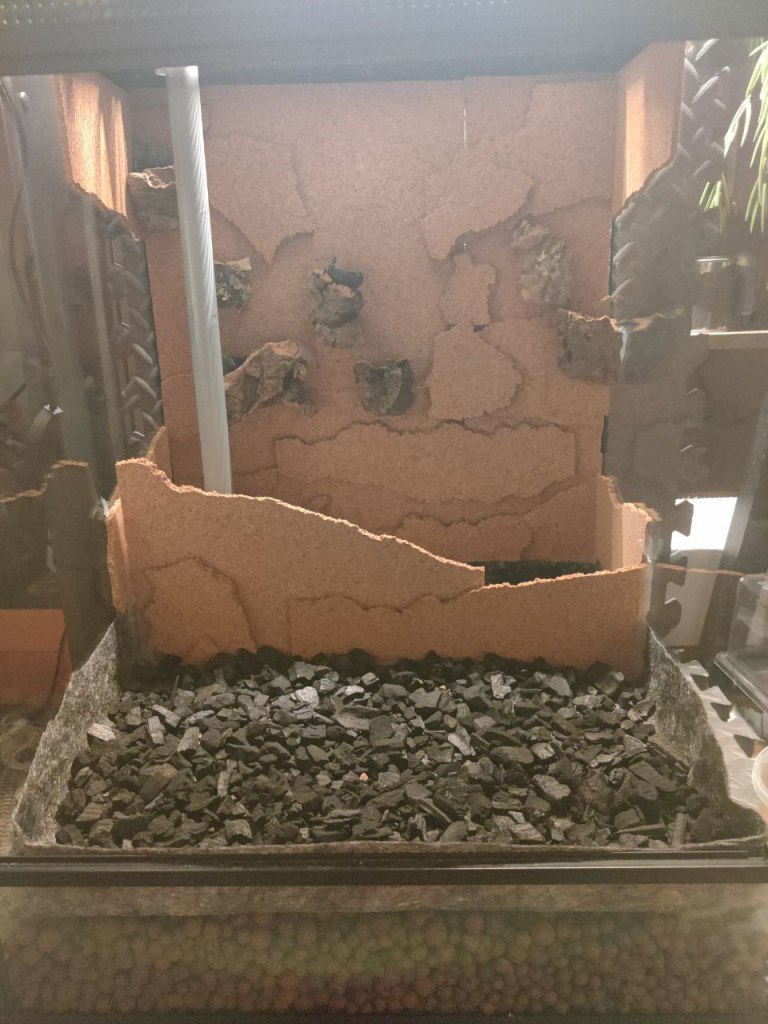
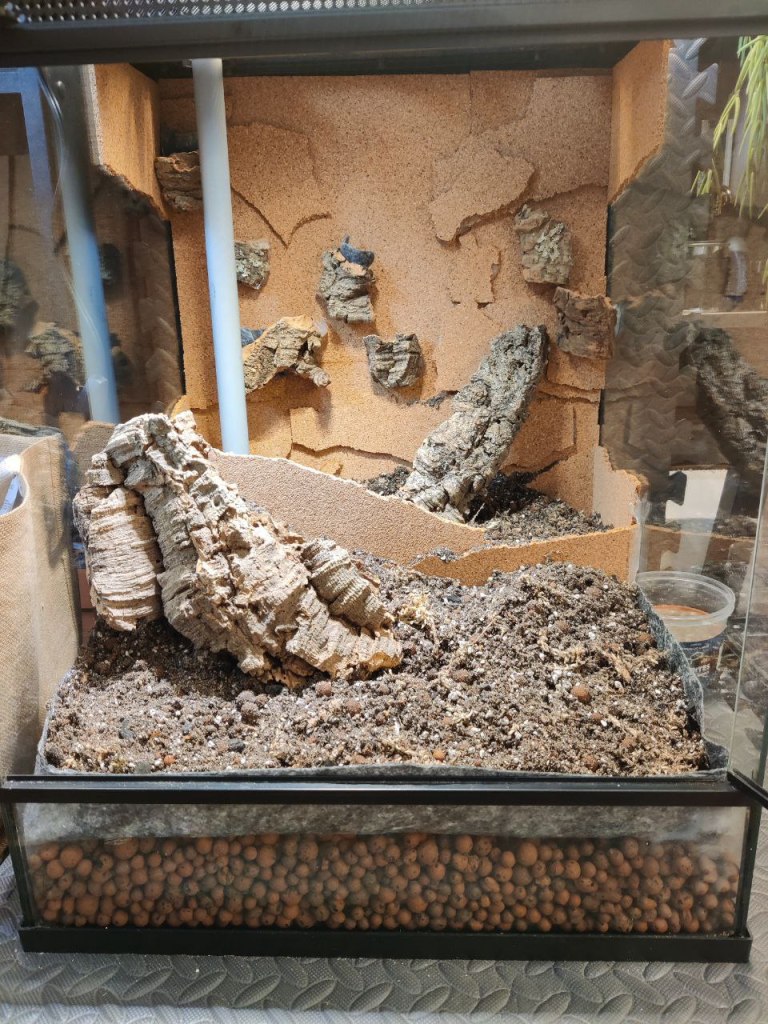
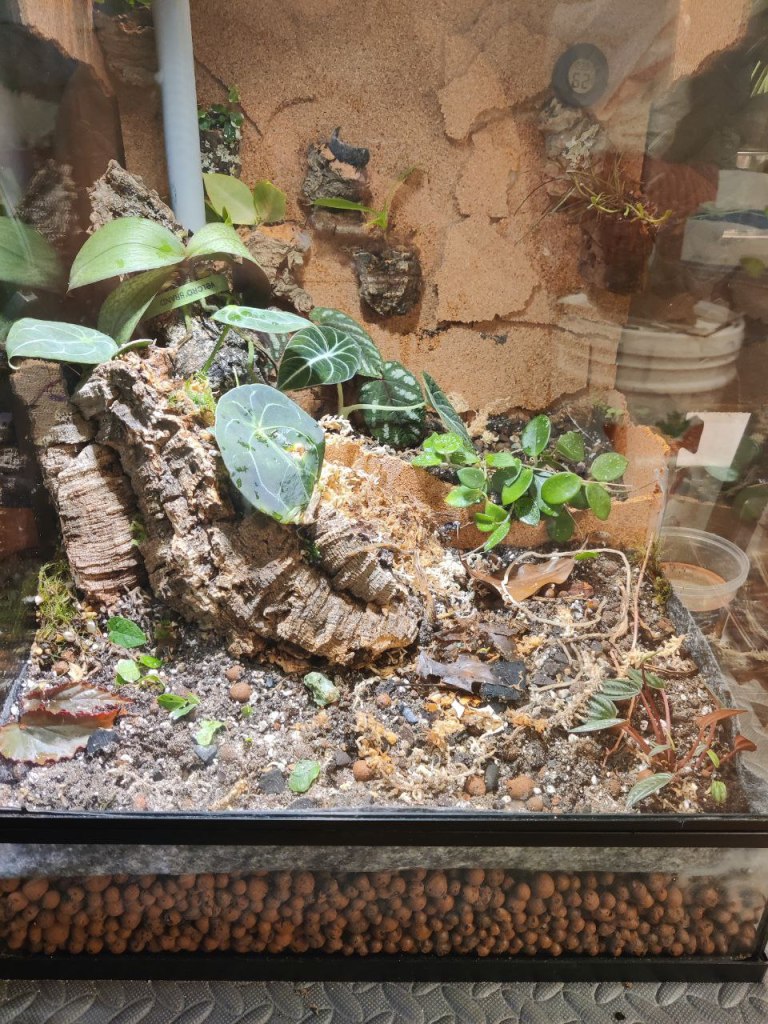
Things were going well, I knew the watering schedule, and I knew that there would be family members who could check in fairly regularly rather than leaving everything in darkness for 2 weeks.
Climax
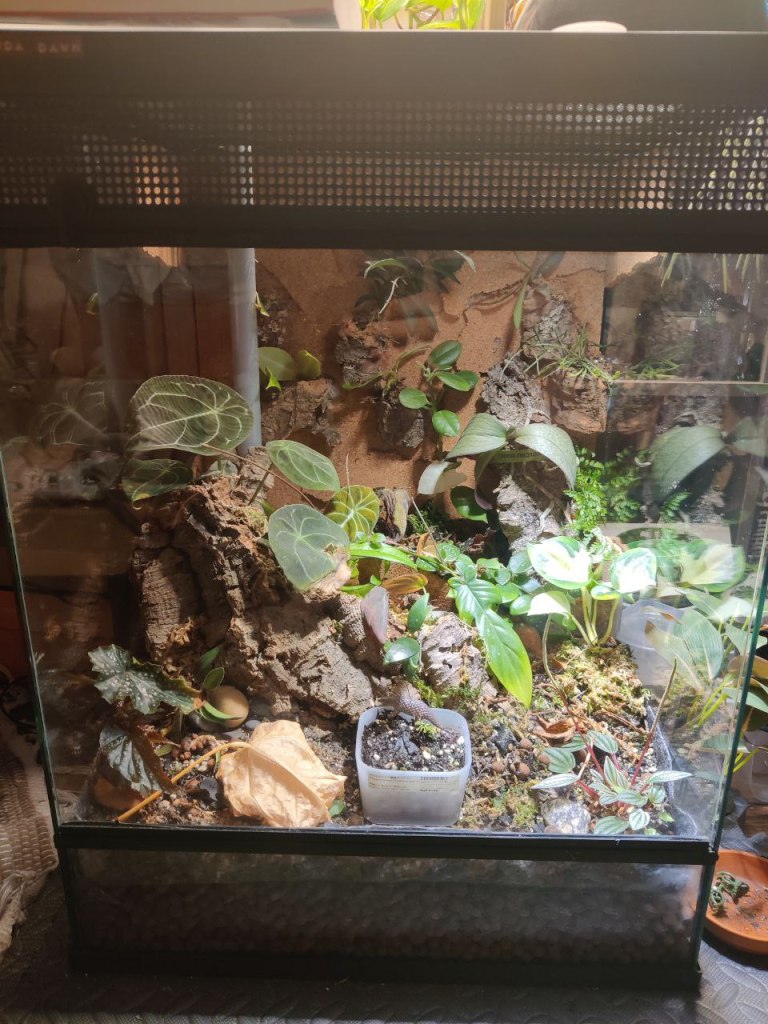
I came back and… not too bad. There were only a few casualties, a spider mite boom, and some very happy isopod colonies. I spent my first full day back cleaning and inspecting the plants in between unpacking and seeing what I had missed while I had been gone.
Falling Action
Life moved on, I had work to catch up on, and I was happy that most of my plants were stable. It was highly convenient to be able to water the vast majority of them all at once! Naturally, I also purchased some terrarium specific plants to add in once I saw that everything had been established and was growing in (Appendix, section B). I felt like things were about wrapping up in this terrarium, and as time progressed, I relocated some of my remaining shelf plants into the terrarium.
Then, just this weekend, I went to a plant swap in Toronto. The event has been on my radar for the last couple of months, and I even had a hopeful wishlist of things I would love to find. I brought 8 plants with me to give away, and took home 10 or so. While I did side-eye the health of a few of the plants, I gave everything an intense blast with water and stripped most of them down to the root. No obvious pests. So… I recklessly placed some of them inside as well (Fig. 5). I was feeling pretty comfortable about the whole situation.
Denouement
Is the plant care optimization and acquisition adventure over? Probably not. I’m planning on going to a Plant Expo later this year, so chances are I may come across something that I fancy. I might also be able to harvest some of the alyssum seeds out of my potted plant container from outside and see how they fare indoors. This also means, I probably need to look into building more enclosures. The current set up is almost a little too easy to take care of, and its been taking out some of the fun and enjoyment out of plant care and maintenance. I’ll be looking into building an automated watering system, which sounds like it could be the next big adventure. Depending on how things progress, I may also need to look into adding some mini fans to help circulate air and dry out the terrarium faster.
Reflections Upon Return
Despite some losses while I was away, having a main set up has definitely a time saver when it comes to watering and general care. I’d argue that I’ve already earned back the time spent sourcing parts and constructing the entire enclosure. Plus its nice to see all the plants placed so closely together, in comparison to pots dotted about.
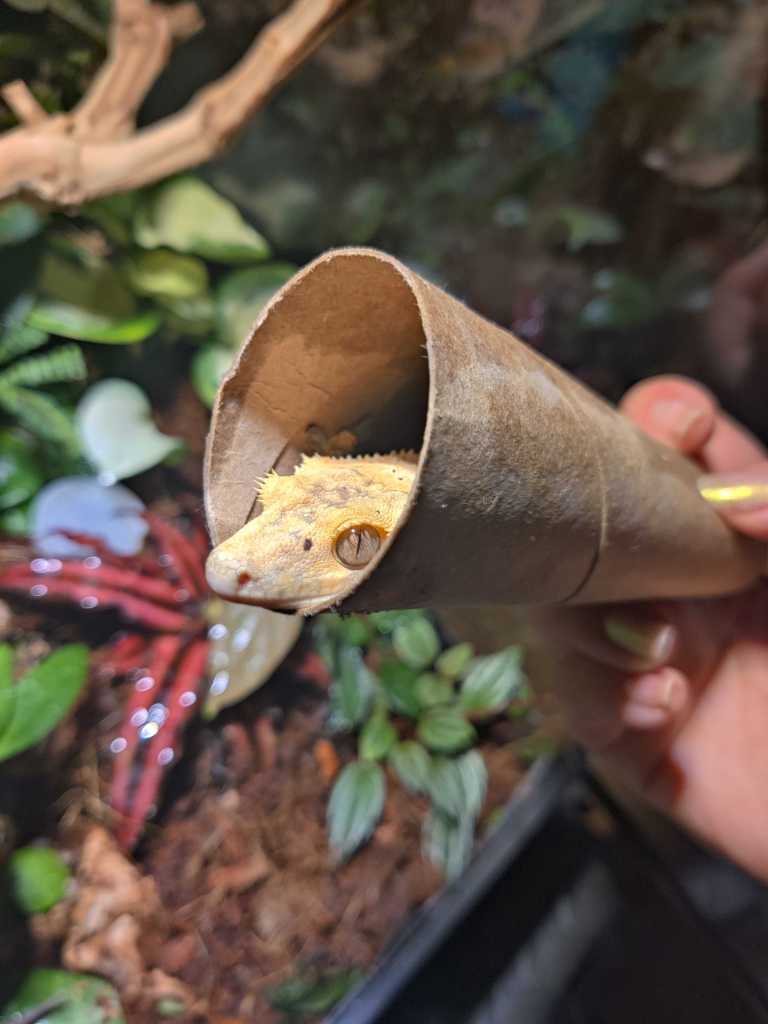
While I still like watering my potted plants at weird intervals, daily spraying is a far easier task. It usually ranges between 70 – 90% humidity in there if I’m watering twice a day (trying to get into the habit in case I go forward with the plan of acquiring a gecko, though I would open up the ventilation more for it to drop quite a bit before adding more water!). I also happen to have a pressure sprayer that holds 4 L of water from a whiles back when I was doing preventative spray downs of my plants so watering is extremely quick. I’ve been filling it up with rain water and using it for just about everything.
Mind you, it’s not just watering I have to do. Since it’s a bio-active setup, I still have to feed the critters from time to time. They get any of the following: crushed egg shells for extra calcium, special Soilent Green from Repashy, select dried leaves from elsewhere in my room, and piles of algae and duckweed from my aquariums. So much duckweed. I don’t think they’re big fans to be honest, but it is very nutritious, so they’ll just have to deal. Definitely one of the more fun projects for the summer though. As for the other “worlds”, I’m waiting on them to establish well enough to share any successes and failures.
Appendix!
A – Initial Setup
Approximate cost breakdown of the terrarium (initial setup) in CAD:
- $100 tank (second hand, 18”x18”x24”)
- $20 cork bark (by the pound)
- $11 wood
- $15 silicone (caulking gun was borrowed)
- $10 spring tails (culture from much earlier in the year)
- $15 isopods (dairy cow isopods on sale, it’s possible to get them for cheaper and much more)
- $0/$50 weed fabric barrier (from a previous project)
- $2/$60 spaghnum moss (I’ve been using the same bale for nearly 2 years! I’m finally running out)
- $10 lamp (this is the cost of the LED bulb, the lampshade came as part of a store display set)
- $10 peat moss/perlite mix (wrong choice by the way, I later topped this off with $5 of coco coir bits)
- $3/14 biochar
- $5/$60 LECA
- $3/$15 mineral magic (pon-like blend)
- $5 perlite
Plants that I jammed in there (some of these were added much later when I returned though!):
- plant species (personal):
- alocasia black velvet (melted away, this sucked since my backup plant dried out while I was gone)
- anthurium forgetii
- anthurium dorayaki
- begonia lynda dawn
- cissus discolor (pinky leaves! Though most of it melted away)
- davallia fajeensis (rabbit’s foot fern)
- ficus pumila green (dried to a crisp!)
- hoya crassipetiolata
- hoya GPS 7240
- hoya mathilde
- hoya retusa (finally growing!)
- pepperomia bando
- phalenopsis (of some spotted leaf variety)
- philodendron florida ghost
- philodendron micans
- pothos manjula
- Added after I got back:
- begonia fannie moser
- begonia escargot
- hoya burtoniae aff
- hoya coroniae (red)
- hoya fitchii
- hoya memoria
- hoya polyneura
- hoya rebecca
- hoya sigillatis
- maranta var
- philodendron white princess (ish)
- pothos global green
B – Additions to the Terrarium
Plant species (purchased for terrarium):
- begonia burkilii
- biophytum sensitivum (I don’t recommend purchasing this one, it seems to just pop up on its own if you purchase other terrarium plants!)
- cryptanthus (very pink!)
- ficus pumila quercifolia
- selaginella sp “Pachitea Dark” (I’m not sure if this is alive and growing or totally dried out)
- selaginella uncinata (sold as peacock club moss)
Plant species (plant swap/gifted):
- ludisia discolor var. nigrescens (jewel orchid)
- monstera lechleriana
- syngonium pink spot
- hoya nova ghost
- dischidia hirsuta (?)
Crested gecko:
- 2 year old male crested gecko with minor spinal deformity
C – Reviews
Provision Garden Supply – I went to the one in Newmarket and have gone a few times in the past. Usually I’m looking for something specific, like fertilizer or a soil replacement. This time I was looking for a few types of soil, biochar, and LECA. The staff was really helpful in narrowing down the best base “soil” for a terarrium that might one day host a live creature. He pointed me to Lamberts since they had a claim about being entirely organic, though wasn’t convinced it meant all that much. I appreciate the candor though!
JOMO Plant Studio – I’ve shopped from JOMO a few times in the past, and attended one previous plant swap event. It is a store that targets people interested in plants for aesthetic, but has been slowly moving into trendy plants that are often priced pretty high in comparison to their older pricing that was mostly scaled on the size of the plant. The swap event itself was fairly well organized, with drinks and 3D printed freebies as well. It also stayed remarkably on schedule. I have mixed thoughts on the health of their plants, but I have never once seen pests upon arrival. I seem to have bad luck with the few things I’ve gotten from them though.
Understory Enterprises – the source of my terrarium plants (and an ill-advised decision on fruit flies, my fault, not theirs). They were quick to email back on an inquiry for local pickup, it was easy to organize, and the plants were healthy. All are still doing well at this moment!
The Gecko Hub – April at The Gecko Hub responded to my immensely sketchy Instagram message with a lot of grace and let me visit her residence to interview the geckos. She selected 5 based on what she thought I was looking for, and also let me look around the breeding room while chatting about general gecko care and husbandry (and pointing out other geckos that I might be interested in! She was right). I was pretty impressed by her professionalism and knowledge base, as well as her firmness on which animals would be “pet only” due to concerns over passing on unhealthy traits.
 Abstract ED