Another day, another adventure.
Background
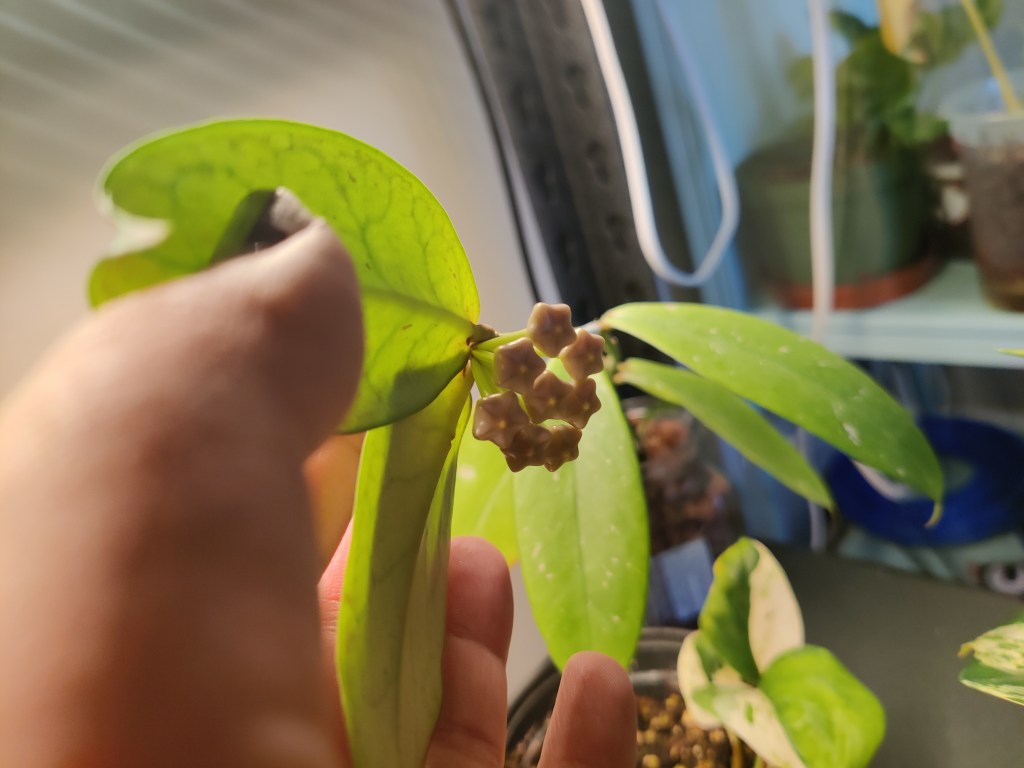
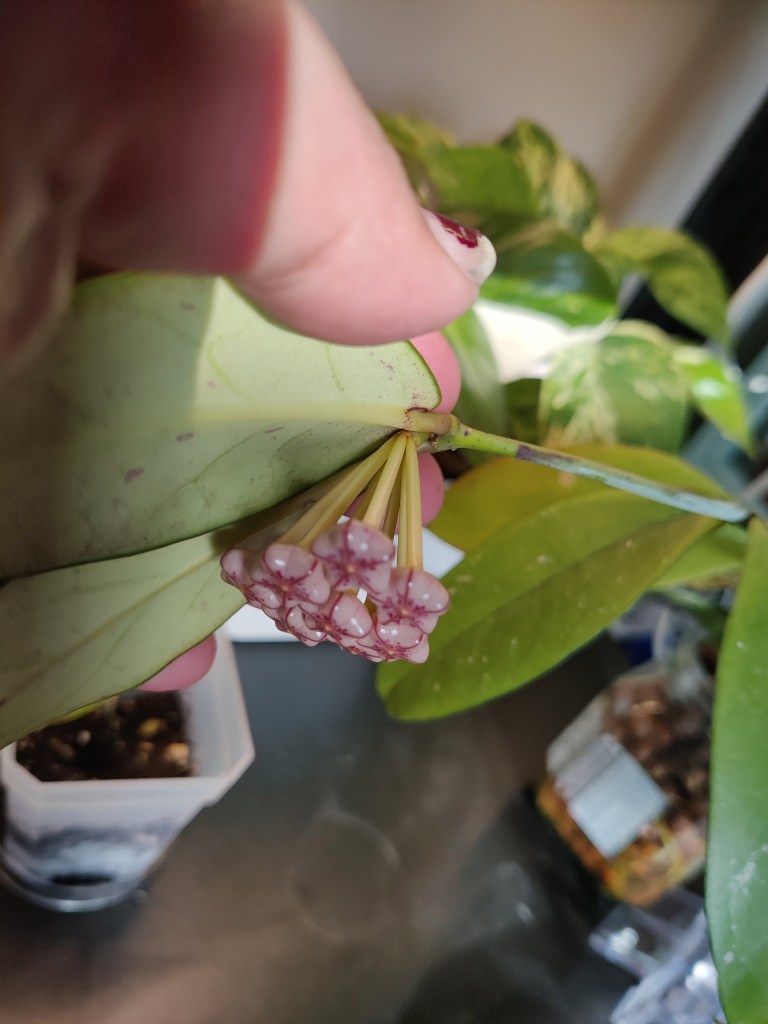
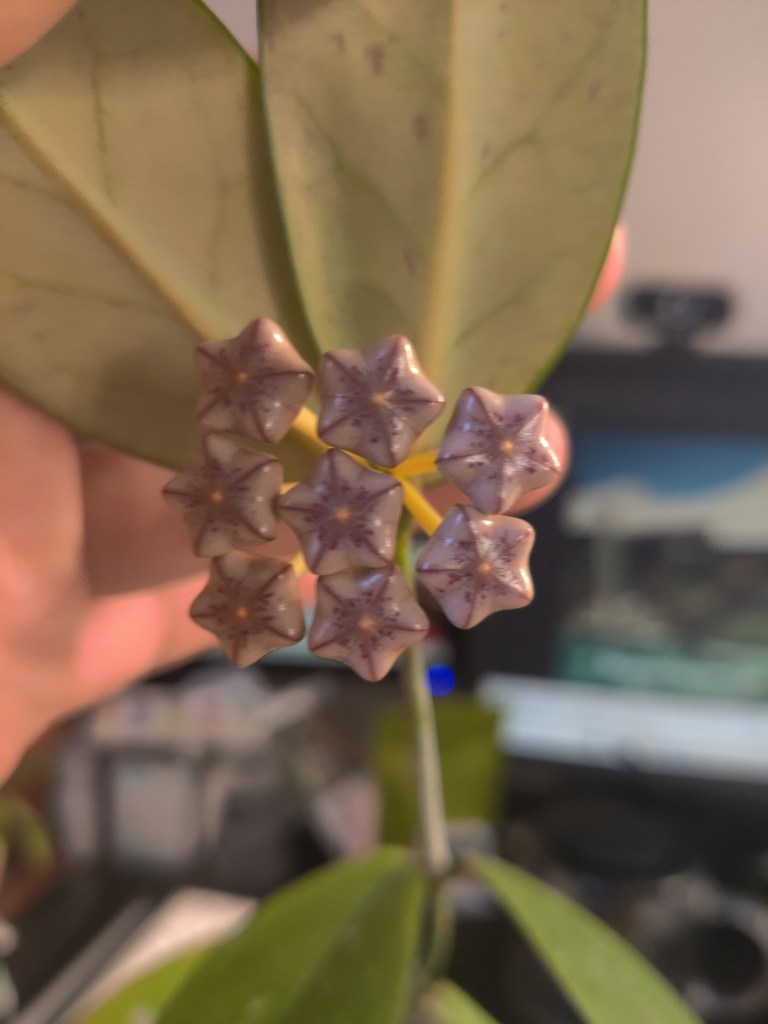
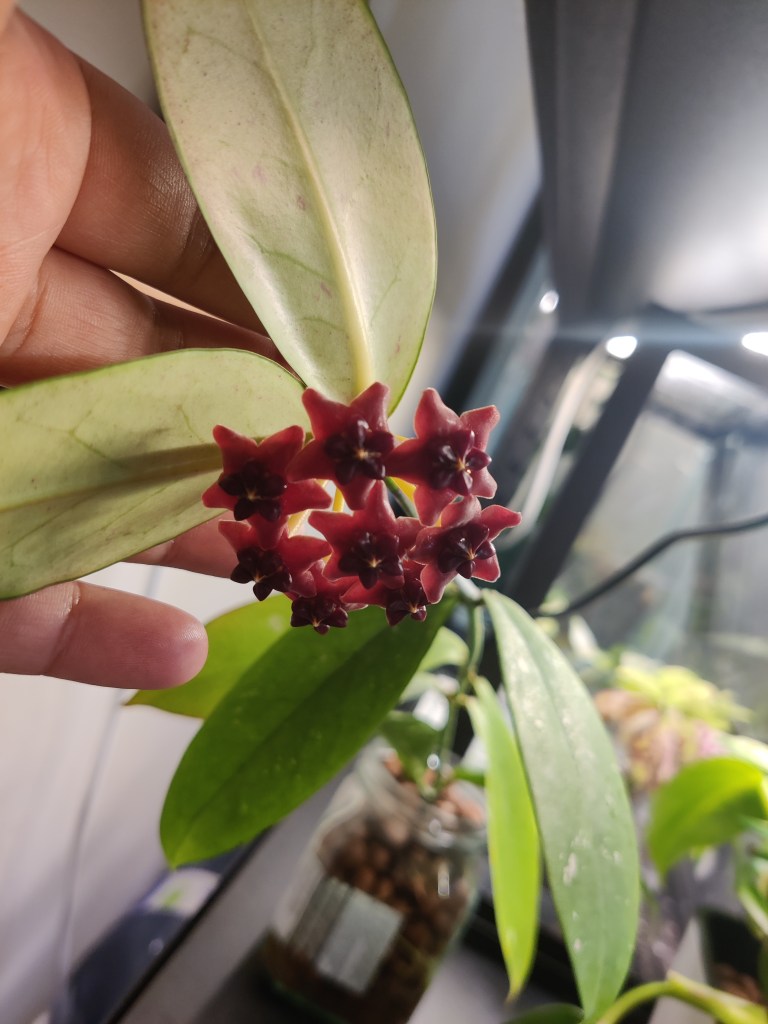
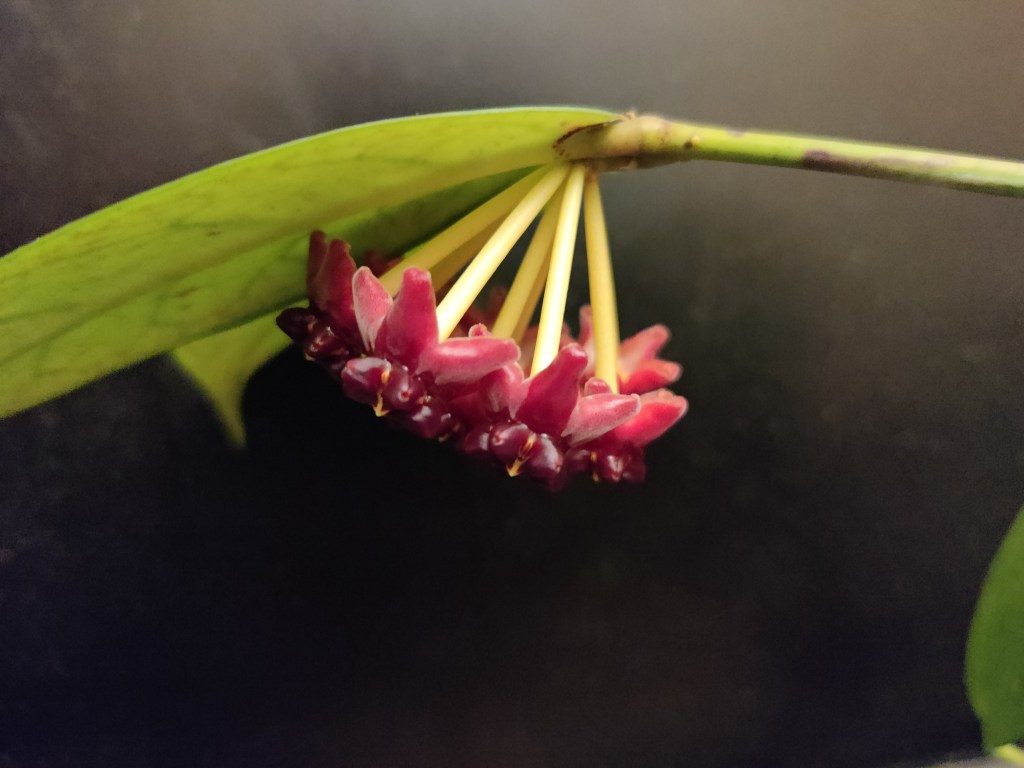
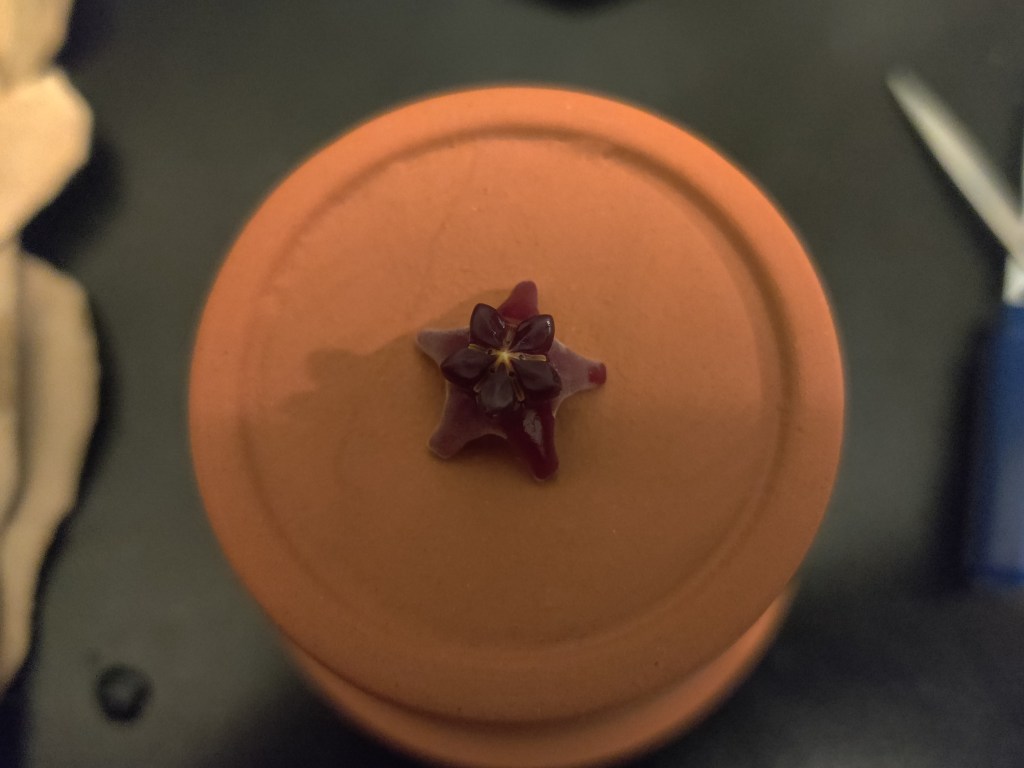
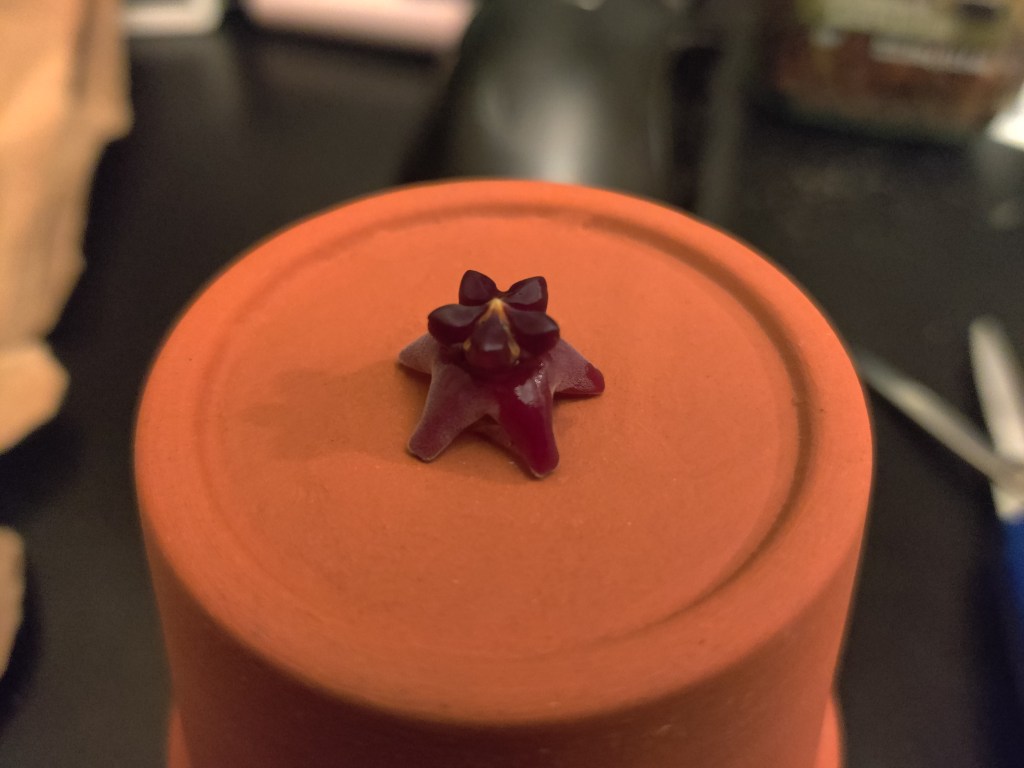
A hoya blooming to completion for me was a first! I’m not typically one for blooming plants, but this one promised dark purple flowers, and so I was intrigued. The plant was acquired with two sets of leaves back in 2023, and has since put out another 3 sets of leaves in the intervening time. That’s something like 150% growth! More importantly, during early May, a peduncle started forming. This signifies the potential the plant is starting to push out a cluster of flowers if it doesn’t “blast” off, like my linearis did last year. I was pretty excited to see these “black” blooms, but wasn’t holding my breath. Over the span of another two weeks, the blooms slowly got larger and showed their “waxiness”. I missed the moment where they unfurled, but I came back one day to full on flowers (Figs. 1 and 2).
Flower and Plant Review
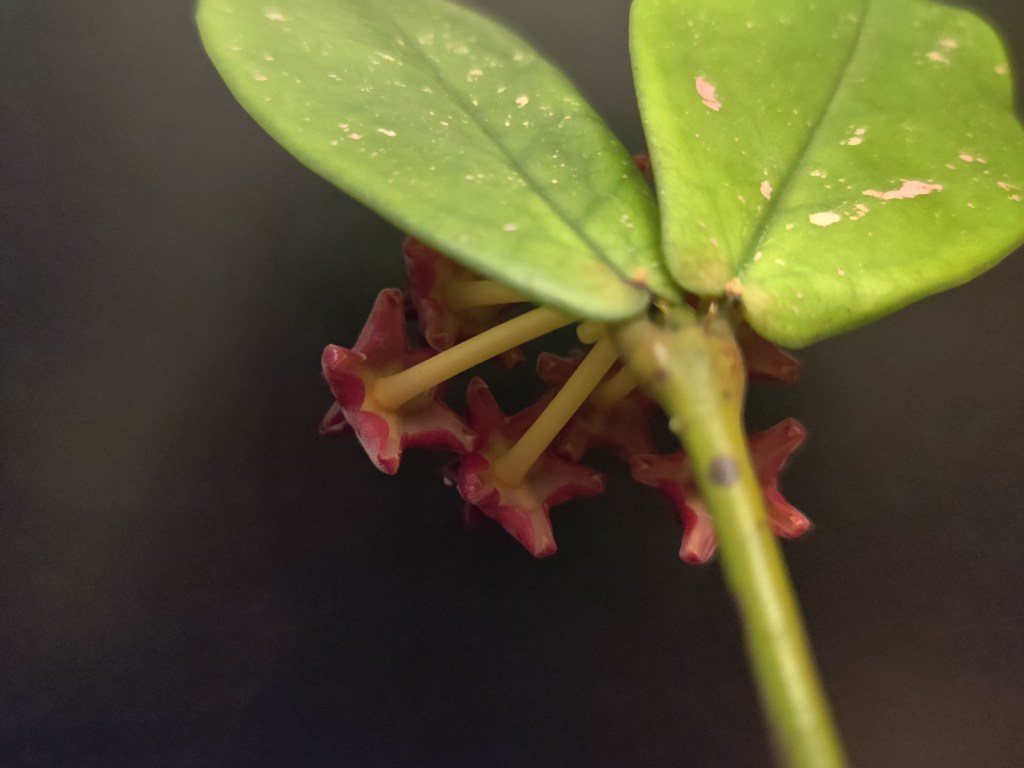
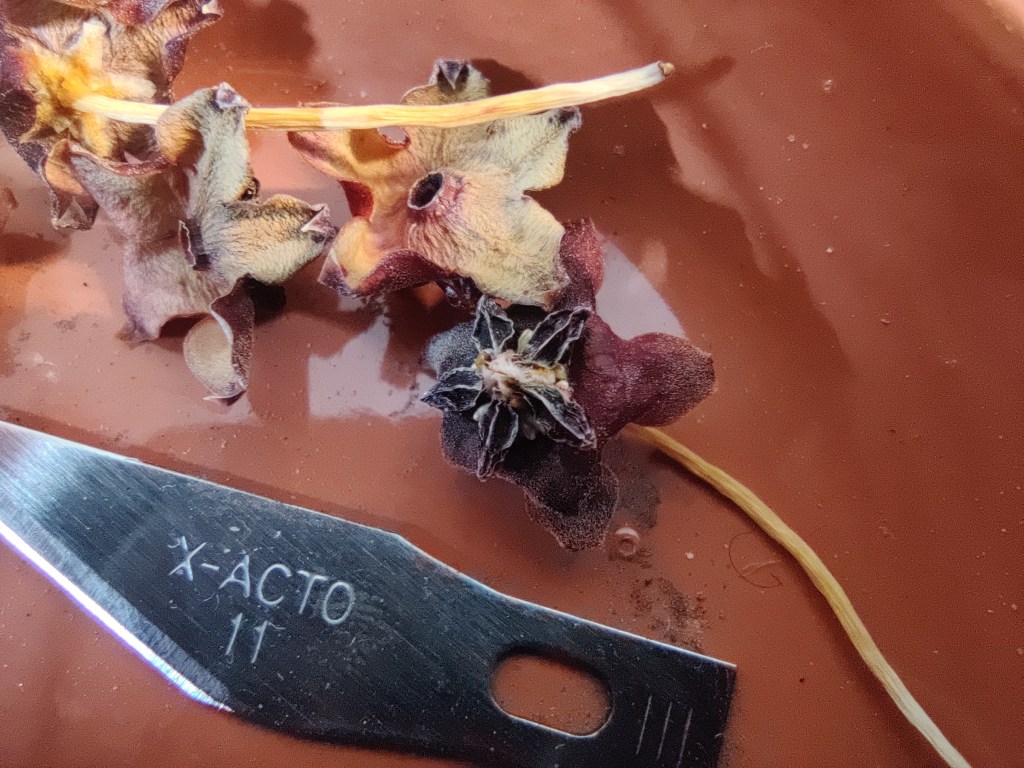
The bloomed didn’t smell particularly strong, but there was a faint sweetness if I got very close. Admittedly, I didn’t think through the fact that this plant lived on a shelf, and the blooms were well below my face height while sitting. So to see the blooms, I had to either jam my face in at an awkward angle, or pull out the plant to admire. Anyhow, the plant bloomed, I was happy, but not entirely convinced it was worth the wait. The leaves aren’t particularly charming, and unless it’ll be regularly in bloom, it doesn’t do much as a décor piece. It also made a mess after the pollination, leaving behind nectar blobs that had dripped off onto the shelf. A minor amount of drippiness can be seen in Figure 4.
The Response
With that in mind (the plant being rather boring), I tried to go to bed. At some absurd hour, I decided that it might be worthwhile pulling out the information I had on trying to pollinate the plant. I vaguely recalled that I had downloaded a few articles on the procedure, but being in bed, it was easiest to pull out my phone. Here are the two sites I landed on:
- https://www.theplantdom.com/blog/pollinating-hoya-blooms
- https://www.houzz.com/discussions/3793437/for-adult-eyes-only-making-hoya-babies
I also found a less than useful, but often looked at YouTube resource for pollination and a Reddit thread wishing the poster luck: https://www.reddit.com/r/hoyas/comments/ghng1f/pollinating_hoya_blooms/. The main issue I found was somewhat low resolution images and unclear arrow directions in the diagrams. Even though everything was labelled, looking up the respective parts of the hoya flower across different flower types was quite difficult. Here are the steps with the best interpretation I could make.
- Identify the respective components. Hoya blooms tend to be in clusters, though some form single blooms. The flowers are typically 5 sided, forming star patterns. To pollinate, the parts of interest are near the center of the flower, where activity takes place
- Pick your weapon
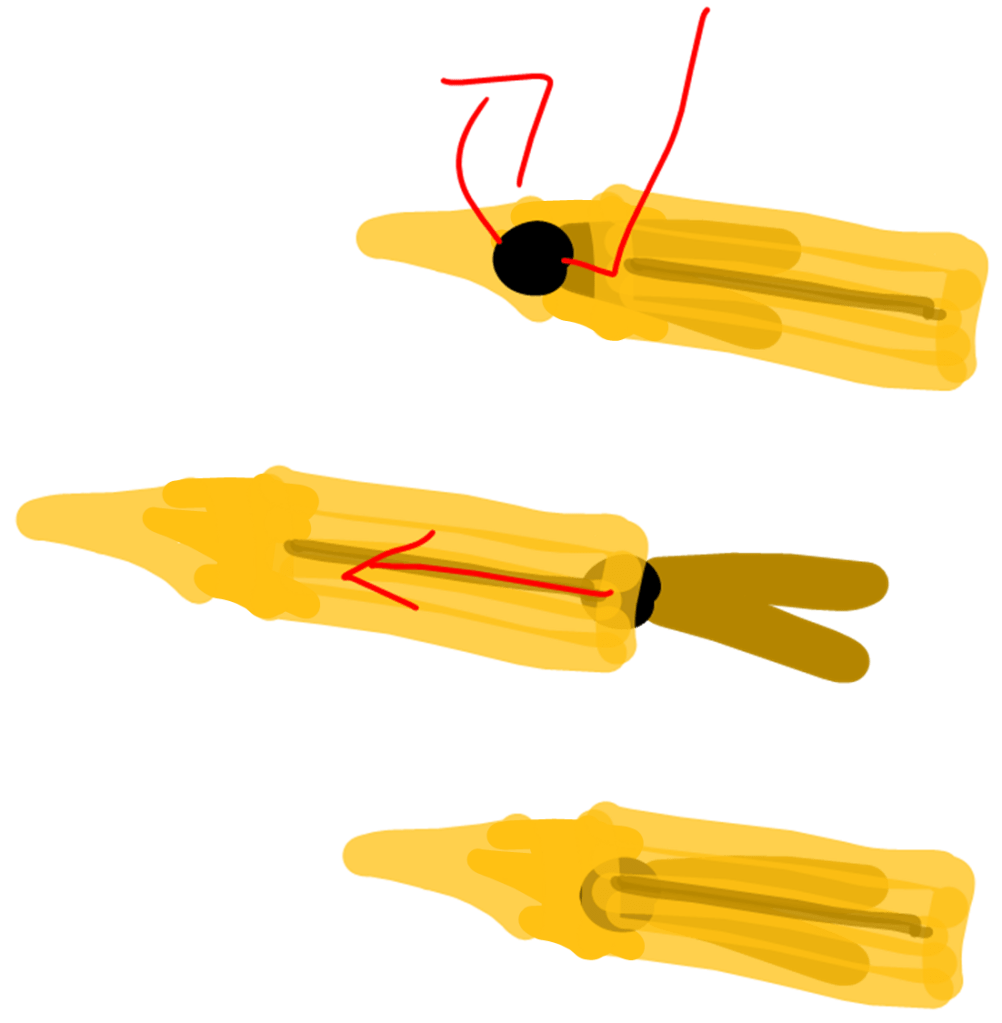
- Pull out the pollina by sliding along the surface slit, gently pushing down, hooking the dark joint (corpusculum), and lifting it out. The pollina consists of two pollinium attached by a corpusculum
- Identify your target and hold your breath
- Slide the pollina into and through the “stigmatic lock”, also known as the ”staminal slit”. The goal is to get the pollen in the pollina to contact the inner walls of the lock
- Repeat
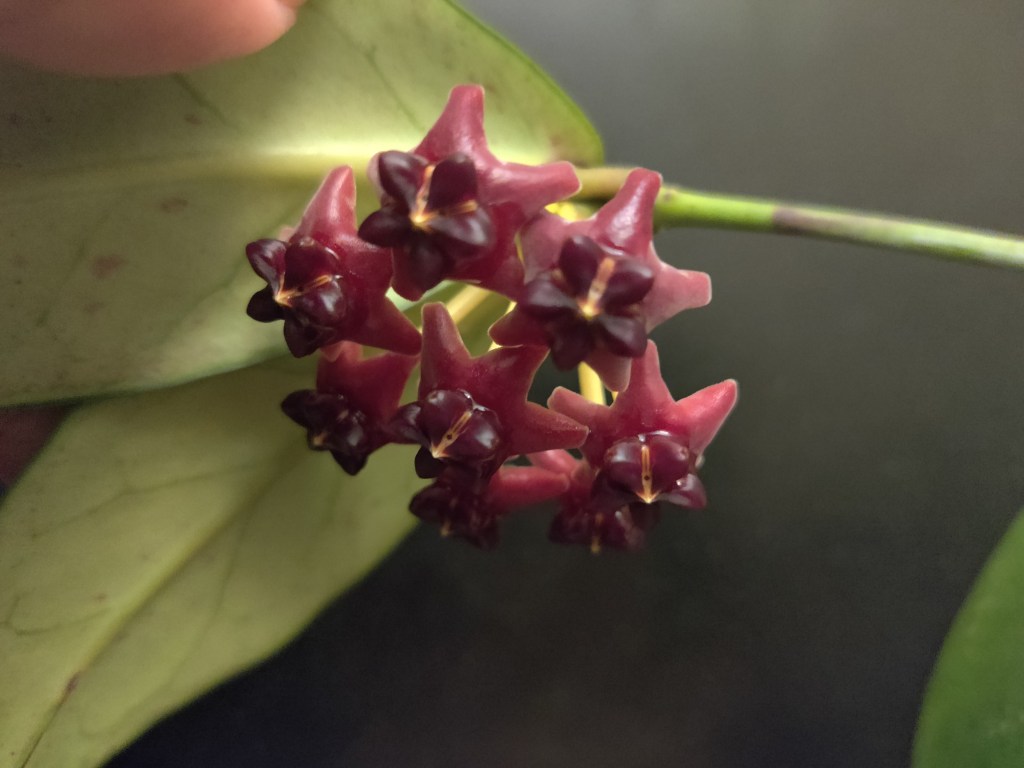
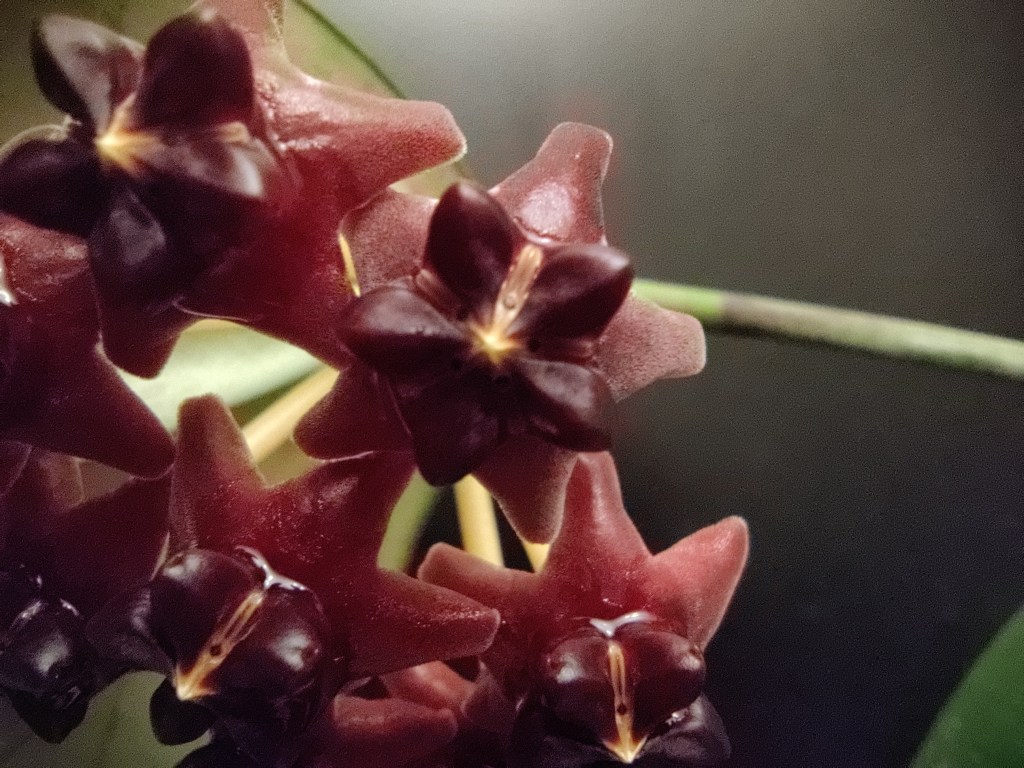
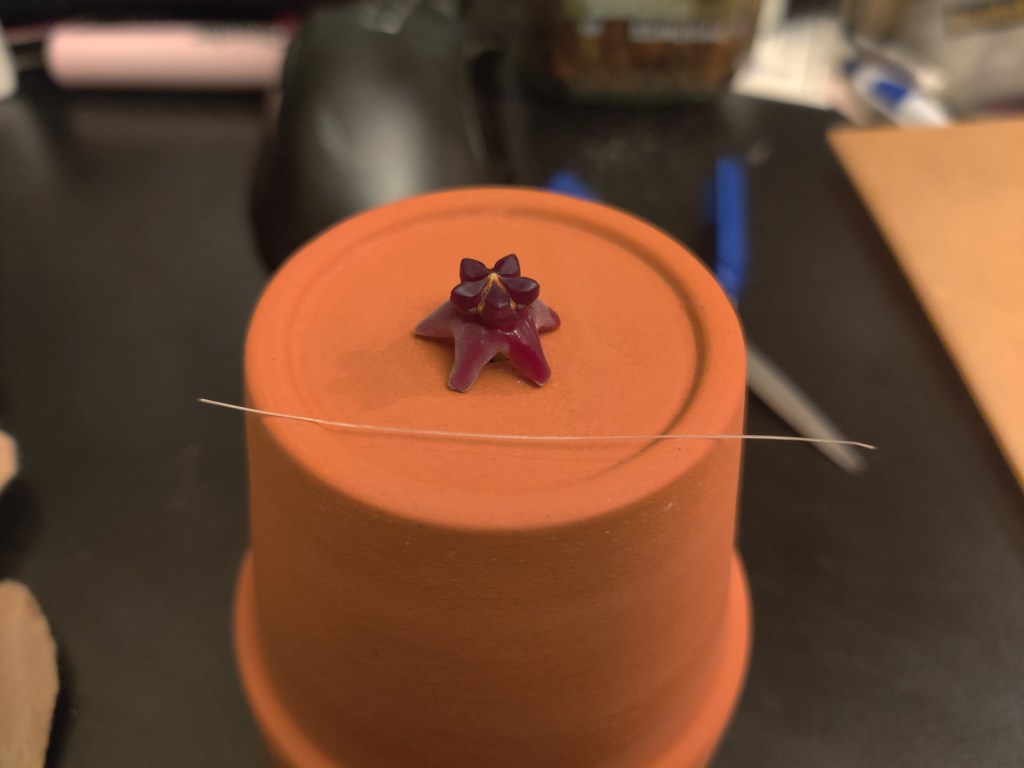
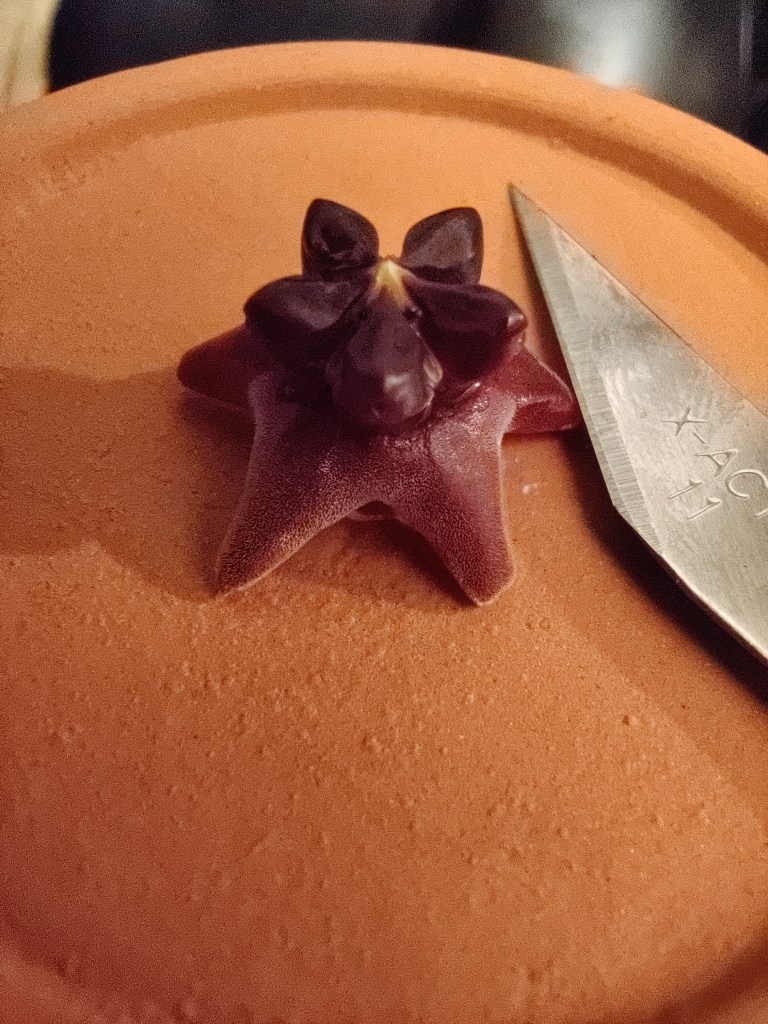
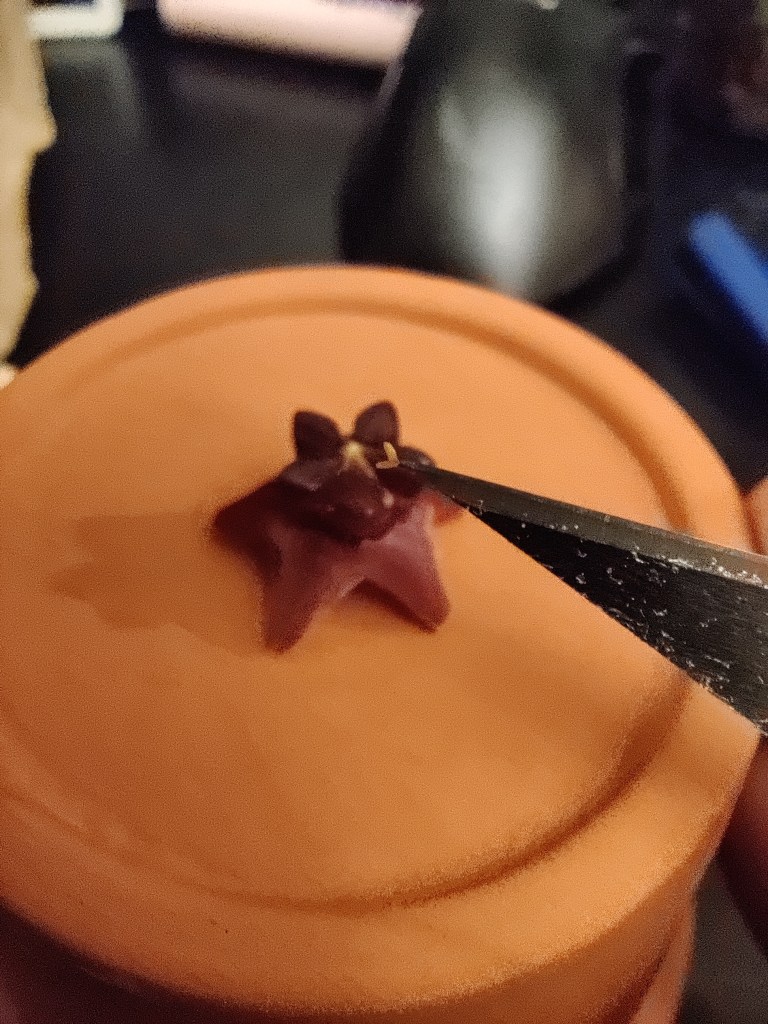
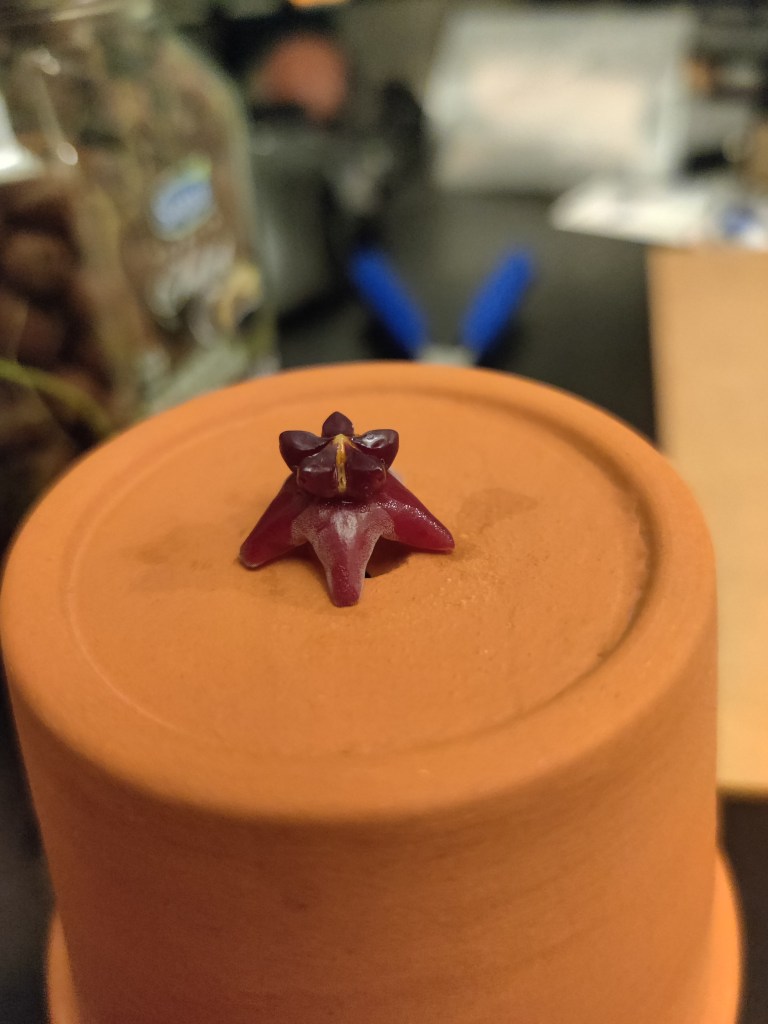
I reluctantly rolled out of bed after realizing I wouldn’t be able to sleep unless I tried the pollination out myself. From what I could tell, the goal is simply to readjust the location of the pollen source further up.I took some photos for reference (Fig. 4), then decided to also take the internet’s advice on repeated trials. I balanced juggling my phone, trying to read instructions, while trying to perform the procedure on a single cut flower (Fig. 5). If I could pollinate while it was stably fixed in place, then maybe I’d have an alright shot trying to balance a wobbling plant too.
Procedure
There are “optimal” times for pollination, and I’m not sure the crack of dawn was it. I found it fairly difficult to get the insertion correct, despite this flower having a very simple and accessible structure. This could have been because it was 4:30 am and I was all bleary eyed, or I didn’t have the right tools. The internet recommends a cat whisker (I left mine behind), but I only had a horse hair on hand. I decided to stick with the fresh X-ACTO knife blade gave me the best balance between control and width after the horse hair proved itself too difficult to be used. (Figs. 6 and 7) Note, if you use a utility knife like I did, you’ll find that the flower also bleeds sap!
The Result
In the end, I managed to repeat the procedure at least 3 times across most of the remaining flowers that were still attached to the main stem. One of the biggest issues I had were the pollinarium not wanting to remain in the lock. They would poke out a bit and I was reasonably confident that the probability for fertilization would be just about zero. Trying to insert things in also caused a lot of damage to both the receptive and insertion components of the flower. Nontheless, I was hopeful.
I waited a few more weeks but the flowers all dropped and dried out. A fun experiment, and one I’ll likely try out again if I get the chance. Preferably at a different hour.
I’ve also made my own reference diagram I can look at and contribute!
Next Steps
I might try to invert the shape of the pollina next time in case the pollen is on the inside of the wings rather than the outside edge. For this specific plant, it may also be worth waiting an extra day or two to pollinate, since the flowers lasted for quite a while, and I feel like they would naturally be more receptive when the nectar is more actively being produced.
Regrettably, I can’t validate the procedure I detailed because I’m writing this a month later, long after the flowers have dried and dropped off with absolutely no seed pod production. Maybe the sudden increased production in nectar caused the pollina to slide out? Maybe I should harvest some insect legs to try pollinating? Or perhaps self-seeding rates are simply very low to begin with?
 Abstract ED