A list of the planning and scheduling resources I use intermittently or all the time. I’ll update this periodically. Currently I use a mix of Google Calendar, a Weekly Planner, and a Daily Planner/large notebook.
Google Calendar
Nothing new here! I have several calendars that I’m subscribed to and use. The top three that I pay attention to are:
my lab calendar (x2). We update our extended out of office dates, shift dates, group meeting times, and events that may be of interest to others here. I usually use this to check when the next group meeting is, if I’m on the hook for anything to share at a meeting, and if anyone is out of town/busy
my personal calendar. I schedule things like game nights, personal meetings, and events I’d like to attend here
my personal work calendar. This is shared with my supervisors. When I need to get a lot of work done in a short amount of time, or I have huge swaths of work hours I can leverage, I plan out detailed tasks that help me accomplish larger goals with “Target” dates in which I send completed writing tasks to my supervisors/labmates/coauthors for review. I also put in major timeline checkmarks here
Weekly Planner
For those who have been subject to my love of the Hobonichi Weeks, let it be known that I moved into a Midori because their cat covers (and the price jump on the Weeks) convinced me. The weekly planner is a slim, vertical layout, with 2 pages per week. On the left side is M-S broken up vertically throughout the page, and on the right side is a blank graph page. I tend to carry this around all the time to mark in
3-5 tasks I want to complete for the day, and
any scheduled appointments/meetings I have that day.
The graph side is for notes, impromptu ideas, tracking granular details, etc. There are overflow pages at the end, but this isn’t suitable for taking many notes.
Daily Planner
This is where I log meeting notes, plan things in detail, and use as an adhoc planner for whatever it is I need at the moment. (Previously I did this in the Hobonichi Weeks, but I found that the slim format was actually a detriment and I needed more horizontal space). I’ve used everything from a blank notebook, gridded notebook, sticky notes, and tip-ins from scrap paper for this. This year I’m using a Hobonichi Cousin because there is a lot I want to get done and its nicely formatted for me. I use this to
set monthly goals/tasks on one page per month
take meeting minutes
use as scratch paper! Currently it’s arranged so that it’s one day a page. If I overflow the date, I just flip back to the last empty page and jot down the “date/page” I continue on. I often write down equations in these pages when I’m trying to do unit analysis and I need to get away from my code for a moment, scribble out plots and graphs that I think should appear and compare to what I see on a computer screen, or outline things such as my weekly plan, my thesis structure, jot down who I want to reach out to for whatever topic, write down short summaries of papers I’ve read, etc. This is also where those extra random stickers I accumulate throughout the year often end up…
My goal with this format is to actually develop an index this year. If there are key writings that I want to go back to, I don’t want them lost. Last year I just stuck in book marks, but it eventually got overwhelming. This year I want to take advantage of the “year at a glance” page and write down a brief header in those spots so I know where to go looking for when I want to check on the contents of a meeting I had.
This could easily be replicated in something likeOneNote or any other note taking software, but I’ve found I never really used those, and spending the extra few minutes to write down important things from a paper I want to remember works better than trying to dig up my highlights in my reference manager!
Bonus: Google Forms
Sometimes it’s just too much work to trawl through your calendar and fill out a tracker. To track things that take up my time, I use Google Forms! I write out a 3-4 question form for something I want to keep track of all in one place, and I know that I won’t want to do on paper/keep flipping to. The major use of this one is my Teaching Assistant duties. I keep track of my hours in 15-30 minute chunks and classify my tasks. This has come in helpful when discussing expectations and remaining hours in my contract. Its also useful for profs to know how to better assign hours to their TAs for the following year! I create one of these forms each year, and sometimes a more detailed one for certain courses I’m assigned to. I have my phone out all the time, so I might as well use it when I’m feeling guilty that I’m not doing work!
Questions in the form are:
What course is this for?
What tasks did you do? (eg. marking, proctoring, communications, prep work)
How many hours did it take?
Notes (more details, for example, noting that it was Assignment 1 that I was working on, or if it was an unexpected conversation that was course relevant)
Bonus: Check-ins
All of these tools are useless if you don’t use them. I typically review my calendar 2-3 times a day (and have noticed I’ve missed meetings because it’s muted, so I’m workig on a solution to that!), my weekly planner once in the morning and once at the end of work + whenever I need to jot down an appointment, and my daily planner daily-ish if I want to use all that extra space.
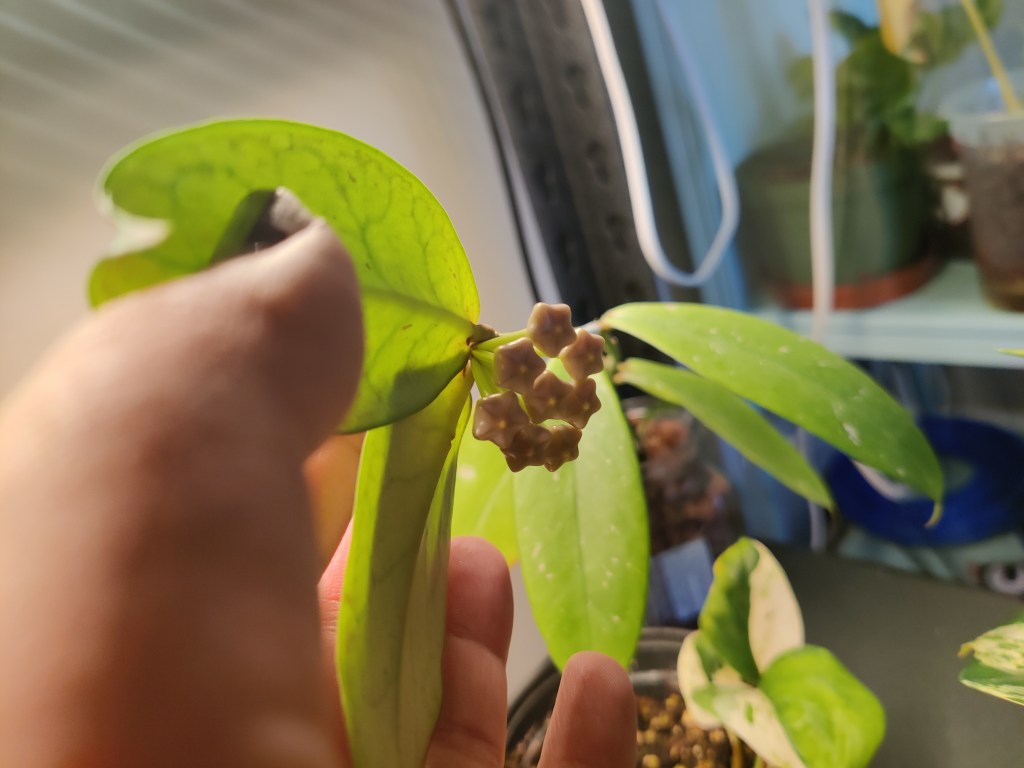
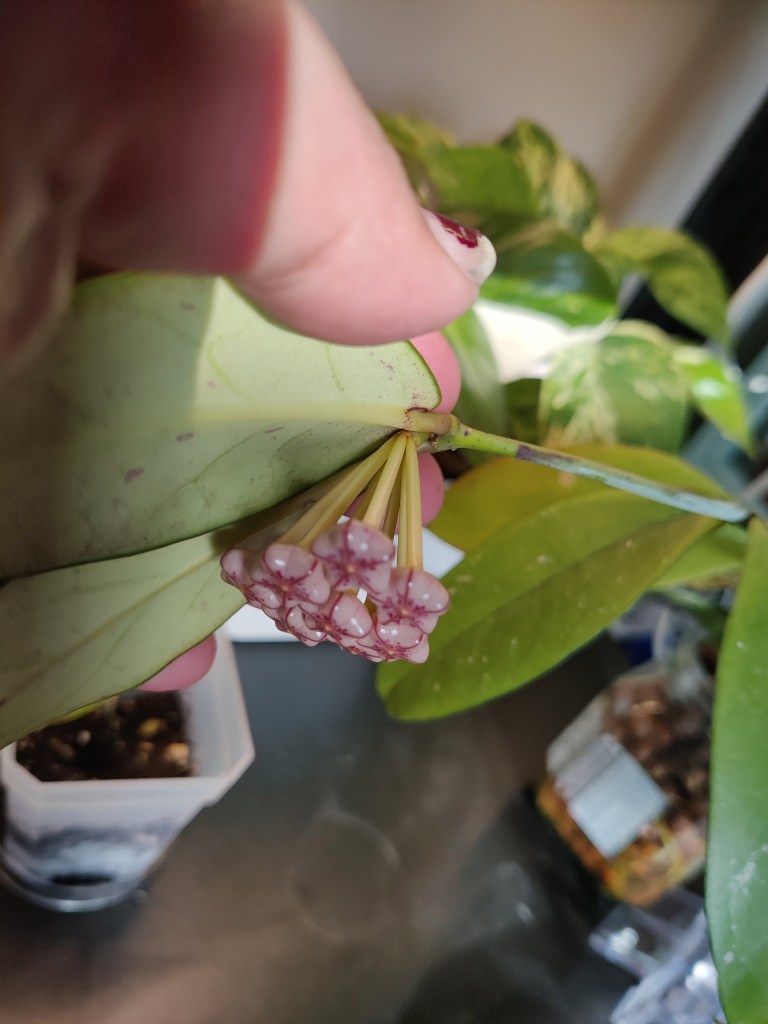
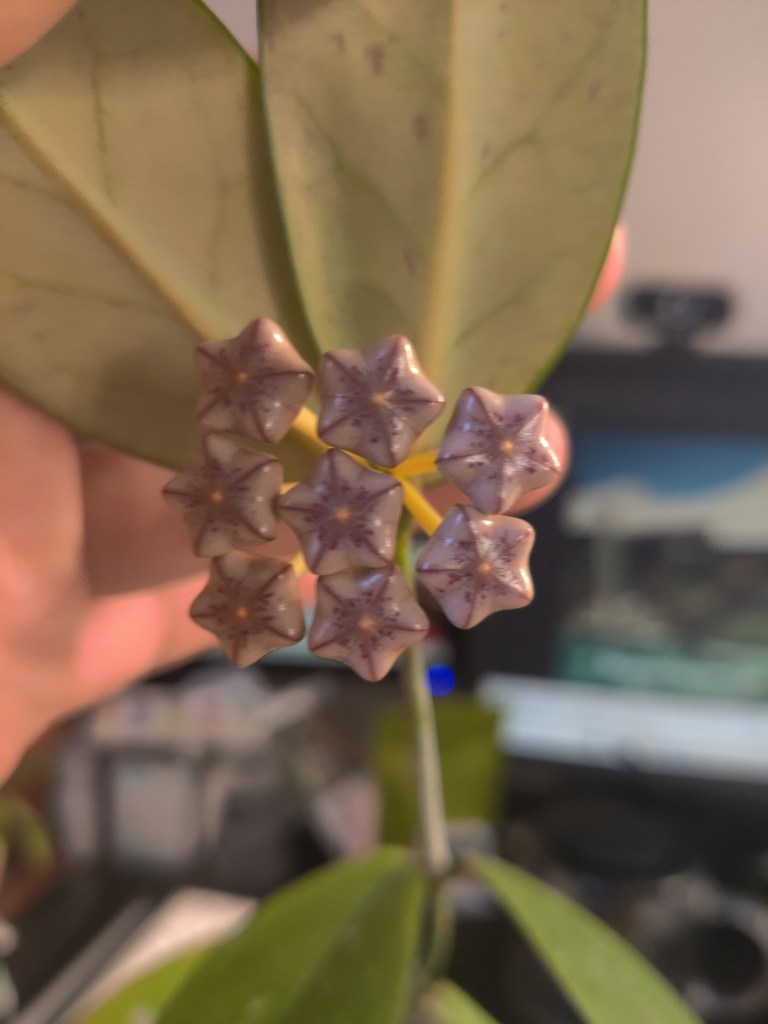
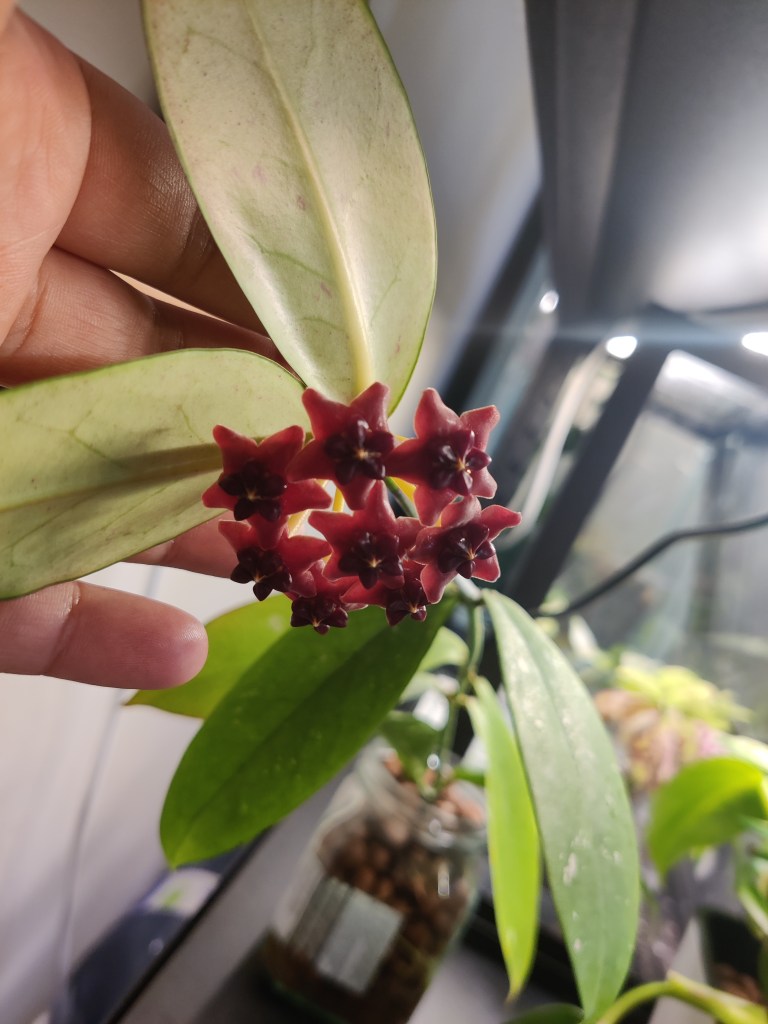
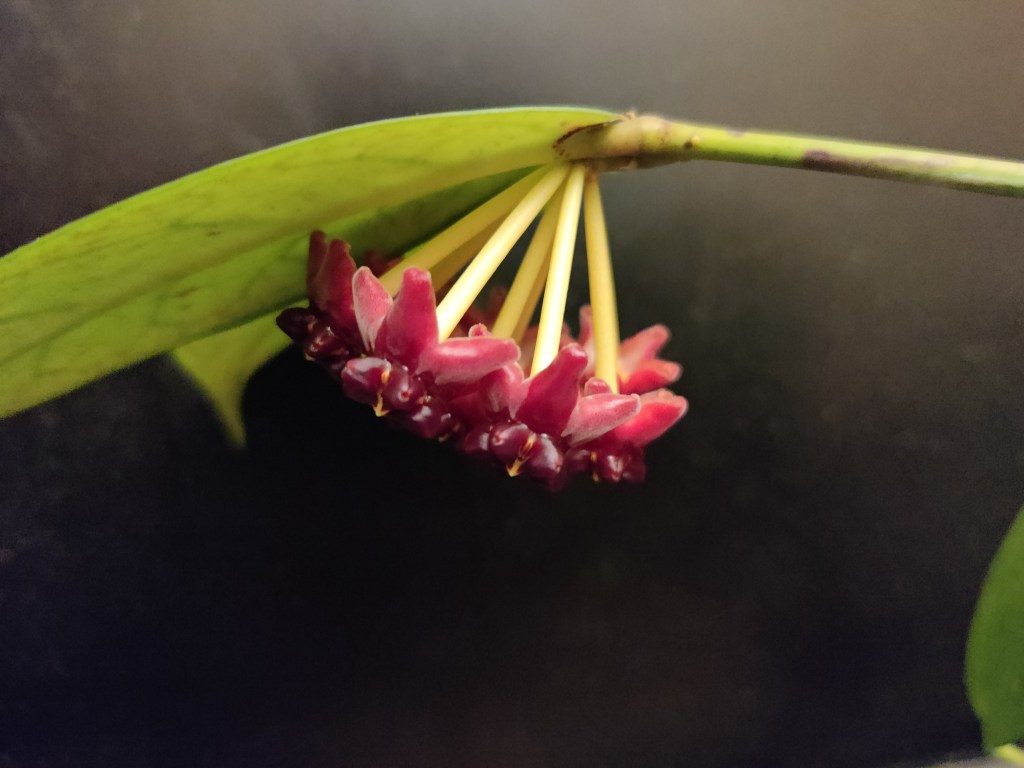
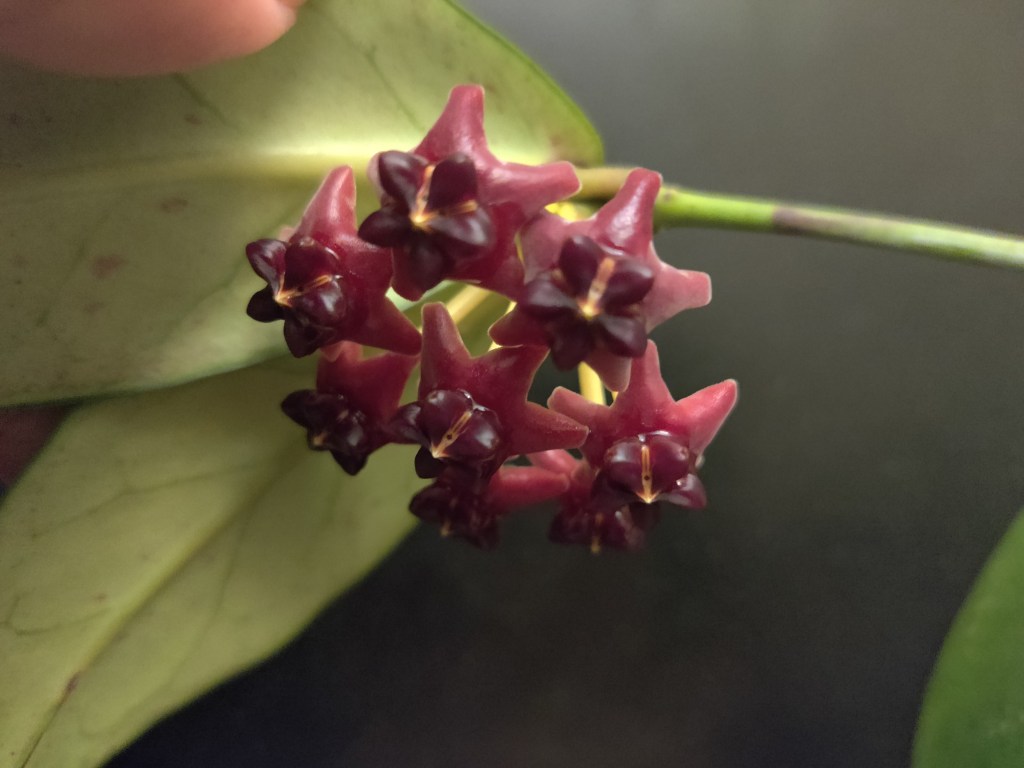
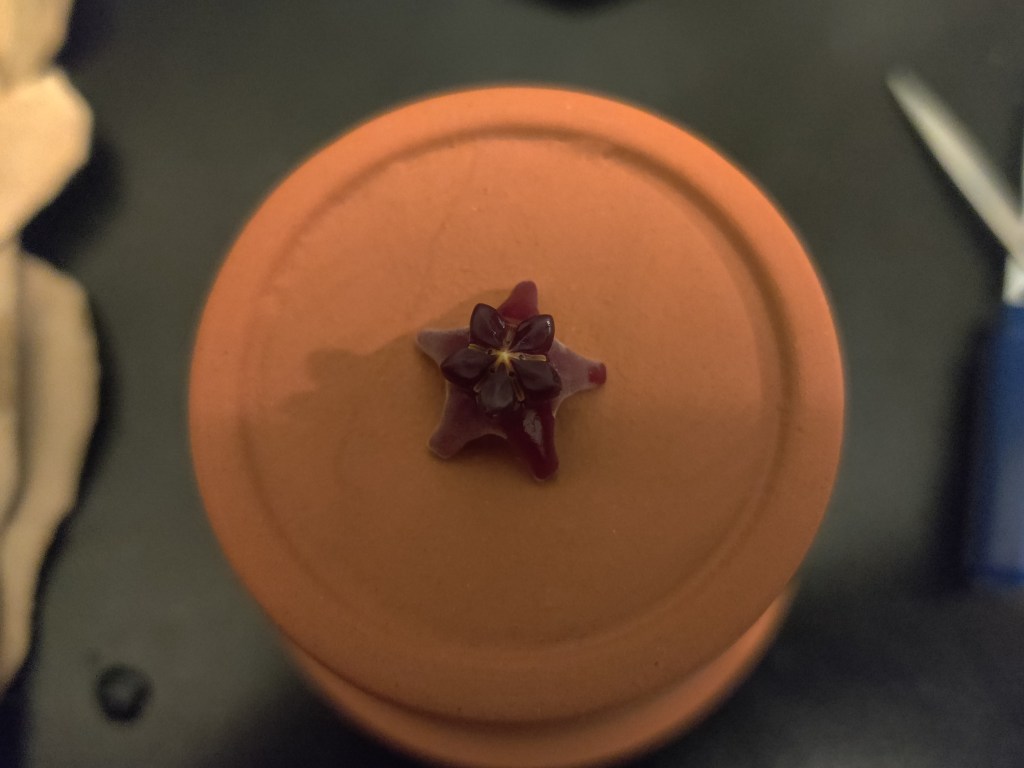
A hoya blooming to completion for me was a first! I’m not typically one for blooming plants, but this one promised dark purple flowers, and so I was intrigued. The plant was acquired with two sets of leaves back in 2023, and has since put out another 3 sets of leaves in the intervening time. That’s something like 150% growth! More importantly, during early May, a peduncle started forming. This signifies the potential the plant is starting to push out a cluster of flowers if it doesn’t “blast” off, like my linearis did last year. I was pretty excited to see these “black” blooms, but wasn’t holding my breath. Over the span of another two weeks, the blooms slowly got larger and showed their “waxiness”. I missed the moment where they unfurled, but I came back one day to full on flowers (Figs. 1 and 2).
Apr 21, 2024Apr 27, 2024Apr 28, 2024Figure 1. Left to Right, progression of hoya blooms over a week.
Figure 2. The flowers all open! Picture taken Apr 30, 2024. Also check out that cute olive jar it lives in. Surprisingly hasn’t shown any signs of needing a larger vessel yet! Yellowing is almost certainly from getting too much light.
Flower and Plant Review
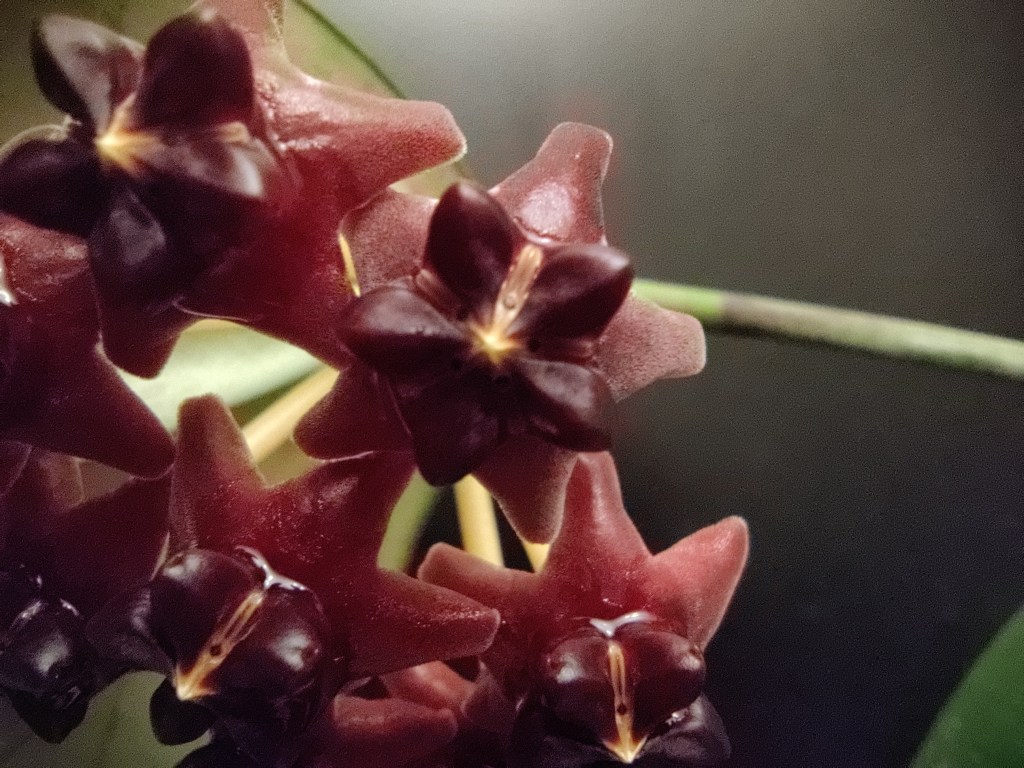
The bloomed didn’t smell particularly strong, but there was a faint sweetness if I got very close. Admittedly, I didn’t think through the fact that this plant lived on a shelf, and the blooms were well below my face height while sitting. So to see the blooms, I had to either jam my face in at an awkward angle, or pull out the plant to admire. Anyhow, the plant bloomed, I was happy, but not entirely convinced it was worth the wait. The leaves aren’t particularly charming, and unless it’ll be regularly in bloom, it doesn’t do much as a décor piece. It also made a mess after the pollination, leaving behind nectar blobs that had dripped off onto the shelf. A minor amount of drippiness can be seen in Figure 4.
Figure 3. Hoya blooms early in the morning on May 2, 2024 at 5:09 AM. The nectar can be seem in where the fuzzy petals are slightly darker.
The Response
With that in mind (the plant being rather boring), I tried to go to bed. At some absurd hour, I decided that it might be worthwhile pulling out the information I had on trying to pollinate the plant. I vaguely recalled that I had downloaded a few articles on the procedure, but being in bed, it was easiest to pull out my phone. Here are the two sites I landed on:
I also found a less than useful, but often looked at YouTube resource for pollination and a Reddit thread wishing the poster luck: https://www.reddit.com/r/hoyas/comments/ghng1f/pollinating_hoya_blooms/. The main issue I found was somewhat low resolution images and unclear arrow directions in the diagrams. Even though everything was labelled, looking up the respective parts of the hoya flower across different flower types was quite difficult. Here are the steps with the best interpretation I could make.
Identify the respective components. Hoya blooms tend to be in clusters, though some form single blooms. The flowers are typically 5 sided, forming star patterns. To pollinate, the parts of interest are near the center of the flower, where activity takes place
Pick your weapon
Pull out the pollina by sliding along the surface slit, gently pushing down, hooking the dark joint (corpusculum), and lifting it out. The pollina consists of two pollinium attached by a corpusculum
Identify your target and hold your breath
Slide the pollina into and through the “stigmatic lock”, also known as the ”staminal slit”. The goal is to get the pollen in the pollina to contact the inner walls of the lock
Repeat
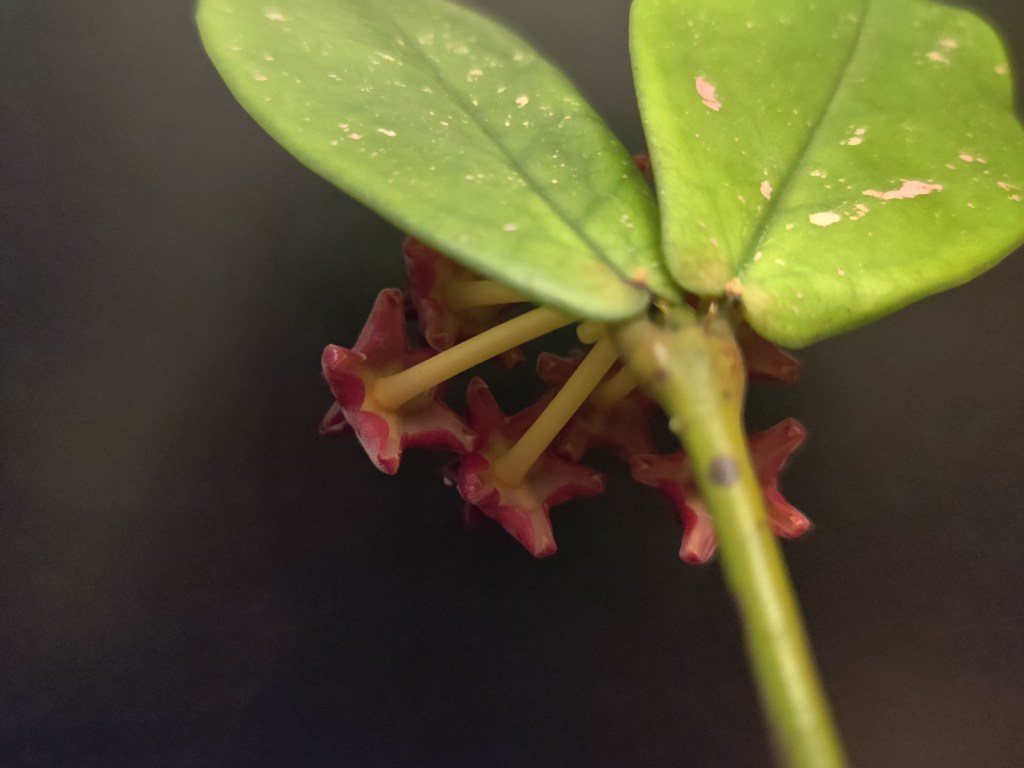
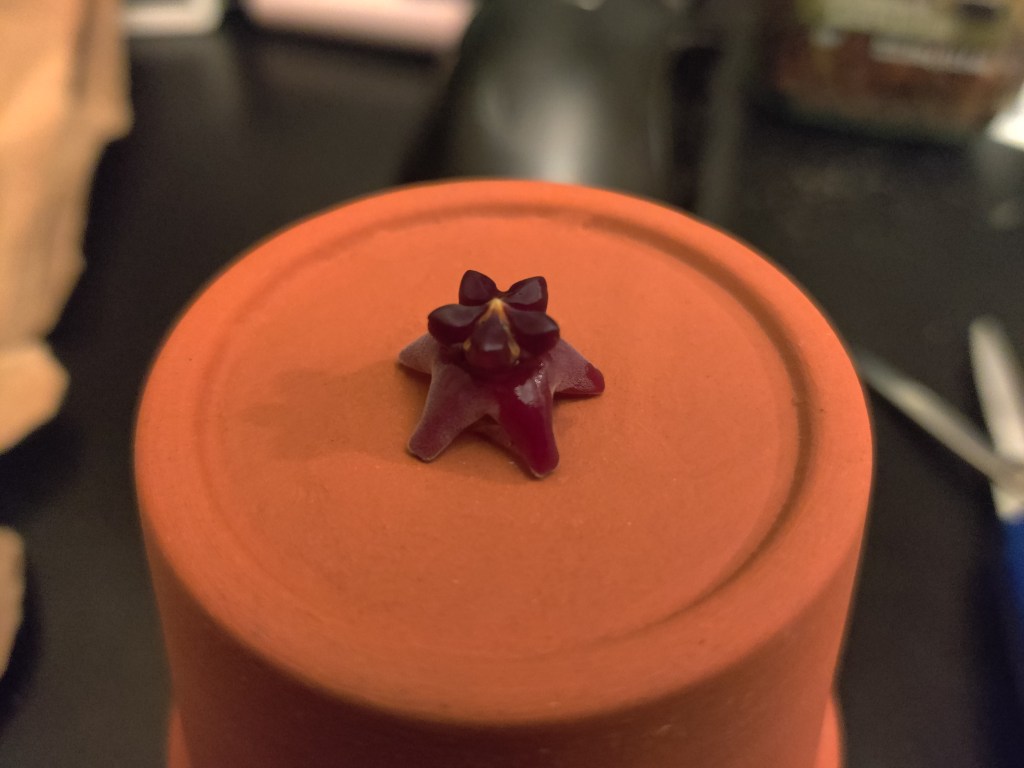
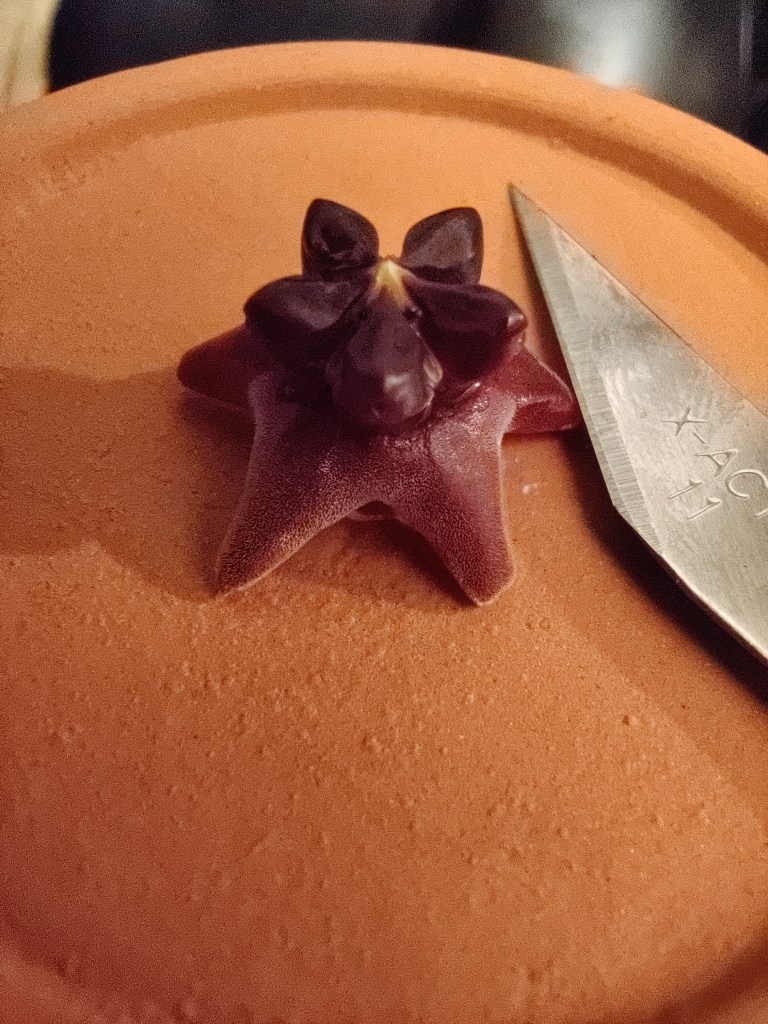
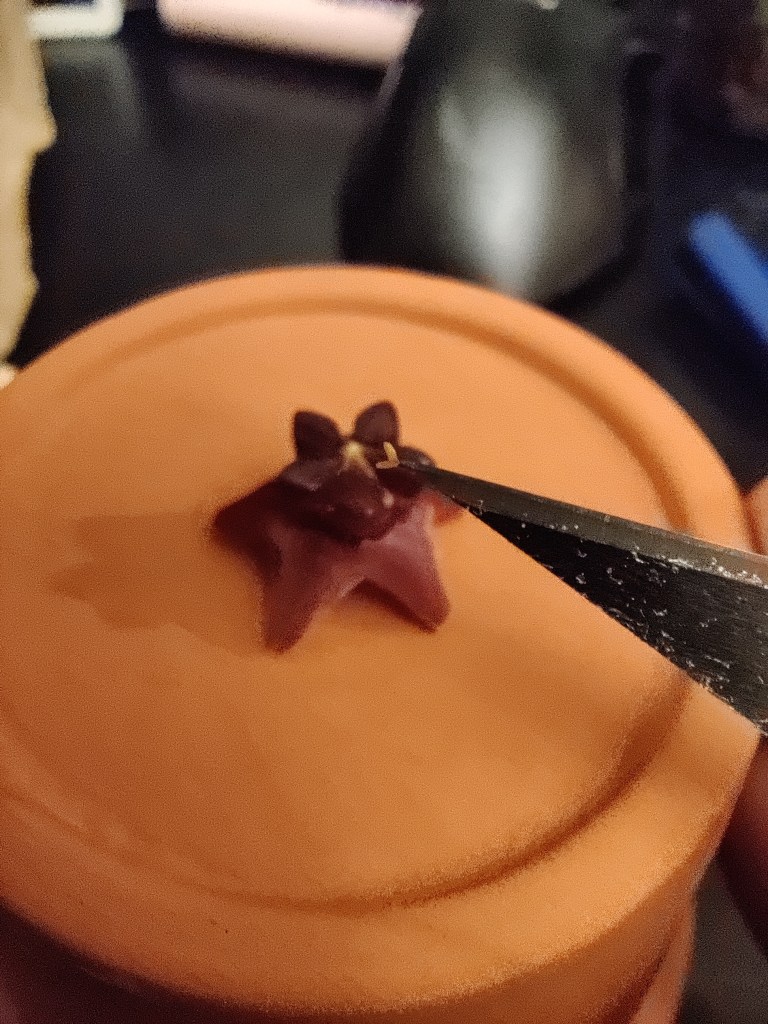
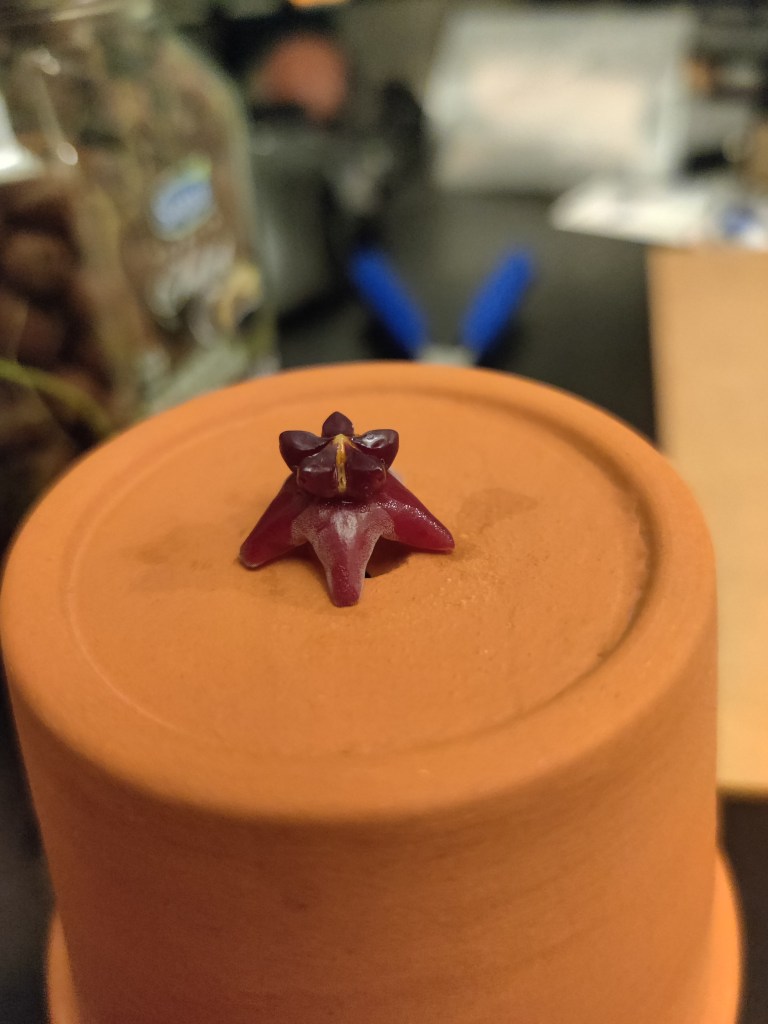
I reluctantly rolled out of bed after realizing I wouldn’t be able to sleep unless I tried the pollination out myself. From what I could tell, the goal is simply to readjust the location of the pollen source further up.I took some photos for reference (Fig. 4), then decided to also take the internet’s advice on repeated trials. I balanced juggling my phone, trying to read instructions, while trying to perform the procedure on a single cut flower (Fig. 5). If I could pollinate while it was stably fixed in place, then maybe I’d have an alright shot trying to balance a wobbling plant too.
Figure 4. May 5, 2024. Detailing on the flowers, they are quite dark! Also a fun back shot for more detail. The leaves have cute pink speckling.Figure 5. The test bloom. Isolated and slotted into the base of a terracota pot since that’s what I had on hand.
Procedure
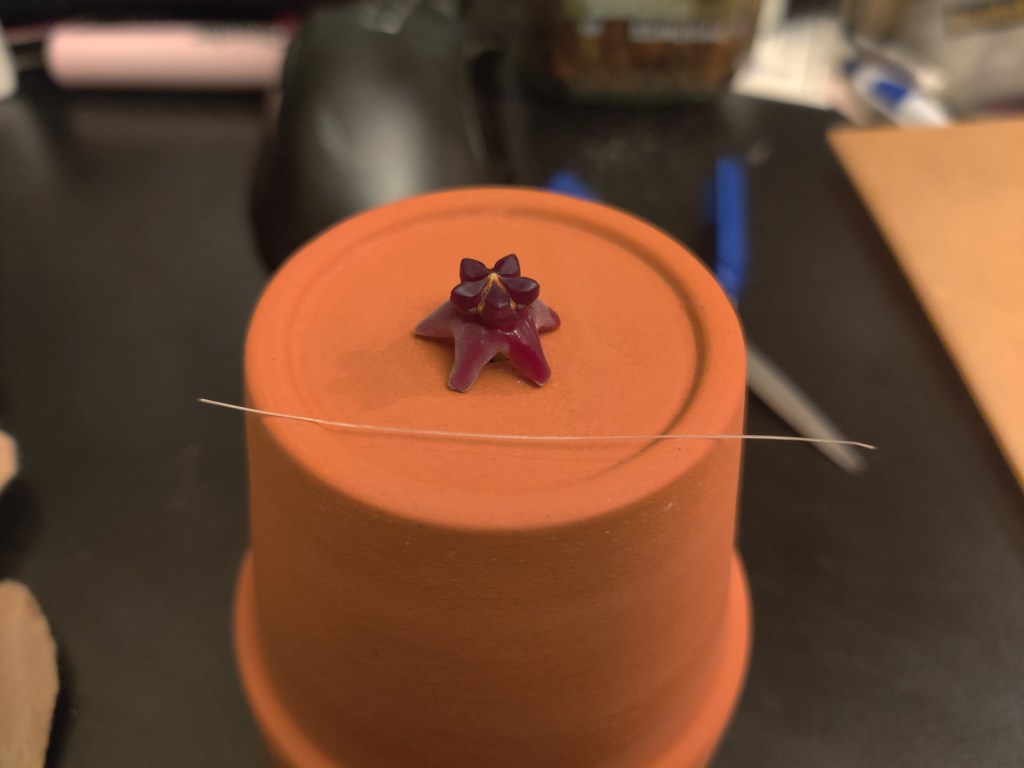
There are “optimal” times for pollination, and I’m not sure the crack of dawn was it. I found it fairly difficult to get the insertion correct, despite this flower having a very simple and accessible structure. This could have been because it was 4:30 am and I was all bleary eyed, or I didn’t have the right tools. The internet recommends a cat whisker (I left mine behind), but I only had a horse hair on hand. I decided to stick with the fresh X-ACTO knife blade gave me the best balance between control and width after the horse hair proved itself too difficult to be used. (Figs. 6 and 7) Note, if you use a utility knife like I did, you’ll find that the flower also bleeds sap!
Horse hairX-ACTO bladeFigure 6. The weapons of choicePicking out the pollinaPost insertionFigure 7. Some snippets of the action.
The Result
In the end, I managed to repeat the procedure at least 3 times across most of the remaining flowers that were still attached to the main stem. One of the biggest issues I had were the pollinarium not wanting to remain in the lock. They would poke out a bit and I was reasonably confident that the probability for fertilization would be just about zero. Trying to insert things in also caused a lot of damage to both the receptive and insertion components of the flower. Nontheless, I was hopeful.
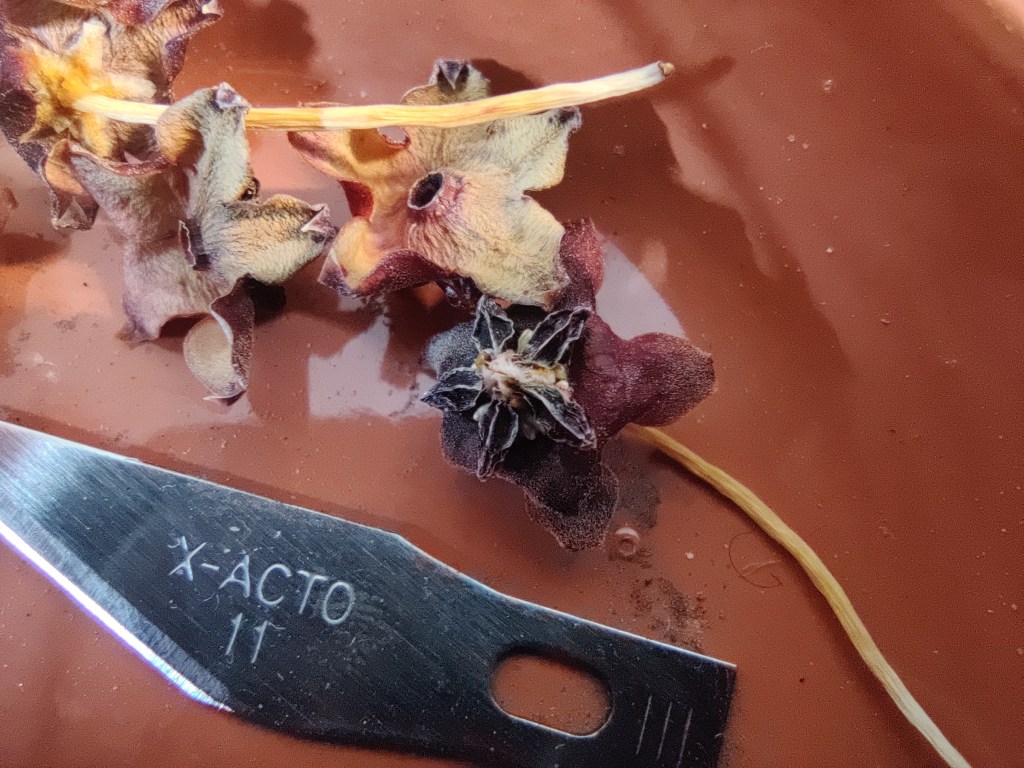
I waited a few more weeks but the flowers all dropped and dried out. A fun experiment, and one I’ll likely try out again if I get the chance. Preferably at a different hour.
Figure 8. Dried up flowers a month later. You can see how plump the flowers used to be! This may be worth dissecting later to see whether or not the pollina vanished.
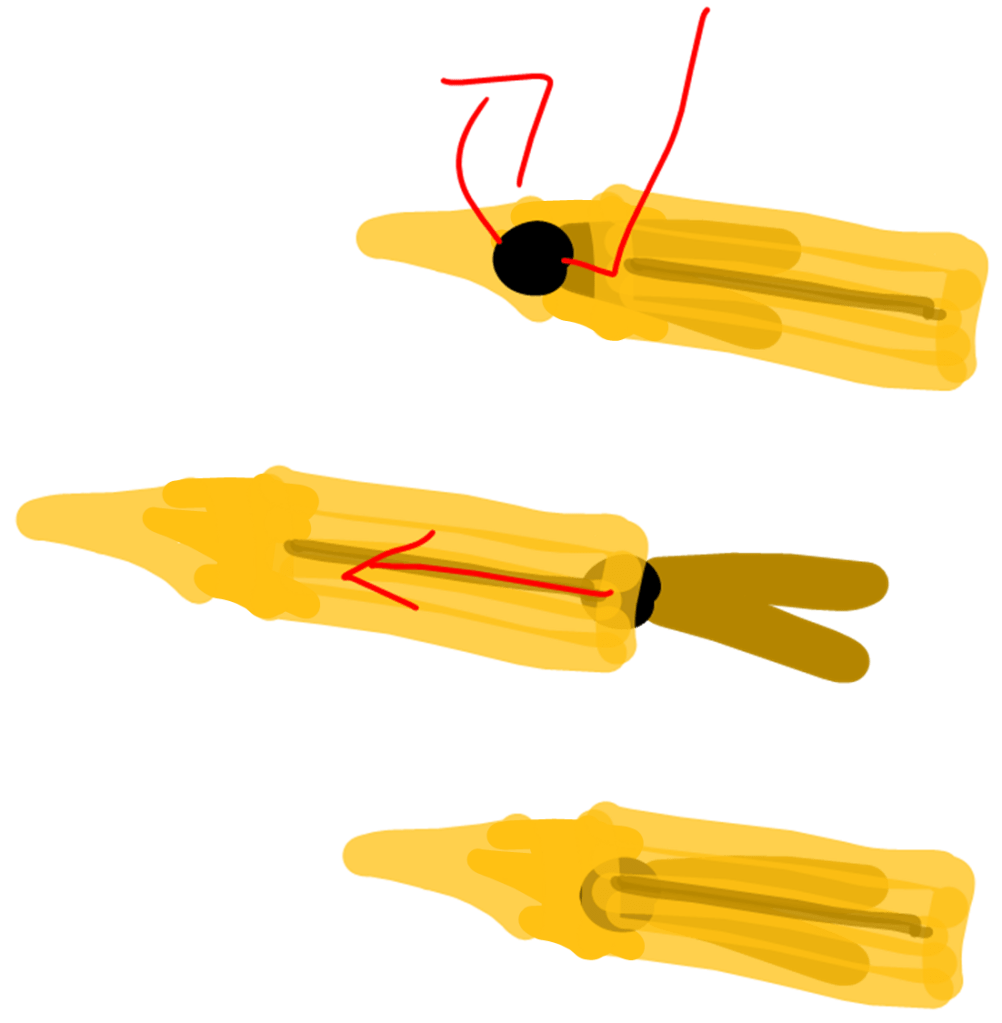
I’ve also made my own reference diagram I can look at and contribute!
Figure 9. Abstracted diagram for hoya pollination procedure. Find one pollina, remove via corpusculum, insert corpusculum in first through the stigmatic lock, push until pollium contact the inside of the lock. (It is entire possible I got the insertion direction wrong, but I can’t imagine it matters so long as contact is made!)
Next Steps
I might try to invert the shape of the pollina next time in case the pollen is on the inside of the wings rather than the outside edge. For this specific plant, it may also be worth waiting an extra day or two to pollinate, since the flowers lasted for quite a while, and I feel like they would naturally be more receptive when the nectar is more actively being produced.
Regrettably, I can’t validate the procedure I detailed because I’m writing this a month later, long after the flowers have dried and dropped off with absolutely no seed pod production. Maybe the sudden increased production in nectar caused the pollina to slide out? Maybe I should harvest some insect legs to try pollinating? Or perhaps self-seeding rates are simply very low to begin with?
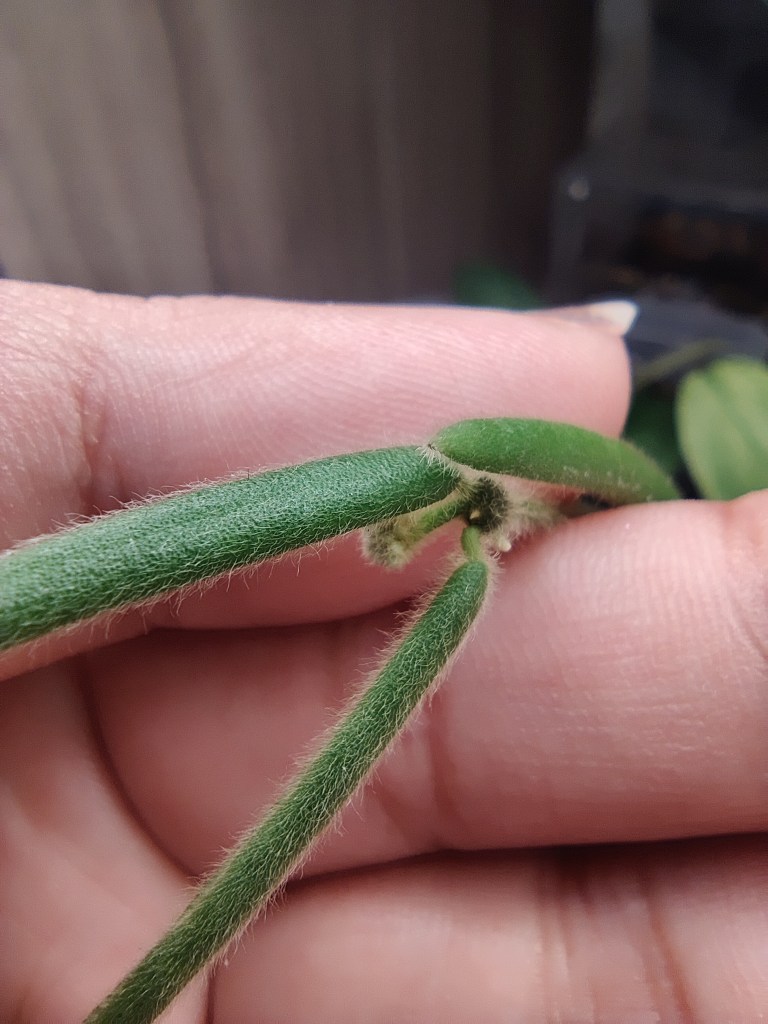
Figure 10. A hopeful Hoya linearis bloom on the way? Check back in a month or so!
A speedy writeup today while I take a break from thinking about the numerous emails I have been putting off. Despite the prompt I received, I do find myself spending a surprising amount of time helping out other TAs (teaching assistants) figure out what is, and isn’t okay. Having TAed (verb) for quite some time now, I have dealt with wonderful and atrocious instructors, other TAs, and students. Here are some words of wisdom.
Top skills I used while TAing:
Patience. Much patience has been applied. Be observant in your patience
Time Management. TAing is a “job” insofar as it is one of the only ways to fund your research, which is likely what your supervisor and the institution consider to be your real job. Nontheless, you have hours assigned to focus on something else. Try to strike that balance
Self-preservation. It’s good to check in with yourself. Are things okay?
Some handy strats for first-time TAs:
Read the contract. Do it. The instructor is obliged to meet with you at some point in most contracts. You are obliged to confirm if the contract makes sense. This is a great time to mention your comfort level with the materials and if you need hours to learn the content to be successful in your other duties
Track your hours. All your hours. If you forget to, go back and estimate each week. Meetings, emails, prep, despairing over the assignment, formatting feedback, all of it. Then forecast. Do you actually have enough hours for the rest of the term?
Balance any need to “care” for the students, yourself, and the course. Forget the institution’s reputation and a disdain or admiration for cheaters for a moment. Will anyone appreciate the effort you’re putting in? Will you gain something from it for yourself? Spend a little bit of time figuring out what feedback actually gets used. It may be handy to compile a general list of issues rather than provide specific comments. Do not entertain one on one meetings instigated by sob stories unless the student has done a minimum to ask specific questions or have read the general feedback. The exception to this is if you have hours set aside for this task. TAs are not trained to take care of the mental health of their students nor deal with exceptional circumstances. Have a handy list of references to point them elsewhere if need be. A reference document on how to “save as pdf” is astonishingly useful. So is “how to save a file and where to find it”
Communicate often and early. If the instructor is not accesible, then with the other TAs. Check that contract. See if it is being upheld. Count those as hours. This ties in with…
Front loading your work. Within reason of course. Get the rubrics, read the assignments, set up your TA hour tracker, let the students know that YOU know about the myriad ways in which they can be academically dishonest, and set and enforce your boundaries early on!
For the long-term TA, you may be jaded. Or even as a first-timer, you may simply not care for this aspect of your job. There are certainly ways to optimize your true working hours and not be reviled by your earnest coworkers.
For the passionate TA who cares about academic integrity, rigor, passion, and performance from students… It will be difficult and disappointing sometimes. Being actively involved with the course progression, reading the syllabus and course goals, checking the grade distribution, skimming the assignments you didn’t mark might help you identify the pain points of the course, or what the students are underprepared for. Feel free to suggest small changes or potential improvements to the course. If something is working well in your section, mention it to the others. In the case of your coworkers not caring abotu the same things you do, you may need to argue truthfully that it will save everyone work in the next few months. Good luck.
Lastly, it is worthwhile mentioning that professional relationships are sometimes difficult to navigate. The academic sphere does not always foster teaching skills nor empathy. If you suspect something is not quite right, get a second opinion. Tenure and a different cultural background do not justify a complete lack of communication, competence, nor care.
Thoughts? For brevity’s sake, I have not included my thoughts and experiences on academia as a whole. Thus, context has been stripped from this post. Nonetheless, I suspect the general skills/strategies should still hold regardless of what kind of job it is, if human interaction is somehow involved.
Addendum: This post has predominantly been prescriptive, in the hopes that it will be intuitive as to why the strategies have been listed. However, I strongly believe that “tools, not solutions” is the best thing you can provide to students that have the time and enthusiasm to improve.
I’ve been prompted to discuss some of the recent issues I’ve been having. There’s been a slight delay on some issues popping up, but as projects rise and fall, changes to my computer set up are required. Also I just moved. Again. We’re now counting 9 moves since I’ve started graduate studies. Let’s chat.
Projects and Pathing
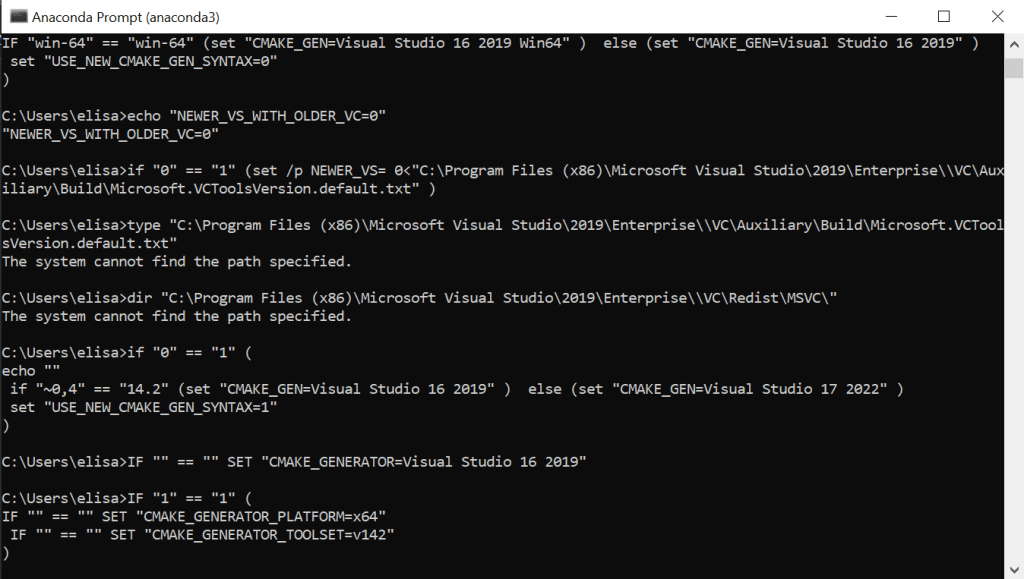
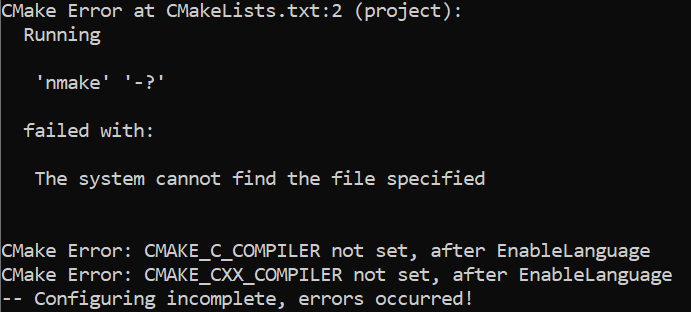
What feels like a common silly thing to wrestle with which each new code package is the installation of specific dependencies and setting up folders and paths in a particular fashion to allow the use of said new fancy code package. Without going into detail, I’m astonished that I was able to follow some specific set of instructions to install GDAL (notorious for being tricky to set up since a number of dependencies need to be upgraded and downgraded at various steps in the installation). However, I’m at a loss when it comes to the more cryptic error messages (Figs. 1 and 2).
Usually what I do is Google and check various forums for days on end, find some workaround and install something completely different instead. This time it’s looking like I really might have to figure out the issue. On a related note, speaking with my labmates did help out for another software problem I was having. Thank you!
Figure 1. A screenshot of Anaconda. I cracked open my “clusters” environment and got a series of messages that I have no recollection of setting up. Here I was just trying to reproduce the weird error that I get when I try to import a python package! More to solve I suppose. I should start documenting what I do to set up my environments.Figure 2. The actual issue. The log has nothing useful in it by the way.
Housing
Wow, what a problem. This is a nation-wide issue of course. There’s the actual cost of housing that means I get to spend something like 80% of my income and have 20% leftover for groceries and any sort of enjoyment in life outside of work, then there’s bad housing. Let’s document my housing experiences briefly.
Location zero: never even moved in. I got a last minute notification that the place I had originally planned was not going to work out.
Location one: Landlord insisted on meeting up in a different city. Played games with the offer (stating there was another tenant they preferred). Entered premises without notice. Did not resolve issues. Gave me keys to everyone’s bedroom and asked me to keep it a secret (I refused) because they didn’t have a property manager and didn’t want to drive in to unlock the doors for people. Refused to address the issue of a surprise pet someone had been hiding in their room (and causing allergic reactions) despite this being a condo with no pet rules. Failing to notify the condo association of the tenants and associated vehicle licenses. Gaslighting and yelling. It goes on.
Location two: Landlord lived in the house. When viewing the place, they indicated that kitchen and pool were for common use. Linens were provided. Moved in. Got yelled at for cooking and having “food scents”. Insisted that people in the past just ate take out every day. Threatened to call the police on me. Put something questionable in my room that caused it to smell. Lied about the passcode for the entrance. I didn’t even last the two weeks I had paid for.
Location three: Just a crash pad at a friend’s place while avoiding Location two and figuring out where to go.
Location four: Perfectly fine! The place was a little small and out of the way. This was a non-issue until the pandemic rolled around and I was stuck indoors all the time due to a wasp problem in the backyard.
Location five: Pretty great. Minus the extreme heat (no AC) and roommates that had weird sleeping hours that resulted in a lot of stomping overhead. The folks were great, but the random footsteps overhead really got to me after a while. I was all set for the rest of my degree. Until I wasn’t.
Location six: Turns out it’s really hard to find housing when the university suddenly declares in person classes again. After 60+ calls and messages, and several in person visits where people were making offers on the spot, I finally found a place reasonably priced and close enough to bus. Only issue is that the landlord hated onions. Okay. I could deal with that for a bit.
It turns out that it was a lot more than that. There was a lot of random sudden sniffs outside my door, and loud music being played all the time from upstairs, and a lot of guests (guess what we weren’t allowed to have?). The heat would also get randomly turned off and she demanded our windows be opened for hours to air out. Eventually me and my law school roommate decided to look into the legality of our living conditions and decided that we were indeed protected by the Residential Tenancies Act and our lease was nonsense. Over the holidays our landlord someone developed some terrible illness wherein her doctor insisted that no scented things were allowed in the house. Of course, they felt welcome to inspect our quarters. Somehow my roommate spilled an entire bottle of perfume that the landlord didn’t notice, but my diffuser that had water in it for over a month was a problem. No wonder I didn’t submit my thesis in time to work from home the next term.
Location seven: Great! Lovely roommate, reasonably nice location. Wasps in the house and mice in the walls. Can’t win ’em all. Those issues never got resolved properly. There was also incredibly poor heat distribution in the house and a gap in our entry door, so we often had a space heater on. Oh, and the house down the street was regularly broken into and we had a couple fires in the five months I was there. I wouldn’t have enjoyed living there much longer.
Location eight (skipping over living from home and living at a remote campsite for three weeks): Okay. Housing in Toronto is rough. A family friend let me stay for a bit while I was waiting on residence to let me in. It was a lot of being treated like a surrogate daughter though. Not the most comfortable, but alright.
Location nine: Finally! I have arrived! I applied way back when I received my original acceptance and followed up after the response date had passed. I was on the wait list. Cool. Then I got in and picked a date. Great! I emailed closer to the move in date asking where the lease was. I was informed it was in the works. It showed up in my inbox a week before move-in with some additional information. For example, there was a link that informed me I would receive a move-in time via email and I should confirm this worked for me. The email never arrived despite reaching out several times and getting a response for elevator booking on the Friday before move-in. No one seems to work on the weekends.
Move-in day. I waited until around 10 that morning, calling in several times to see if I could get a hold of someone. I even got transferred once. To no avail. Anyhow, I show up and it’s all good. Then I get into the apartment. Fairly quickly, I notice it is not all good. There are several issues with the apartment, most of which are cleanliness and electrical related. I have a quick chat with the office that gave me keys, and they assure me that I can submit a maintenance request and most issues will be addressed between 24 and 48 hours.
Surprise! I am unable to fill out the maintenance form. To that point, I am also unable to complete the arrival inventory (where I can state the condition of things where I found them). I email IT and someone fixes this a day later citing a mysterious issue and I have now have access. Alright then. I fill out the form and make 3 specific maintenance requests, and within a day, I see notice that my requests have been updated and are in various stages of progress. I come back after going to a workshop out of town and see a notice indicating that one request is a non-issue, and another has been confirmed as an issue. A nice little notice informs me that they will be coming back. Cleanliness issues have not been addressed.
A week passes, and I check with the front desk how to escalate. They are surprised to hear that my issue is ongoing. I follow the information I was given to reach out to another group to figure out what has been going on. Another 48+ hours passes, and I hear nothing. I email again, requesting an update. 48+ hours go by. Nothing.
This morning, I ask the front desk to escalate. They are surprised to see me again, and apologize once more, this time promising to reach out to the custodial staff directly. I come back mid-day to address my rumbling stomach, and find my door open and people inside my apartment. Weird. Someone just emailed me confirming they would come by tomorrow morning to take photos. After extensive discussion and several phone calls (from the staff in my apartment), I am assured that their superiors have contracted someone to come by tomorrow. We shall see if this happens. It is evident that there are some communication issues within the Maintenance group themselves. At first, no one was addressing my issue. Now there are at least 4 other people involved. Apparently people had been trying to knock on my door for the last 2 days instead of simply emailing me back.
Lessons (RE)Learned
Being a student with limited financial resources can be rough. No doubt about it. I spoke with a few others who had been living in residence and they made it clear that they had ongoing issues that had never been resolved or required escalating several times and external intervention to address. I have absolutely paid my way out of bad housing situations in the past, but this isn’t a viable solution for everyone all the time. Being persistent in resolving issues is the only way they move forward, and it takes more time than I would like to spend. It would be wonderful if the people I had to interact with were competent, especially when I am reliant on them or pay for a service. To quote roughly the individual I spoke with the first time around regarding cleanliness, “It’s because they’re part-timers. I don’t get it. They should work hard until they’re full-time, then they can slack off on the job.” Admittedly, I bit my tongue when I heard that from what appeared to be one of the full-time staff. I think I may have responded with, “Right, so 24-48 hours?”
Pile of Projects, Solutions?
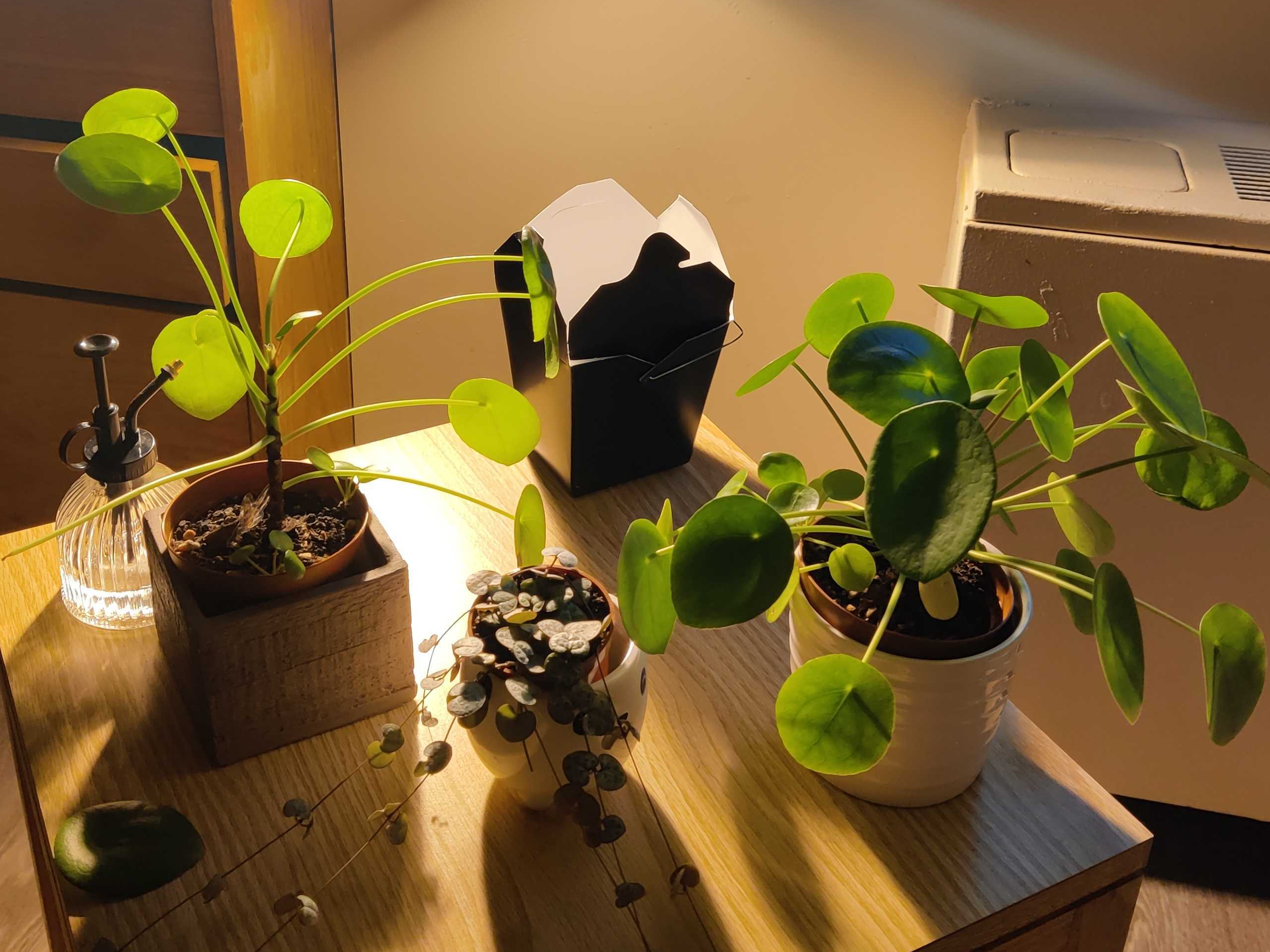
I’d love to be able to compartmentalize my life so that I can focus on one thing at a time. Research, TA duties, housing, a semblance of financial security, and my personal life. It doesn’t quite work out that way though. So instead, I write myself a small to-do list for each “project” in my life and see how much bandwidth I have that day or week. This doesn’t always work out (I still have what is hopefully an hour long task to wrap up a short project), but it seems to help. I will eventually find some time to work on my pet projects, such as in Figure 3. Electroforming and shampoo making, here I come!
Figure 3. Not all is bad. I finally picked up an LED lamp that mimics part of the spectrum necessary for happy plant growth. It also provides a warm light instead of the fluorescents everywhere else in the apartment!
My last post discussed catching COVID-19 and all the fun I had with the resulting data that came about it. What I didn’t cover was the conference I was attending remotely during the bulk of the time I was sick. At first, I was supposed to attend the 54th DPS (Division for Planetary Sciences) meeting in person. Alas, this was not possible after contracting a very contagious virus. Instead, I found myself prepping to check in online and make the best of it. Here are some of the tips that I developed when I was getting ready for another conference online (AGU). An alternate version of these tips can be found on the PVL blog (http://york-pvl.blogspot.com/).
Tips for attending a scientific conference (when you’re remotely at a hybrid event):
Identify your favourite conference snacks and drinks
Purchase, make, or make student-budget friendly versions of said snacks and drinks
Plan chores that require at most 1 hour of your time. Preferably a bunch of 10-15 minute chores
Acquire bluetooth headphones
Identify some clothes for dressing up (or down)
Pick a few “key” sessions you want to be awake for and some interesting ones to pad out the rest of your time
Chat with your lab mates on your preferred communication method of choice.
Let’s break these down a bit. Say you were really looking forward to attending the conference in person and had already planned for those days to be away. However, you’ve fallen sick or some event has taken place that prevents you from attending. You might as well try to get part of the conference experience at home! While there will be significantly less mingling with others and networking opportunities will be at most, awkward and stilted, you can still delight in the little snack breaks while reflecting on the state of the field.
This brings us to tip number 1. If you’ve been to a conference before, what snacks did you enjoy during the breaks? Personally I like that there are usually several tea options, and sometimes the coffee is palatable. The previous conference I had attended online (planned), I had the time to order some coffee samples and pick up a variety of snacks from the asian supermarket. This time I was stuck in quarantine, so I made sure I had a kettle and a massive stock of tea bags. This covers tip number 2 as well. It doesn’t have to be fancy, but having the ability to make hot drinks on demand is quite nice. It’s reminiscent of downing drinks to soothe your throat in the dry, conference room air.
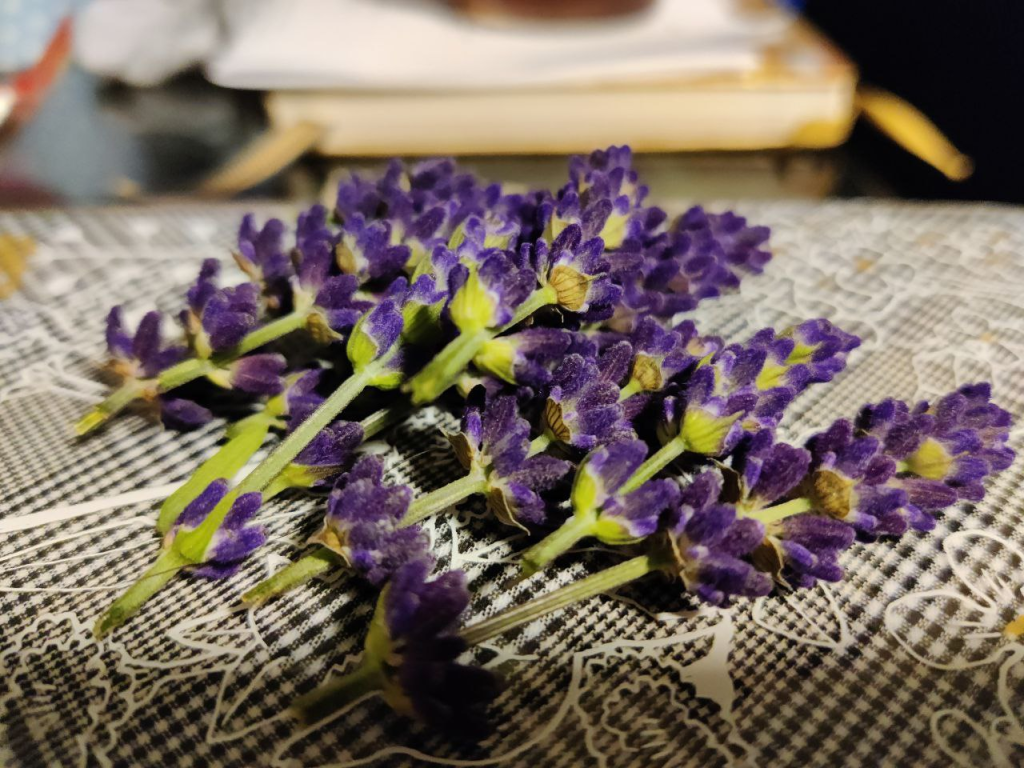
Since I had to attend the conference online rather last minute, I wasn’t able to grab a photo of all the cute snacks and drinks that I had during this time. I will say that my favourite snack was a soft matcha flavoured cake. My favourite drink was lavender tea, freshly plucked from the front yard when my folks could remember to grab some for me, since I was functionally under house arrest.
Lavender from my folks. This + honey made my sore throat much better. Herbal tea (infusion if you’re picky) is a nice alternative to the gallons of coffee I usually imbibe.
Tip number 3 and 4 involve keeping yourself busy. Unlike an in-person conference, there are very few things you can look at that you are unfamiliar with. You likely won’t have access to the attendees (no camera facing that way, zoom only shows the speakers) so figuring out who else is at that session is out unless they speak up during Q&A. Instead, you could be getting some mundane tasks done! I personally can’t look at a screen continuously, so laundry, cleaning the kitchen, organizing bookshelves, watering/trimming plants, etc. all give me breaks away from the screen, but I’m not doing anything so critical that I can’t check what’s on the screen if it’s particularly important. Tip 4 gives you the flexibility to move around without fear of wires tangling or blasting the audio (less of an issue if you don’t have roommates, but still a nice option). Earphones are also an option, but I find headphones to be a bit better with universal fitting. Also, you now have the wonderful ability to choose to go to the bathroom while still listening to the sessions.
It’s all good to be perfectly cozy while stuck at home (or if you’re so inclined, going outside while still plugged into the conference). A big part of the conference experience is being present though. For me, that means dressing in a slightly snappier manner than I normally might. Regardless, I would want to have a change of pace for “conference time”, much like when working from home, it’s helpful for me to dress up for “work hours”. Dressing down could be a fun alternative to this though. After all, no one can see that you’re in the goofiest of onesies. Similarly, no one will know (other than your housemates) that you attended in a full ballgown and mask. So that’s tip 5.
Tip 6 is applicable to any conference you attend. There is only so much time in a day, so pick your favourite events to go to. Figure out what’s relevant to your interests. Not much more to say about this one. Tip 7 is similarly applicable always. Should you find yourself longing for some company, or wanting to experience the social aspect of the conference, checking in with your lab mates or anyone else at the conference can be nice. If you’re all together (remote or in person), it can be nice to schedule some hangout time outside of the planned events.
Lastly, it’s always a good idea to tap out whenever you’re feeling tired. No point attending a conference in your brain is on the fritz. Return to your comfy couch, or pop back into that hotel room as need be. Enjoy your next conference!