I… have a lot of plants.
Today, I wanted to write up a short showcase on my staghorn ferns. Here I’ll explain where I sourced them, identification of the plants, their growing setups, and their overall performance. Plenty of side tangents in between.
The Plants
I have four Platycerium, one bifurcatum species, and three hybrids. For the three hybrids, I’ve lazily abbreviated their names (e.g. Platycerium VxV, Platycerium HxM, and Platycerium FSQ). This is not the correct way to refer to these plants nor are they the species names.
Platycerium bifurcatum
I purchased the bifurcatum two years ago at Heeman’s, a plant nursery in London, Ontario. Heeman’s has a shockingly good cafe when it comes to coffee, and the strawberry milkshakes are simple, yet lovely. There is also a charming “garden” in the back with several water features.
The Platycerium bifurcatum is the most common species in cultivation and is readily available in garden centers. The specific cultivar is likely a dwarf form, the Platycerium bifurcatum cv. (cultivar) “Netherlands”. This plant pups easily, and can become a large specimen quite quickly. I originally purchased this (between $5-8) with the intent of mounting it in one of my gecko tanks. I had been looking for a cheap and small specimen for a while so it could grow to fill the space. After a couple weeks of quarantine, in it went into the tank.
This worked quite well, and I regularly got new growth for the first few months. Towards the end of the tank’s lifetime (I disassembled it to reuse parts when I built a larger tank), I found that it was infested with scale. This most likely came from the bird’s nest fern that I purchased during the same trip, foolishly thinking the brown bumps on the back of the leaves were spores. I threw out most of the plants from the tank, and kept only 6 in the hopes they would recover after treatment. These included pepperomia emarginella (the strands never took, this is a plant I dearly miss), a ficus benjamina (that was hosting the pepperomia emarginella), another creeping pepperomia with smallish leaves, a bromeliad of NoID, a Philodendron Florida Ghost that had been putting out lovely, mature leaves, and the Platycerium bifurcatum.
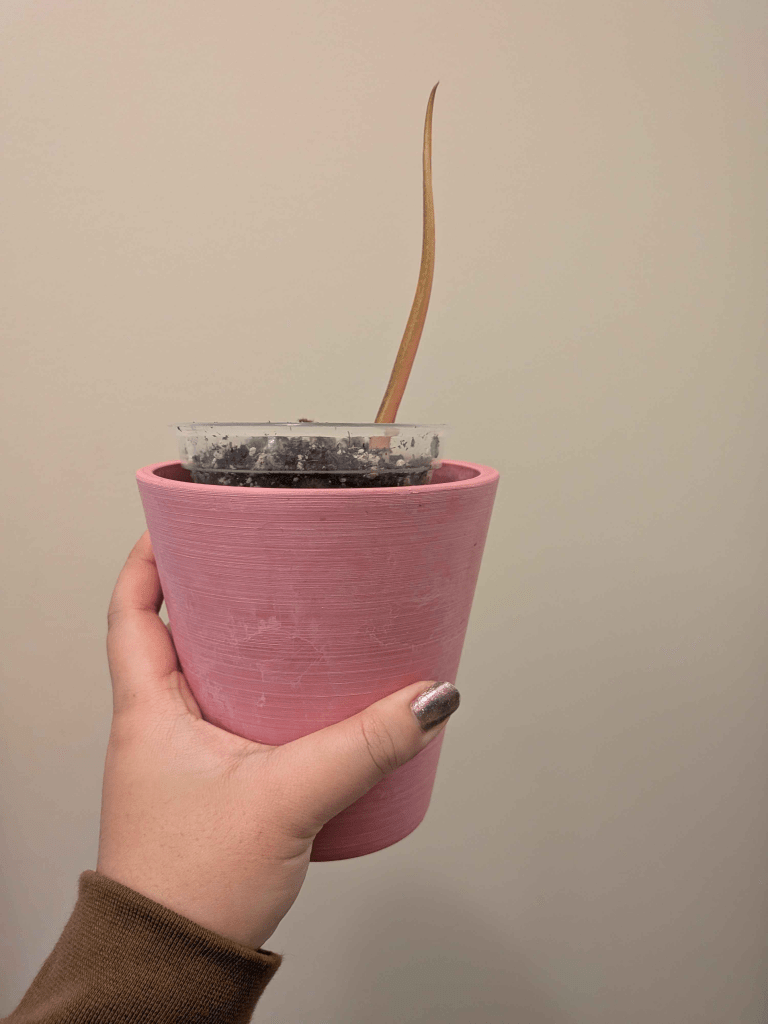
The pepperomia were thoroughly inspected and only a few scant strands were saved. They were directly planted into the new tank, where most of it eventually died off, likely due to lack of light (lowered over a foot from their original proximity to the grow lights) and no longer having a high humidity nook to grow in. The ficus was chopped back severely, and grown in a container with no drainage for several months after. Only recently has it found a new home, guarding the dairy cow isopods at my boyfriend’s place. I believe it has been pest free for months, and the scale never seemed to interested in it to begin with. The bromeliad was also grown separately, in no substrate as it only needs water in its central cup to stay hydrated, and regularly dunked in water for extended periods of time to drown any stray bugs I missed in the intial cleaning. The florida ghost has been slowly recovering (Fig. 1), having been chopped into two sections where I only saved the top sections that I never once saw scale on. No scale has appeared since. One of the sections has just about disintegrated, while the other has put out two new juvenile leaves and is still checked on regularly.
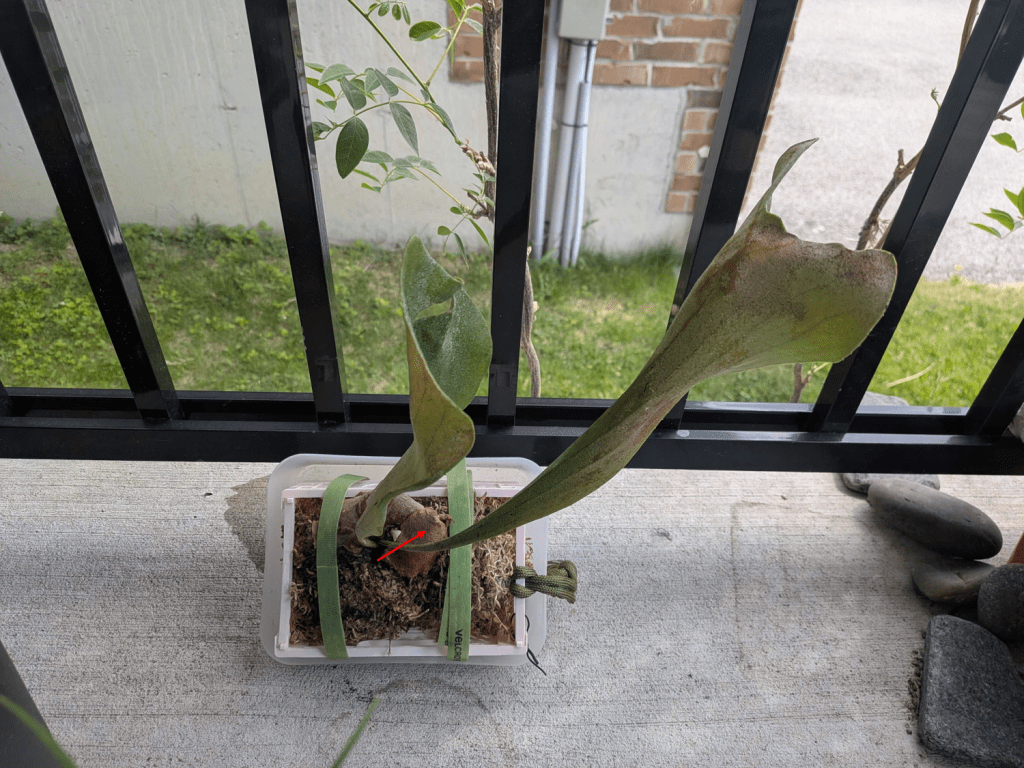
As for the bifurcatum… I cut back all but two fronds, unpotted it from the media it had previously been in, and gave it several periodic soaks. It too, was grown in isolation. Unlike the others, the scale showed no sign of going away. Just under a year from when I had pulled it out, it now lives outside on my front porch, getting blasted with full Sun in the afternoon (Fig. 2). It seems to be putting out a few frond, and there is no scale. I don’t trust it though. We’ll see what it looks like as we head into autumn. Perhaps it will once again put out the majestic long fronds this species is known for.
On Scale
The treatment that I use for scale by the way, is simply isopropyl alcohol and dunking plants so they are entirely submersed for hours, thereby drowning the scale. It is an extremely ardurous process and requires repeat checks for several months after. The only other time I’ve had to deal with scale is when they started showing up in my succulent bowl. I have no idea where they came from, but one day I spotted a snakeplant with brown crusties. A few months with cotton swabs, isopropyl alcohol, and a spray bottle… I think it’s been dealt with.
Platycerium cv. hybrids
The next two Platycerium I purchased took place a few months after discovering the scale problem, and all of the pest bearing plants had been evacuated. I was at Crystal Star Nursery for their annual food drive plant sale event (usually around November I think), and I spotted several beat up Platycerium to the side. They were all unidentified Platycerium, each one in a pot a ~3×3 inch square net pot. I was intrigued, but thrown off by the price. $25 each! For an unidentified plant?? Little did I know at the time, they would be some of the most accessible price points for non bifurcatum I would be seeing for a while.
Anyhow, I spent around half an hour fussing around which ones I really liked, with the intent of only purchasing one. After I had narrowed down by choices (by frond type), I ended up purchasing two (Fig. 3). When I got home, I was at first disappointed to find out that one of them most most likely a bifurcatum. I quickly got over my disappointment and started thinking about how great it would be to have a replacement. I whipped up a mount from leftover PVC board for the bifurcatum (Fig. 4), knowing that it was a hardy species, and started tearing it out of the pot it had very much grown over and into. To my surprise, I found a hidden tag inside the plant. No wonder they had no idea what the species were! The tags had been swallowed up ages ago and were partially buried into the root mass and I had to tear them through the shield frond! (The same thing happened with the other one later). I found out it was labelled Platycerium Vassei x Veitchii (#1).
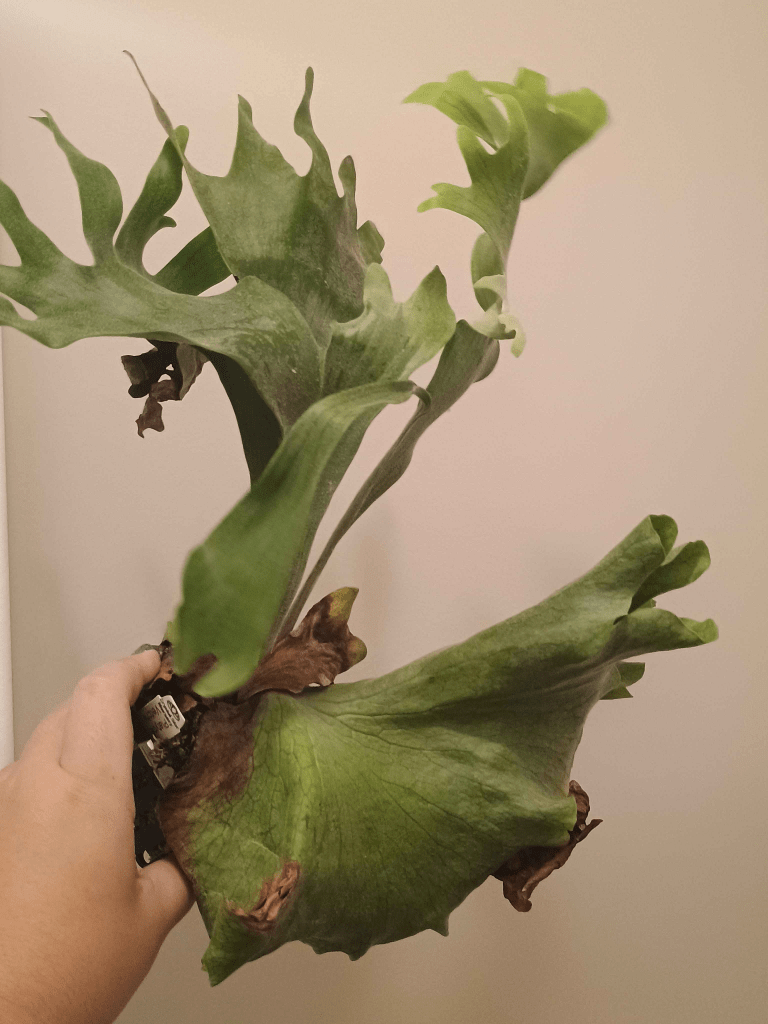
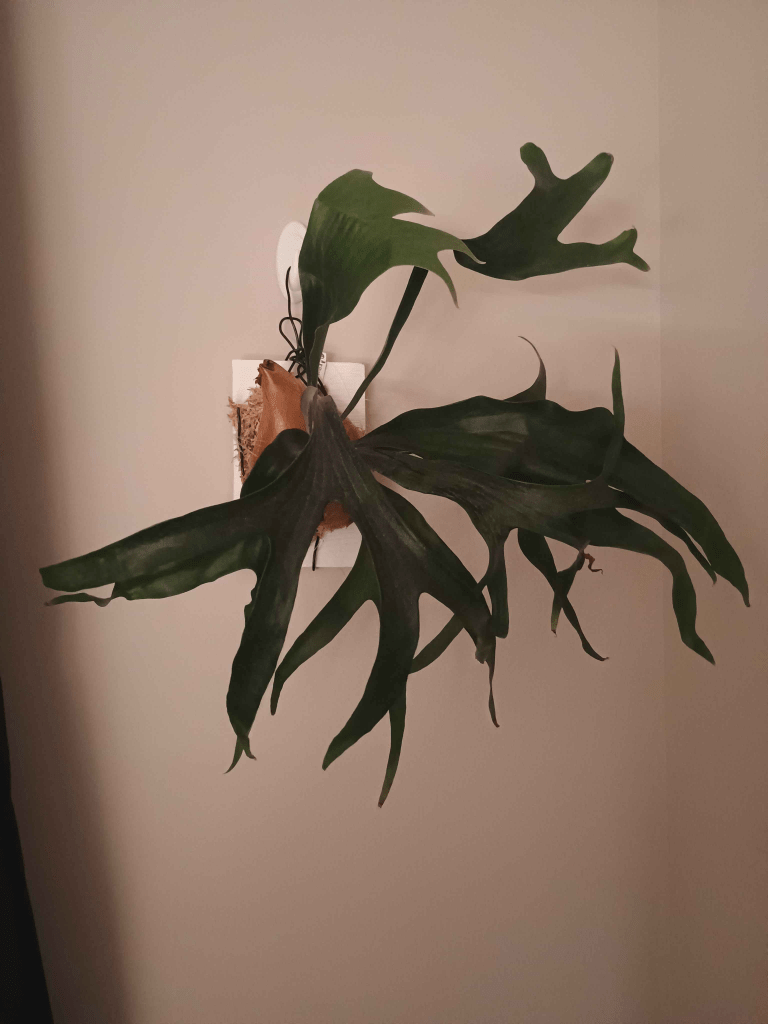
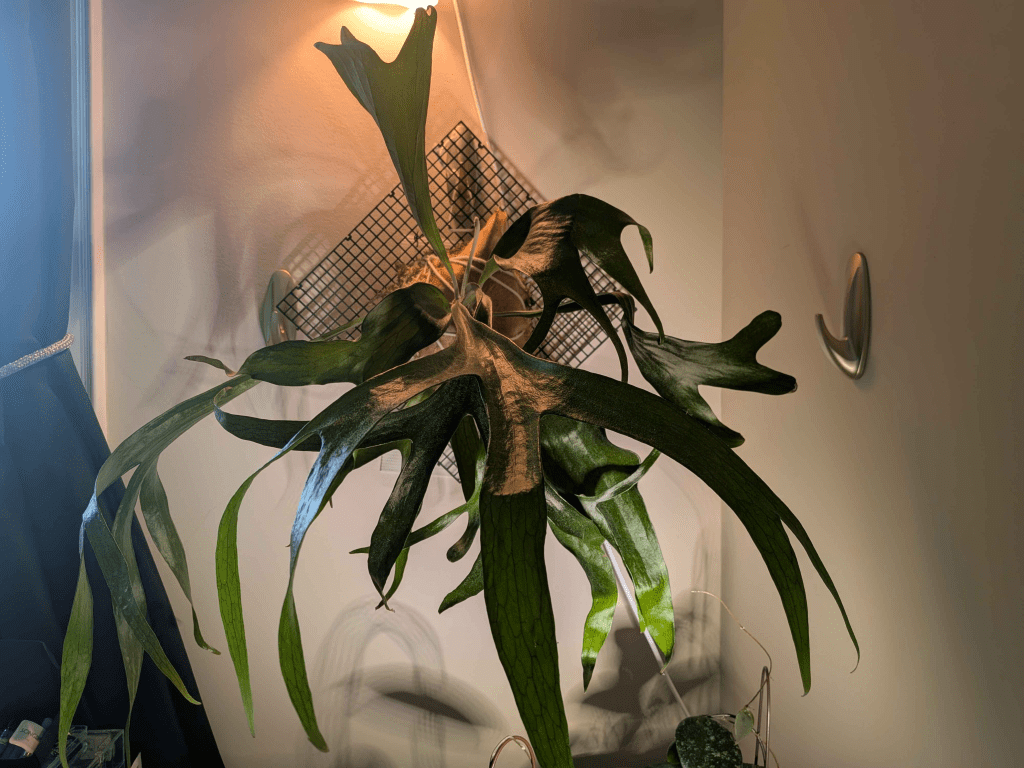
Now, vassei is a type of veitchii it seems, so I have some sort of veitchii cross presumably. The only images I’ve seen of this cross (with this label) seem to suggest I’m not quite growing it quite right. Either the fertile fronds should be pointing nearly straight upwards, or the leaves should be more silvery than they are currently. There also appears to be a Platycerium alicorne “vassei”, that is, a named cultivar of Platycerium alicorne. Who knows! What I do know is that this plant has more than doubled in depth and width. It currently has 9 fertile fronds, having dropped 2 and put out 6 in the 8 or so months I’ve had it. I’ve also upgraded it’s mount as it was swallowing the PVC board I had it on previously, dimensions are shown in Figure 5 and 6. The grid its on is just about 30 x 30 cm. The white rope is capillary wicking rope that I had kicking around from when I purchased a large number of net pots. I’ve tried fishing wire in the past, and wasn’t a fan.
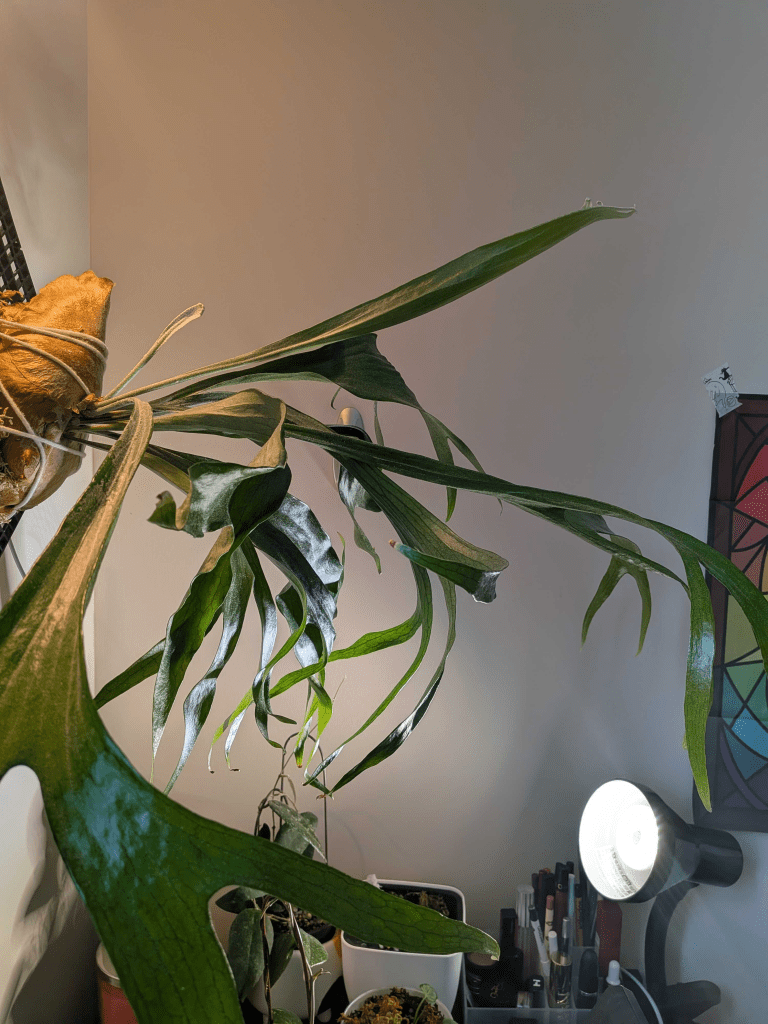
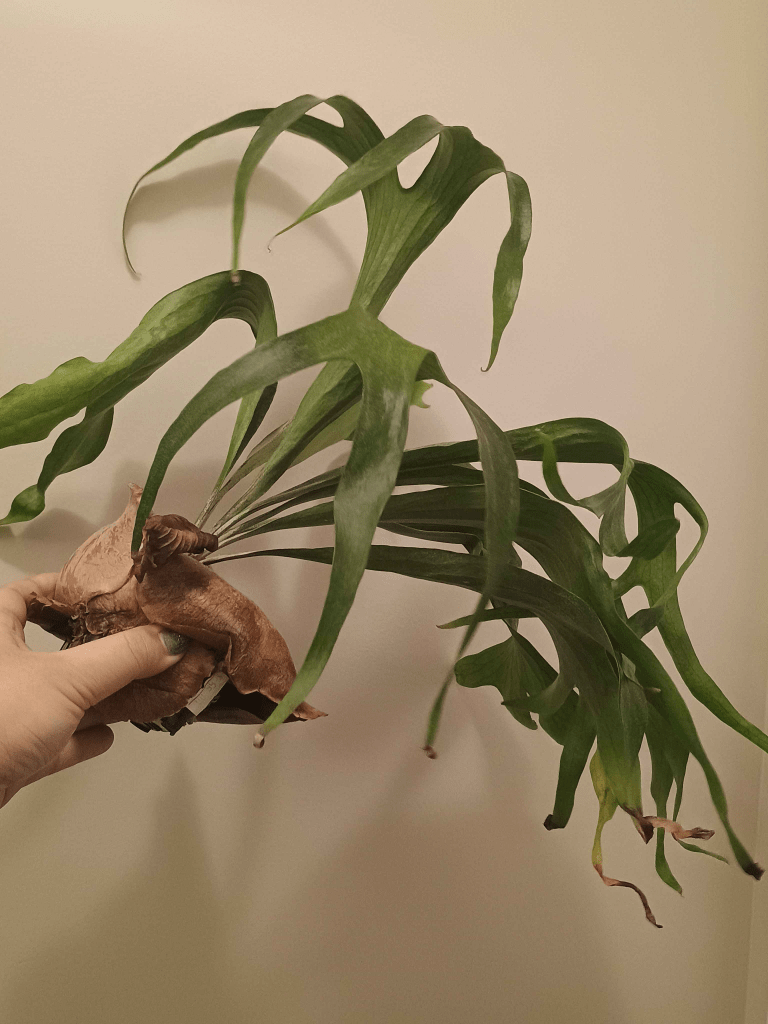
The other one I dug out a couple weeks after after I saw mounting it was a fairly easy process even in a rather dry, Canadian winter with heating on room. This one turned out to be Platycerium Hilii “pao pao” by Mt. Lewis “trident”. This particular hybrid turns up quite a few options online, and seems to be a more common hybrid. The pao pao doesn’t turn up much, but the hilii species seems to give fatter and relatively short fertile fronds with ruffly edges on the shield front. The Platycerium Mt. Lewis “trident” I’ve seen in person recently! It seems to be yet another cross between the Platcerium willinckii Mt. Lewis and a hilii trident. Which is then crossed back with the pao pao. Or something like that. I mounted this one on a piece of cork bark where it sat upside down for quite a while before I realized it was in the wrong orientation. This one has been a lot slower to grow for me, with only 2? maybe 1? new fertile fronds (chonky, wavy, short fingies, but many!) during the same time frame. It has also sent out a shield frond that has been scuffed up and damaged. I can’t tell if it’s mechanical damage from toppling over a lot when it lived on cork, or it doesn’t quite approve of the environment and care.
This one has also been remounted since and now lives side by side with the Platycerium VxV on my wall now. I’m staring at it right now, and I think the mount is still slightly askew. I’ll find out when the next shield frond comes out. Speaking of shield fronds, this one is much thinner than the other two Platycerium, and looks quite crackly in comparison (Fig. 7 and 8).
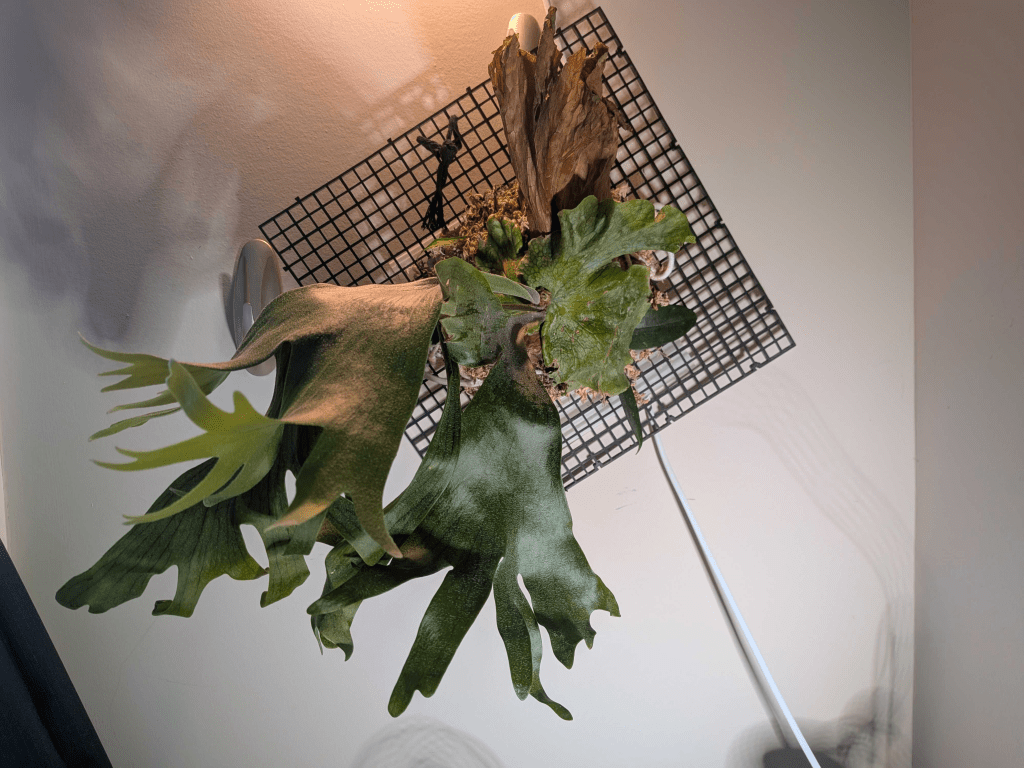
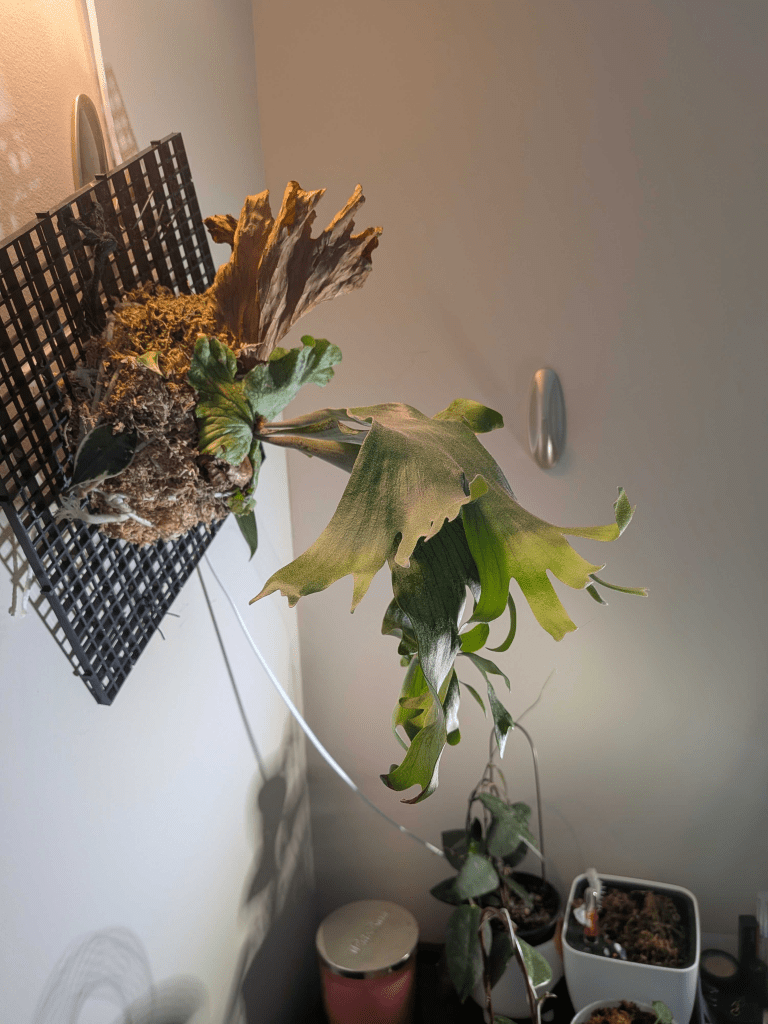
Both of these two are currently mounted of eggcrate, with a backing of polycarbonate sheeting and felt bumpers to prevent moisture from getting too close to my walls.
Platycerium willinckii Foong Si Qi
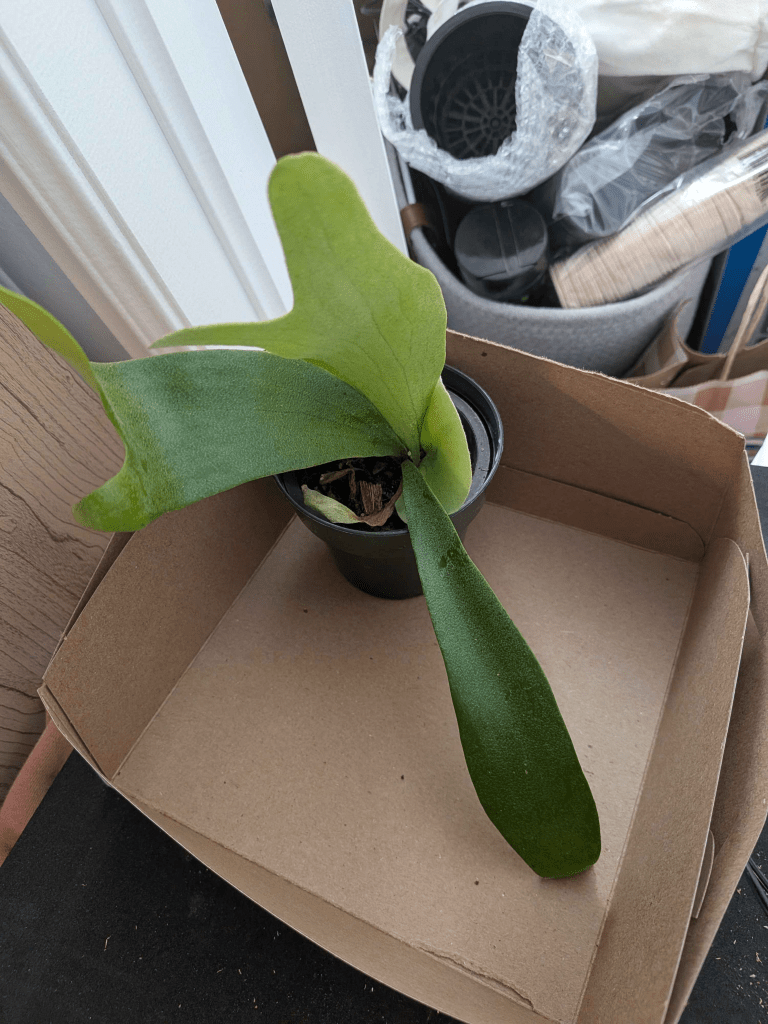
My final staghorn fern (for now) is a Platyceirum Foong Si Qi, named after the grower (Foong’s) daughter (Si Qi). It currently lives in the rather dark corner that the previous hybrid used to live in, but with summer time, I imagine it’ll be less impactful on the growth. This one was purchased when I finally ventured over to Kim’s Nature a few weeks ago, in hopes of seeing their cat. While I did not find the feline creature, I was quite impressed by the large variety of unusual plants they had there. I still think of the ridleyi coral they had, but I didn’t feel like paying those prices. The FSQ was $38 if I’m remembering correctly. It came in a 2 inch round pot. I had to sort through quite a few (I assume they were relatively recent imports that had been acclimated) to find the least beat up leaves (Fig. 9). It has since grown one new fertile frond and one new shield frond (Fig. 10 and 11). I expect this one to put out several leaves quickly until it matures. Maturity is definitely what is interesting about this plant, which I believe is a willincki.
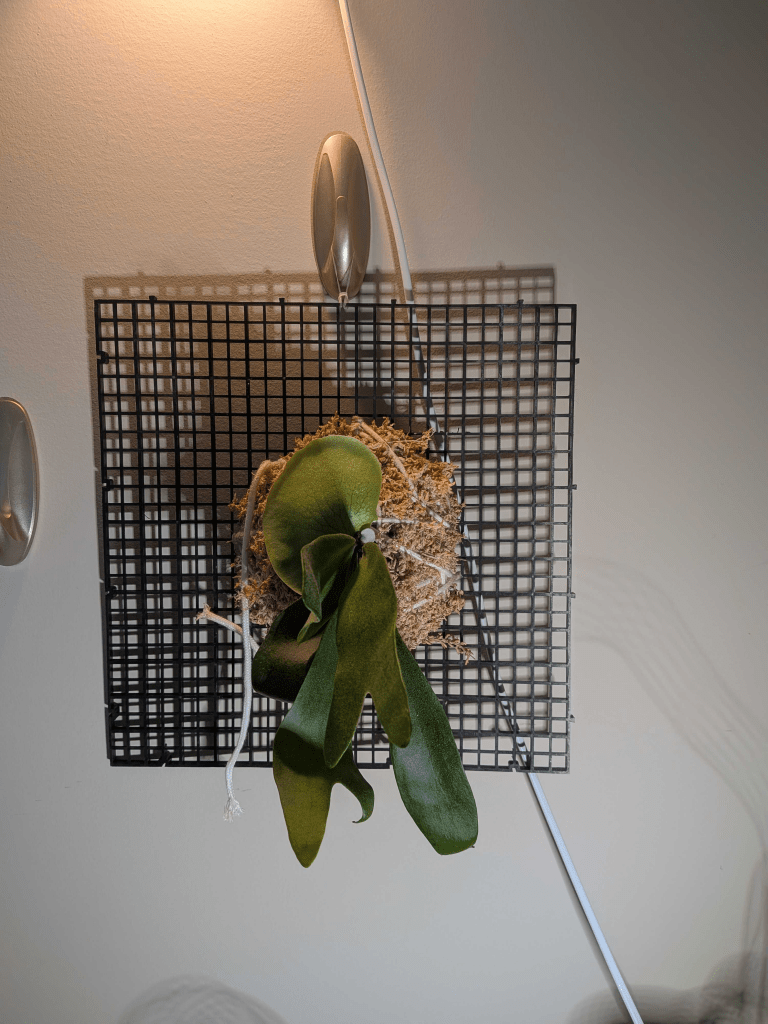
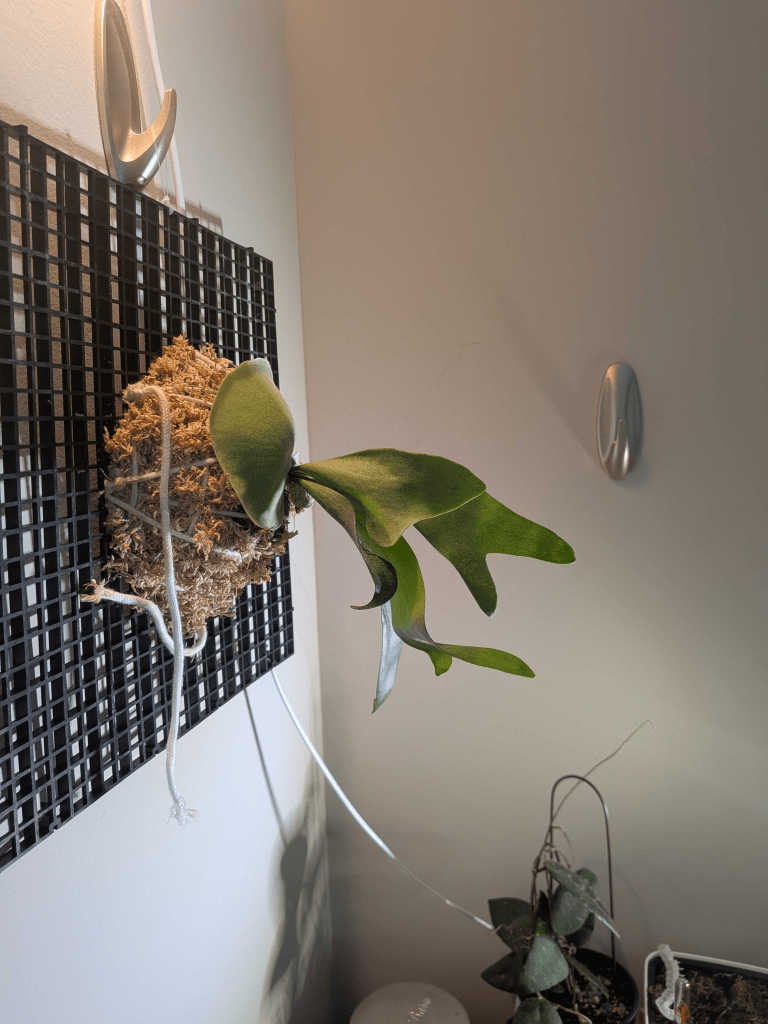
In its mature form, the fertile fronds curl towards the end, exposing brown and dusty spore patches. I think its stunning. From what I’ve read, it also matures quite quickly in the right conditions, so I can expect to see it put out the curls within a couple of years. This one is also on eggcrate, and I would like to put a plastic back on it because it dries out rather quickly (note: just added some bubblewrap to it!). I’ve also mocked up a potential 3D printed mount that I think has promise. I just need to learn how to use Fusion360 or some other software like I’ve been saying I’ll do for a couple years now…
That’s the Platycerium showcase!
Future Plans
A couple others I’ve been thinking about for quite a long time are the Platycerium madagascariense for the super textured shield fronds (though I think I no longer want this, a waffle ball that can croak at any time and needs extra moisture sounds meh), a ginka (a super cool version of the Foong Si Qi), and a ridleyi of some sort for the spindly fertile fronds that arch upwards. There are many other cool staghorn ferns, but I think those two are the ones I’ll be keeping an eye out for when it comes to pricing. I’ve actually gone so far as to email a company with both to see if they’re local so I can avoid shipping fees. Alas, they are in Alberta.
That said, I know theyr’e out there! Maybe in a few years time when I know where I’ll be I can look into it and get both in one fell swoop. Plus, keeping things in odd numbers is best for a wall display (the bifurcatum, if it survives summer, will be a chandelier type center piece due to it’s propensity for pupping). At some point far in the future, I think I’d like a regular, very silvery veitchii with the crown shaped shield fronds. It feels much like having a mask hanging on the wall to me. Also maybe a non dwarf bifurcatum that is slower to pup.
Resources
Here’s a handy resource for the species and common cultivars: https://www.halling.com/Platyceriums/Default.htm
Here’s a detailed document: https://zabel.com.au/russell-zabel-platycerium-ferns/wp-content/uploads/2020/07/Platycerium-Hobbyists-Handbook.pdf
Side Notes
I, by the way, do not water my staghorns like most of the internet suggests. I have them mounted in spaghnum moss that is mostly dry, and the top of the moss every day, sometimes even twice a day to prevent the moss from becoming full hydrophobic and water bouncing right onto the floor. Occasionally they will go two days without water if I’m out and about though. To me, this is far easier than dunking the plants in water for a few minutes then letting drip dry. Only time will tell if this watering method holds up. (I forgot to include earlier, but until about 3 months ago, I was watering exclusively with RO water or rainwater. Recently I’ve used a mix of those, tap water, dechlorinated tap water, and occasionally with fertilizer).
As a further aside, it seems that the veitchii grows its fertile fronds more upright if stronger light is provided. I can confidently say that the light its currently receiving is only a fraction of what the plant can tolerate, so that is something to investigate later in terms of whether it is a veitchii or not.


One response to “Sketchy Science: Growing out Staghorn Ferns”
nice
LikeLike